
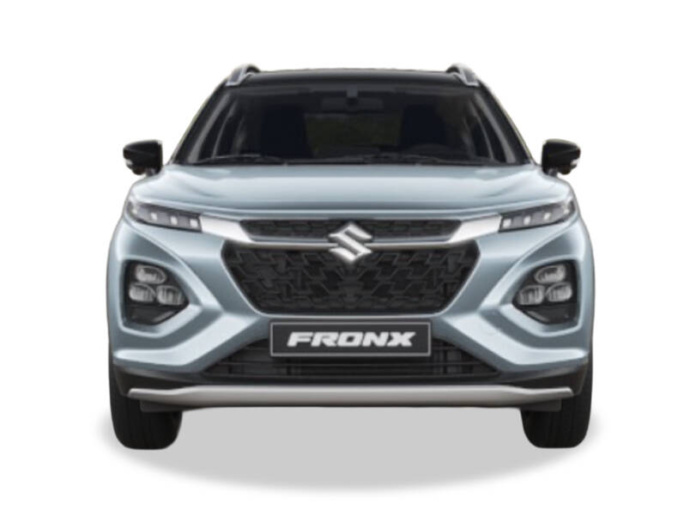

City SUVs have a reputation problem. Most of them are just hatchbacks with slightly raised suspensions and a bit of plastic cladding stuck around the wheel arches. Buyers have started to notice. They want something that actually looks the part, drives with some character, and does not embarrass itself when parked next to proper SUVs at the mall.
The new Fronx is Suzuki’s answer to that complaint. And based on everything the car brings to the table, it is a more serious answer than a lot of people expected from a brand mostly known for affordable, practical transportation.
Let’s go through what this car actually is, what it gets right, and why it is worth considering if you are shopping in the city SUV segment.
What the Fronx Actually Is
Before anything else, it helps to be clear about what category the Fronx sits in. Maruti Suzuki calls it a “new-genre SUV,” which is marketing language, but there is a real point underneath it.
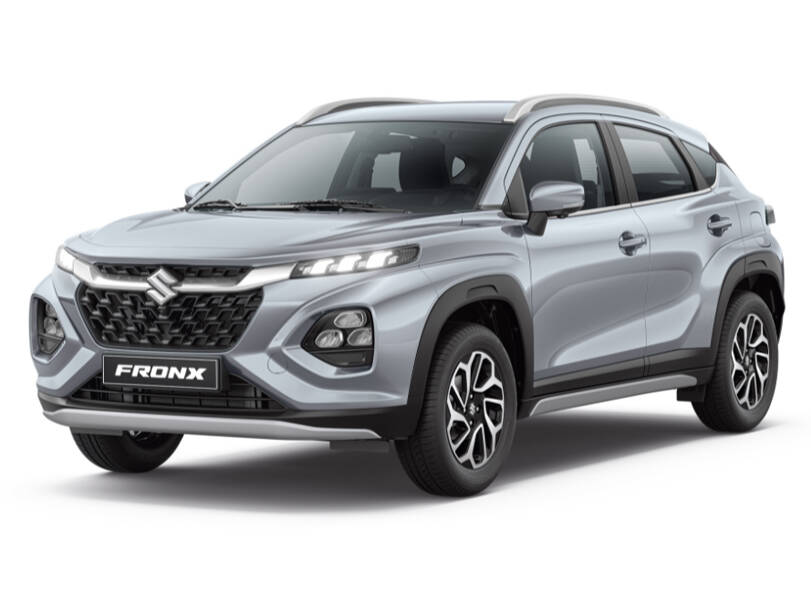
The Fronx is not a compact SUV in the traditional sense. It is not competing directly with something like the Brezza or the Creta. It occupies a space that is more coupe-influenced than a standard boxy SUV, with a roofline that tapers more aggressively and a side profile that has actual visual tension to it rather than just being four straight lines with some height added.
Think of it as sitting between a premium hatchback and a sub-compact SUV, but with a design ambition that leans harder into the SUV aesthetic than either of those categories typically does. It is a city car that wants to look like it could handle more than just city roads, while being honestly optimized for the environment where most Indian buyers actually spend 95 percent of their driving time.
That is a reasonable and honest product philosophy. Maruti Suzuki is not pretending this is a proper off-roader. They are saying it is a city SUV built to stand out in city conditions, and they have put real effort into making it do exactly that.
The Exterior Design: Three-Dimensional and Intentional
The exterior of the new Fronx is where the car makes its strongest argument for itself.
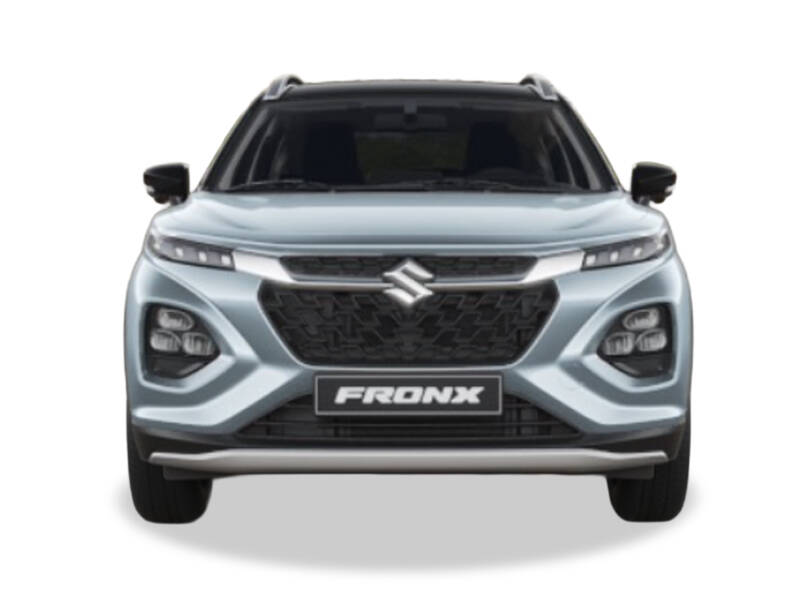
The phrase Suzuki uses is “three-dimensional shaped exterior,” and while that sounds like it could mean anything, the design actually backs it up. The bodywork has layered surfaces rather than flat panels. Light plays across the body in ways that make the car look more expensive than its price point would suggest.
The front end is aggressive without being overwrought. The grille treatment connects with the headlight clusters in a way that gives the car a wide, planted stance even before you look at the wheels or the bodywork. It reads as confident rather than busy.
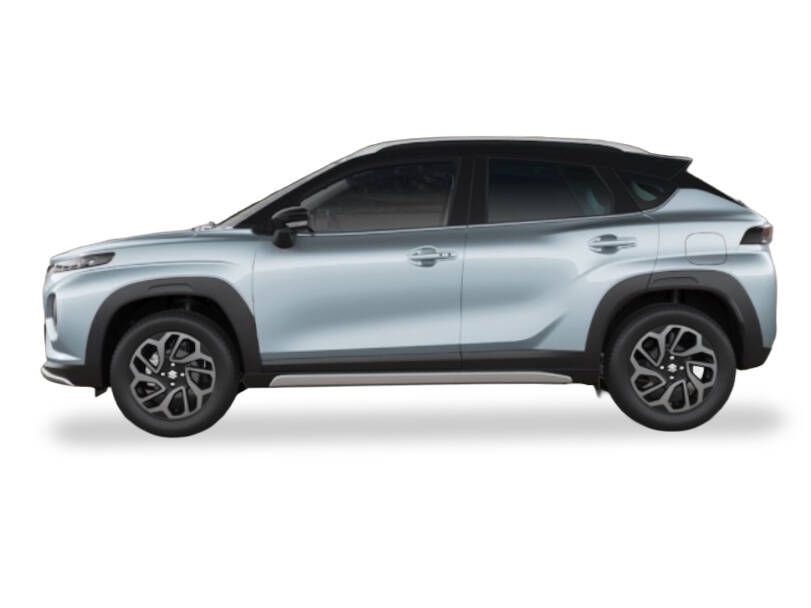
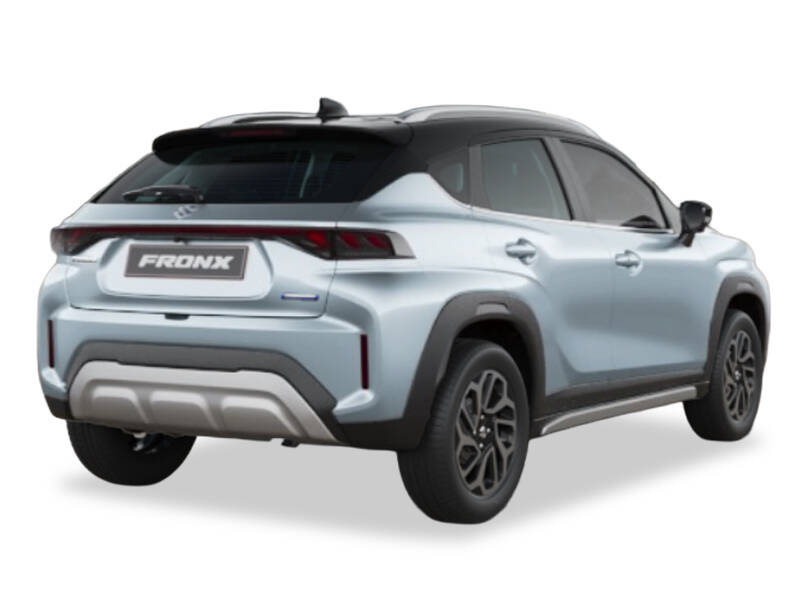
The side profile is where the Fronx earns its coupe-SUV label. The roofline does not just gently slope at the rear the way some competitors do as an afterthought. It has an actual intentional arc to it, which creates a distinct silhouette that you can identify at a distance. In a parking lot full of increasingly similar-looking crossovers, that matters.
Wheel arch cladding is present but restrained. Some city SUVs pile on so much plastic trim that they start to look like they are trying too hard. The Fronx uses it as an accent rather than a defining feature, which keeps the overall shape cleaner.
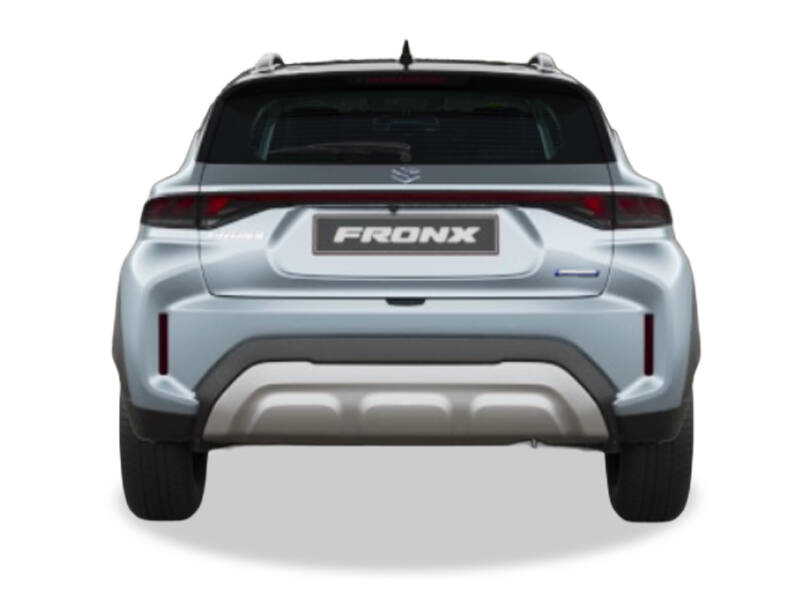
The rear end ties everything together. The tail lamps have a design that echoes elements from the front, giving the car visual coherence from every angle. One of the problems with a lot of affordable SUVs is that the front looks deliberate and the rear looks like it was designed by a different team on a different day. The Fronx does not have that problem.
Color options play into this too. Maruti Suzuki has offered dual-tone combinations that work with the body’s surface structure, using contrasting roof colors that emphasize the roofline rather than fight against it.
Interior: Confident Without Overreaching
The interior of the Fronx takes a similar approach to the exterior. It is trying to punch above its segment, and it largely succeeds.
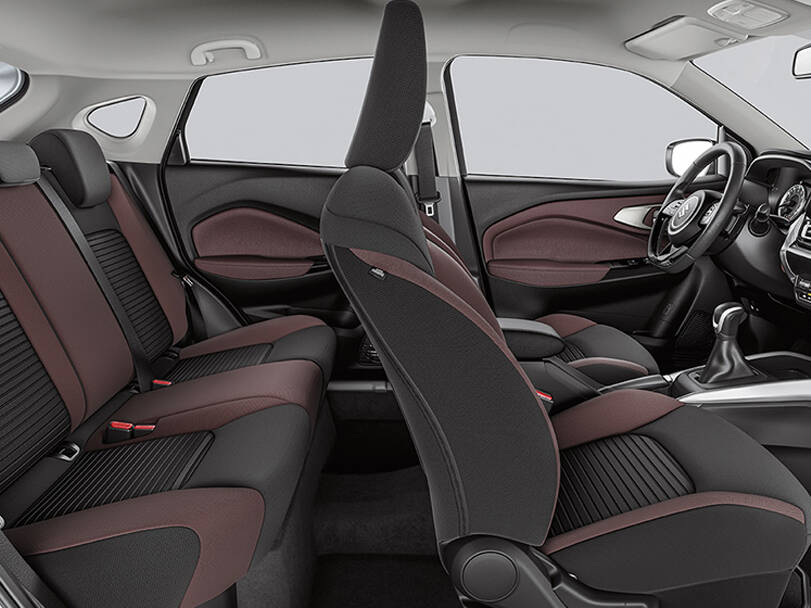
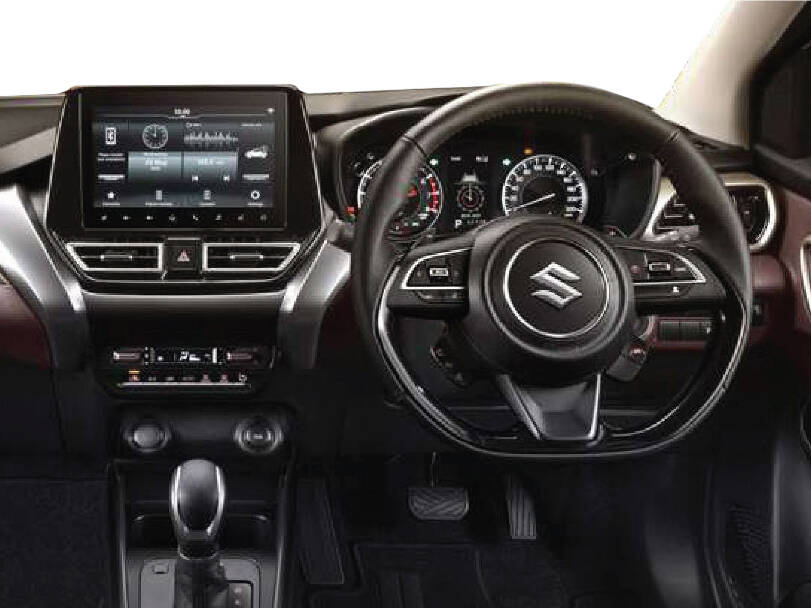
The dashboard layout is driver-focused. Controls are placed where your hands naturally fall rather than arranged symmetrically for the sake of symmetry. The instrument cluster is clear and readable, which sounds basic but is something a surprising number of cars get wrong by prioritizing looks over function.
The material quality across the cabin is better than you would expect from this price point. Maruti Suzuki has used harder plastics in areas where they will not be touched much and softer, better-feeling materials where hands and arms actually make contact. It is the kind of attention to where money gets spent that shows the people designing the interior were thinking about the actual user experience rather than just the press photos.
Seating position gives you a proper commanding view of the road, which is one of the genuine functional advantages of an SUV body style over a sedan or hatchback. You can see further ahead in traffic, which reduces stress on longer drives and makes city driving less claustrophobic.
The infotainment system centers around a touchscreen that is sized appropriately for the cabin, meaning it does not feel like it was designed for a much larger car and jammed into this one. Apple CarPlay and Android Auto connectivity are present, which in 2024 is essentially a minimum requirement for any car targeting younger buyers.
Rear seat space is honest for this class of vehicle. Two adults fit comfortably. Three adults fit adequately. If you regularly carry five adults on long trips, the Fronx is probably not the right choice, but most city cars in this category face the same reality.
Boot space is usable. Not cavernous, but enough for grocery runs, a weekend trip for two, or the occasional flat-pack furniture purchase, depending on how ambitious your flat-pack choices are.
Engine and Powertrain Options
Maruti Suzuki has offered the Fronx with engine options that suit different buyer needs.
The 1.2-liter naturally aspirated petrol engine is the sensible baseline choice. It delivers adequate power for city use, returns good fuel economy, and is proven reliable over hundreds of thousands of units sold across Maruti Suzuki’s broader lineup. If your driving is mostly urban with occasional highway runs, this engine handles the job without drama.
The more interesting option for buyers who want more engagement is the 1.0-liter Boosterjet turbocharged petrol engine. This unit produces around 100 horsepower, which is a meaningful number for a car of this size and weight. Turbo engines deliver their power lower in the rev range than naturally aspirated units, which means overtaking and merging on highways feels less frantic. You do not need to rev the engine hard to get a useful response.
The Boosterjet is available with both manual and automatic transmission options. The automatic pairs well with city driving conditions where stop-start traffic makes clutch work tedious. The manual is the choice for buyers who want more direct control and do not mind the extra engagement.
Maruti Suzuki has also made the Fronx available with CNG fuel compatibility on certain variants, which is a practical consideration for buyers in cities where CNG infrastructure is well-developed and fuel costs are a significant concern over the ownership period.
Fuel economy figures across the range are competitive.Suzuki’s engineering has always prioritized efficiency, and the Fronx fits that pattern. Real-world figures will obviously vary based on driving conditions, traffic, and driving style, but buyers switching from older or less efficient vehicles should notice a meaningful improvement.
Technology Features
The technology package in the Fronx has been put together with the actual use cases of its buyers in mind.
Connectivity is handled through Maruti Suzuki’s SmartPlay Pro system, which covers the infotainment basics and adds connected car features that let you check vehicle status, find the car in a parking area, or receive alerts on your phone. For urban buyers who are already managing multiple smart devices, having the car integrate into that ecosystem is useful rather than just being a spec sheet checkbox.
Safety technology includes features like a rear parking camera, which is genuinely necessary for a car that will spend most of its life parallel parking on narrow city streets. Multiple airbags are available across variants. Electronic stability control is present, which helps when road surfaces in city environments are unpredictable, wet, or poorly maintained.
The instrument cluster options include a semi-digital setup that gives a cleaner read of key information than traditional analog gauges while not requiring the full attention demand of an all-digital screen. It is a sensible middle ground for the segment.
Keyless entry and a push-button start are available on higher variants, which are small conveniences that add up over the course of daily ownership. If you are loading groceries and the car unlocks because your key is in your pocket, that is a feature you will appreciate every time it works.
How It Compares to the Competition
The city SUV segment in India is crowded and competitive. Understanding where the Fronx sits relative to its alternatives helps clarify whether it is the right choice for a specific buyer.
Against the Hyundai Venue and Kia Sonet, the Fronx trades some interior space for a more distinctive exterior design and Maruti Suzuki’s reliability reputation and service network. If you live in a smaller city where after-sales service access matters a lot, Maruti Suzuki’s network density is a genuine advantage.
Against the Tata Nexon, the comparison is more nuanced. The Nexon has strong safety ratings and a loyal following. The Fronx counters with the Boosterjet turbo engine option and a design that appeals to buyers who want something that looks a bit different from the crowd.
Against the Volkswagen Taigun and Skoda Kushaq, the Fronx is more affordable and more practical to maintain over a long ownership period. The European alternatives offer strong driving dynamics but come with higher maintenance costs and less extensive service coverage in many markets.
The Fronx’s strongest overall argument is the combination of Maruti Suzuki’s ownership cost advantages, a design that genuinely stands out from competitors, and powertrain options that cover both the efficiency-focused and performance-focused buyer.
Who This Car Is For
The Fronx makes the most sense for a specific type of buyer, and it is worth being clear about that rather than claiming it is everything to everyone.
It fits well for urban professionals in their late twenties or thirties who want a car that reflects some personal style without the premium price tag of a European brand. They care about how the car looks, but they also care about running costs, service availability, and long-term reliability. The Fronx addresses all of those concerns without requiring compromises that would make the ownership experience frustrating.
It also works for younger families who want the practical benefits of an SUV body style, mainly the better visibility and the higher seating position, without needing the full space of a larger vehicle. If the kids are still small and the boot space requirement is reasonable, the Fronx covers what most families actually need day to day.
Buyers for whom the Fronx is probably not the ideal choice are those who regularly carry more than four adults comfortably, those who need genuine off-road capability, or those who prioritize raw performance above everything else. The Fronx is not trying to be those things.
Pricing and Value
Suzuki has positioned the Fronx competitively across its variant range. Entry-level trims give access to the distinctive exterior design and the core powertrain without adding features that buyers in that segment do not always need. Mid-range variants hit the sweet spot of features versus price for most buyers. Top-spec variants bring in the full technology package for buyers who want the complete specification.
One area where Maruti Suzuki consistently delivers value is the total cost of ownership. Purchase price is only part of the calculation. Insurance costs, fuel costs, scheduled maintenance costs, and parts availability all factor into what a car actually costs you over three to five years. On every one of those measures, Maruti Suzuki vehicles tend to perform well compared to competitors.
Resale value is another practical consideration. Maruti Suzuki’s models hold their value reliably in the used car market. If you plan to sell or trade in the car after four or five years, that retained value is essentially money you get back from your initial investment.
Final Thoughts
The new Fronx is a car that does what it sets out to do, and it sets out to do something specific. It is a city SUV built to look sharper than the segment average, drive with enough character to be enjoyable, and cost enough less than premium alternatives that the math makes sense for a wide range of buyers.
The three-dimensional exterior design gives it a presence on the road that the photos do not fully capture. You need to see it in person, in different light conditions, to appreciate how much thought went into the surface development.
The interior quality is better than the price would suggest, which is Maruti Suzuki doing what it has always done best: finding where buyers’ money is best spent and spending it there.
For buyers in the market for a city SUV that offers genuine style alongside the practical ownership advantages of the Maruti Suzuki brand, the Fronx is worth putting at the top of the test drive list. It is not a compromise disguised as something more. It is a well-considered product that knows its audience and delivers for them.
That is a harder thing to get right than it sounds, and the new Fronx mostly gets it right

