
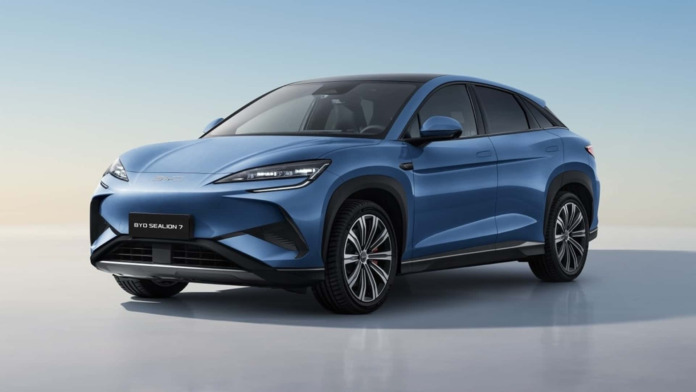

If you’ve been paying attention to the electric vehicle market over the last couple of years, you’ve probably noticed something interesting happening. The conversation is no longer just about Tesla. Chinese automaker BYD has been quietly building momentum, and with the Sealion 7, they’re putting their best foot forward in the highly competitive mid-size electric SUV space.
This isn’t a budget EV with budget compromises. The Sealion 7 is a properly premium machine with serious engineering behind it, aimed squarely at buyers who might otherwise walk into a Tesla showroom. So let’s take a thorough look at what BYD has built, why it matters, and whether it earns the premium asking price.
What Is the BYD Sealion 7?
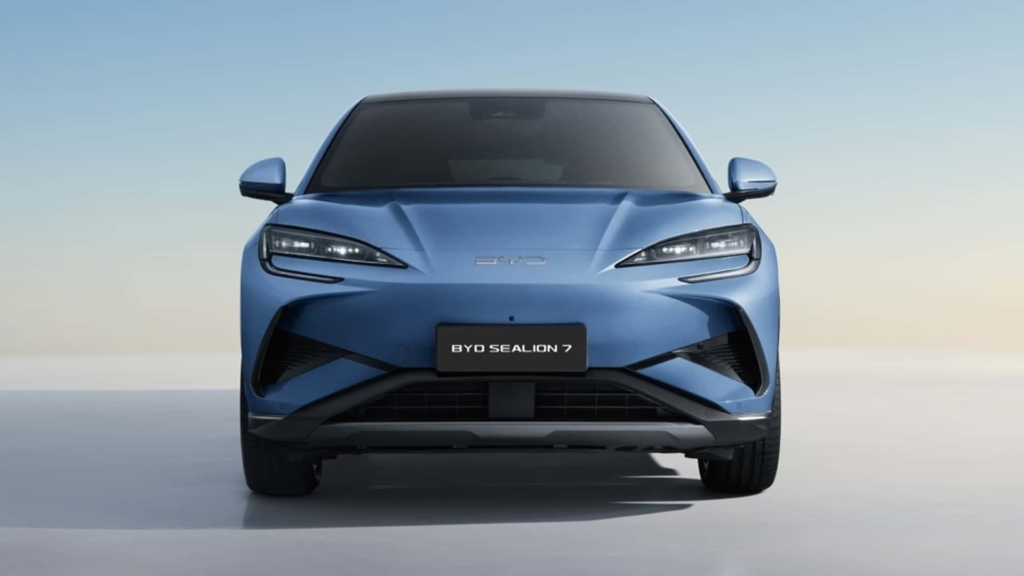
The Sealion 7 is BYD’s mid-size electric SUV, sitting comfortably in the segment dominated by the Tesla Model Y, the Hyundai Ioniq 5, and the Kia EV6. It runs on BYD’s e-Platform 3.0 Evo, which is the company’s most advanced electric architecture to date. This platform is purpose-built for electric vehicles, not adapted from a traditional combustion car chassis, which gives it some genuine engineering advantages in terms of weight distribution, ride dynamics, and interior space.
It’s also part of BYD’s “Ocean Aesthetics” design language, which takes inspiration from the natural flow of water. The result is a vehicle that looks sleek and cohesive rather than overwrought, which is a difficult balance to strike in a market where every manufacturer seems to be competing to have the most dramatic front grille or the most angular headlights.
BYD has a dual-motor all-wheel-drive configuration as well as a single-motor rear-wheel-drive setup, depending on the variant. This gives buyers some flexibility depending on their priorities around performance versus range.
Design: Ocean Aesthetics in Practice
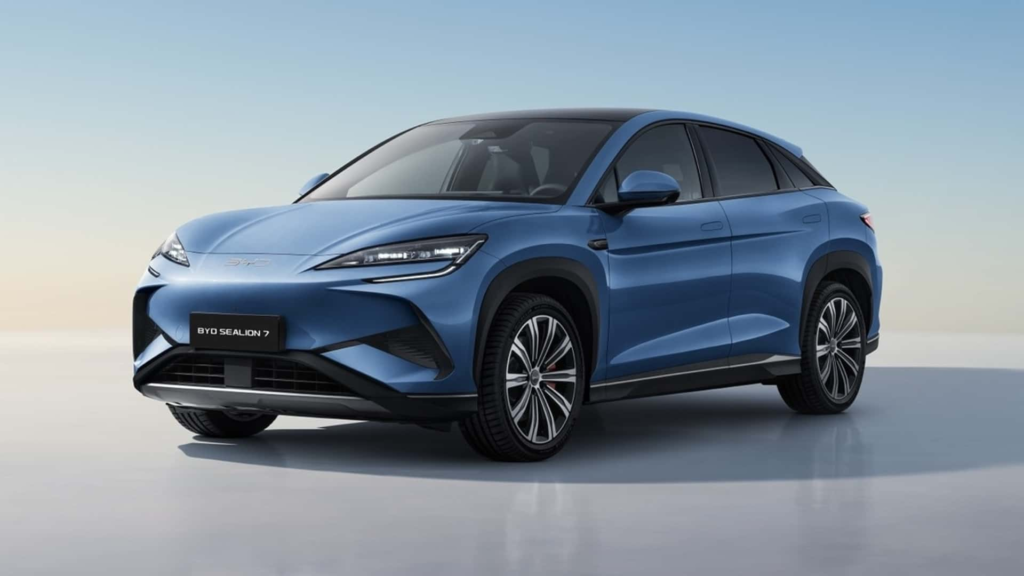
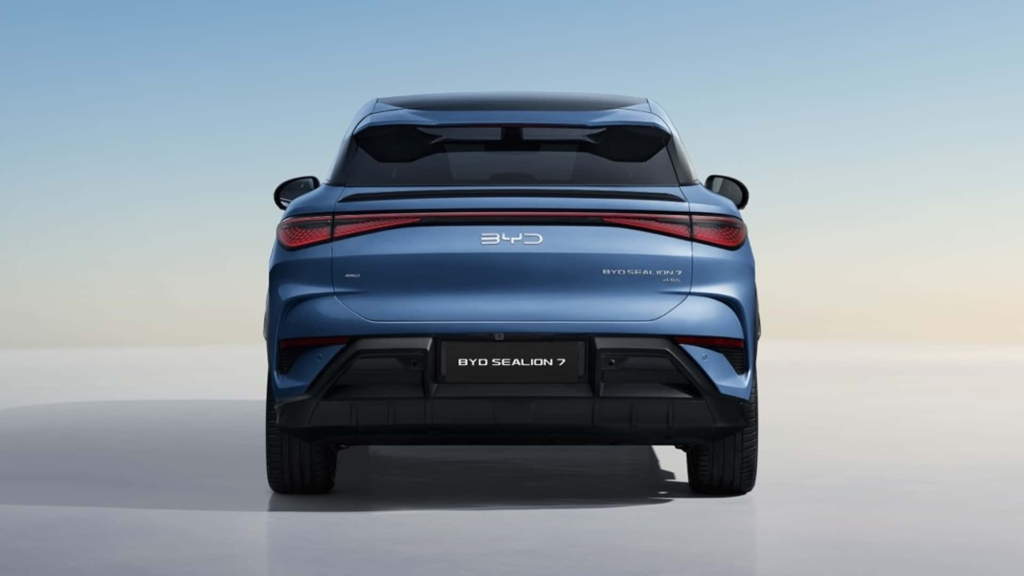
The “Ocean Aesthetics” label is BYD’s design philosophy, and on the Sealion 7, it actually works. The body has smooth, flowing lines that give it a sense of motion even when parked. The front fascia is clean, with slim LED headlights that stretch across the hood in a way that looks distinctive without being aggressive.
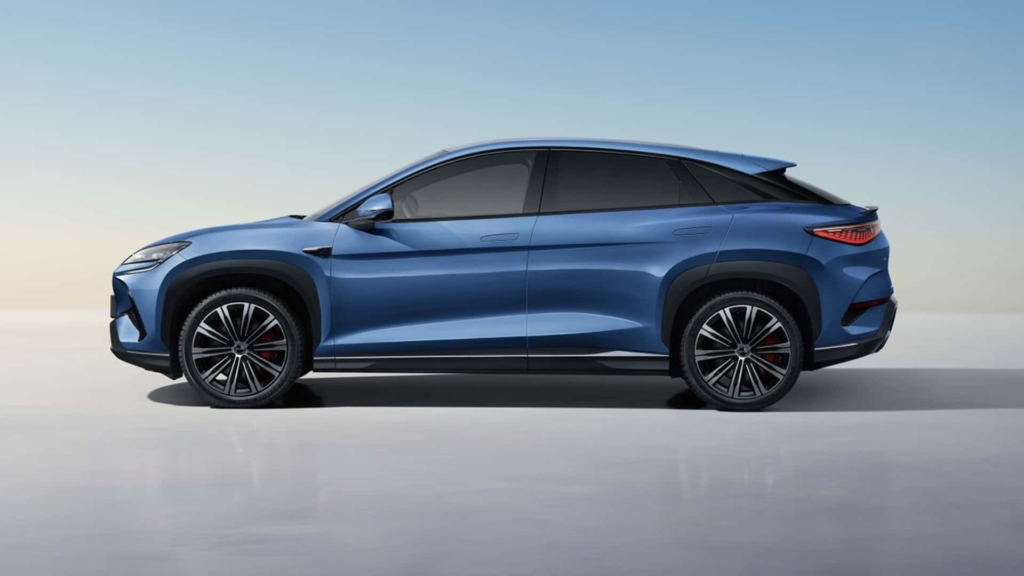
The roofline slopes gradually toward the rear, which gives it more of a crossover-coupe profile than a traditional tall SUV. This does affect headroom for rear passengers slightly, but the trade-off is a significantly more composed look from the outside. The flush door handles and aerodynamically optimized body panels are also functional choices that help reduce drag and extend range.
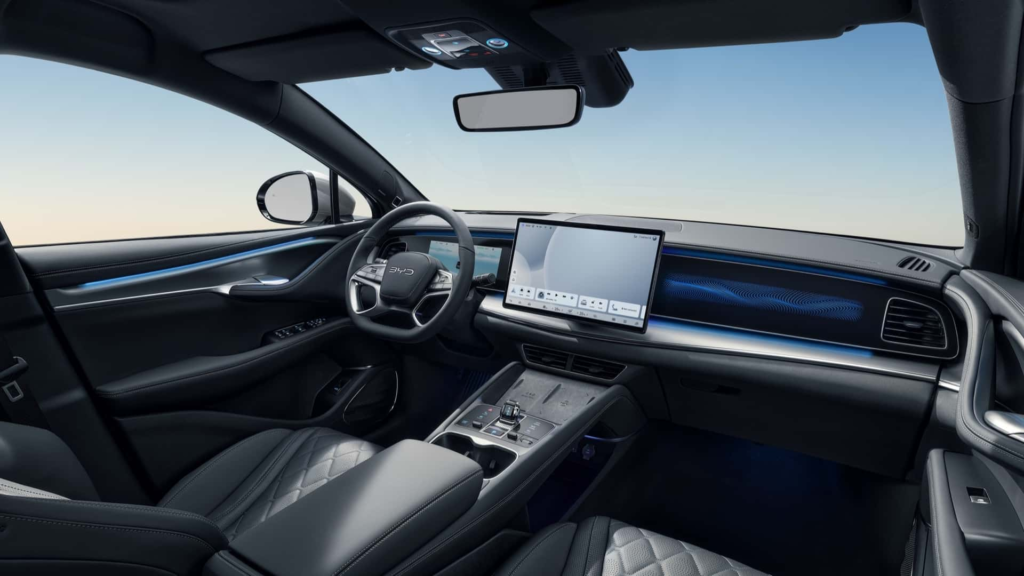
Inside, the cabin reflects the same philosophy. There’s a large rotating central touchscreen, clean surface design, and premium materials throughout. The ambient lighting system can be adjusted to create different moods, and the panoramic sunroof is genuinely large, making the interior feel airy and open. BYD has clearly invested in the interior experience here, and it shows.
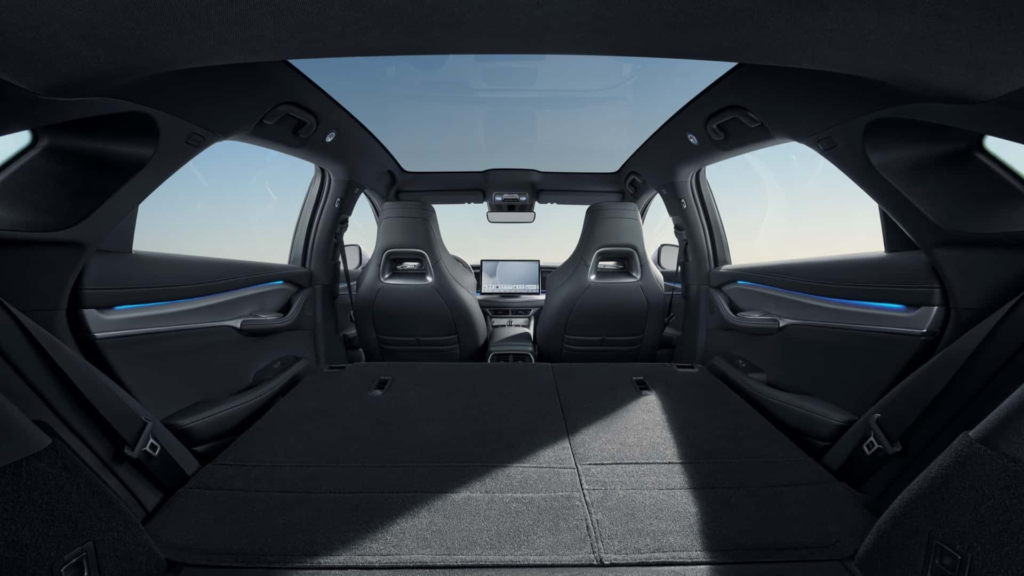
The rear seats offer reasonable legroom, though taller passengers will notice the sloping roofline. Boot space is competitive with the segment, and there’s a front trunk (frunk) that adds useful extra storage.
The Blade Battery: Why It Matters More Than You Think
BYD’s Blade Battery is one of the most important technologies in their lineup, and it’s central to the Sealion 7’s appeal. To understand why it matters, a bit of context helps.
Most electric vehicles use lithium-ion batteries with a module-based architecture, where cells are grouped into modules and then those modules are assembled into a pack. The Blade Battery takes a different approach. The cells are long, flat, and blade-shaped, arranged directly into the battery pack structure without the intermediate module layer. This is called a cell-to-pack design, and it has several important advantages.
First, the structural efficiency means more of the battery pack volume is occupied by active energy storage rather than support structures and casing. This improves energy density. Second, and perhaps more importantly for buyers, the lithium iron phosphate (LFP) chemistry used in the Blade Battery has a significantly better safety profile than the nickel-manganese-cobalt (NMC) chemistry used in many competitors.
BYD famously subjected the Blade Battery to the nail penetration test, one of the most extreme stress tests for battery safety. The battery showed no fire and no explosion. Conventional battery packs often fail this test catastrophically. For anyone who has ever worried about electric vehicle fires, this is a meaningful data point.
LFP chemistry also has a longer cycle life compared to NMC, meaning the battery should retain more of its capacity over a greater number of charge cycles. The trade-off is slightly lower energy density at the cell level, but BYD’s cell-to-pack architecture largely compensates for this at the pack level.
The Blade Battery also supports 800V charging architecture on the Sealion 7, which enables faster DC fast charging speeds. This brings charging performance closer to what some premium competitors offer, and represents a significant step forward for BYD’s charging capability.
Performance Figures
Numbers matter, so here’s what the Sealion 7 actually delivers.
The dual-motor all-wheel-drive version produces around 390 horsepower and accelerates from 0 to 100 km/h in approximately 4.5 seconds. That’s properly quick. It’s not the fastest EV in the segment, but it’s more than adequate for anyone who doesn’t specifically need to beat supercars off the line.
The single-motor rear-wheel-drive version is more modest in output but still respectable, offering a sensible balance of performance and efficiency for everyday driving.
Top speed sits at around 215 km/h, which is competitive. The e-Platform 3.0 Evo also contributes to handling characteristics through its low center of gravity (the battery pack sits flat beneath the floor) and well-engineered suspension tuning. The Sealion 7 doesn’t pretend to be a sports car, but it handles corners with more composure than its size suggests.
The range on a full charge is approximately 482 km (WLTP) for the longer-range variants, which is solid in this class. Real-world range will depend on driving style, climate, and whether you’re using features like climate control, but it should be enough to cover most everyday needs and longer trips without excessive range anxiety.
e-Platform 3.0 Evo: The Technical Foundation
The e-Platform 3.0 Evo is worth discussing in some detail because it’s not just marketing language. This is a properly advanced EV-dedicated platform that enables several things the Sealion 7 benefits from directly.
The platform supports an integrated powertrain design that BYD calls an “8-in-1” electric powertrain, combining the motor, inverter, transmission, on-board charger, DC-DC converter, vehicle control unit, battery management system, and power distribution unit into a single compact unit. This reduces weight, simplifies the drivetrain, improves efficiency, and frees up space compared to having these components installed separately.
The platform is also designed from the ground up for high-voltage fast charging, which is why the Sealion 7 supports the charging speeds it does. A flat battery pack architecture integrated into the floor structure contributes to a lower center of gravity, which improves handling dynamics without requiring active suspension systems to compensate.
Vehicle-to-load (V2L) functionality is also present, meaning the Sealion 7 can be used as a power source for external devices and appliances. This is increasingly useful for camping, outdoor activities, or as a backup power source during emergencies.
How It Compares to the Tesla Model Y
The Tesla Model Y is the obvious benchmark here, and it’s worth being direct about where the Sealion 7 wins, where it loses, and where it’s more or less a tie.
The Sealion 7 has the edge in battery safety. The Blade Battery’s LFP chemistry and structural design are genuinely safer than what Tesla uses in most configurations. BYD’s battery technology is also proven over years of high-volume production, and the cell-to-pack architecture is an engineering advantage.
The interior of the Sealion 7 is more conventional in terms of layout, which some buyers will prefer. Tesla’s minimalist approach strips out most physical controls, which can be polarizing. BYD retains more traditional controls while still offering a large touchscreen interface. Material quality in the Sealion 7 is competitive, and in some areas arguably better than what you get in a similarly priced Model Y.
Tesla still has significant advantages in software and over-the-air update maturity. Tesla’s charging network (Supercharger) is one of the best in the world in terms of availability and reliability, though increasing compatibility with other charging standards is improving the situation for all EVs. Tesla also leads in driver assistance features and the overall technology ecosystem, including navigation, energy management, and third-party app integration.
Range-wise, the two vehicles are close enough that it won’t be a deciding factor for most buyers. The Tesla Model Y Long Range covers slightly more ground on a charge, but the difference is not dramatic in real-world conditions.
Price is market-dependent, but BYD has consistently positioned the Sealion 7 as a compelling alternative for buyers who want premium features and build quality without the Tesla price premium. In several markets, it undercuts the Model Y by a meaningful margin.
For buyers who have found Tesla’s approach to ownership and customer service frustrating, the Sealion 7 is a credible alternative. For buyers who are deeply invested in the Tesla software ecosystem, the switch requires more adjustment.
Who Should Actually Buy This Car?
The Sealion 7 makes the most sense for a few specific buyer profiles.
If you want a premium electric SUV with serious safety credentials, the Blade Battery technology is a genuine differentiator that should matter to anyone who has thought carefully about long-term battery performance and fire risk.
If you’re an existing ICE car buyer making the switch to electric for the first time, the Sealion 7’s more conventional interior layout and familiar control logic make the transition easier. You’re not suddenly dealing with a tablet-on-wheels philosophy; the car still behaves like a car.
If you’re budget-conscious but still want a properly premium experience, the Sealion 7 offers strong value. You’re getting genuine premium materials, a well-tuned powertrain, advanced battery technology, and a distinctive design at a price that frequently undercuts equivalent Tesla configurations.
If you cover a mix of urban commuting and occasional longer trips, the range and charging speed combination is well-suited to that use case. The V2L capability adds flexibility for those who camp, travel, or simply want a backup power source.
The Sealion 7 is probably not the best choice for buyers who are deeply integrated into Tesla’s software ecosystem, rely heavily on a Tesla Supercharger network that may not yet have significant BYD compatibility in their region, or need maximum performance above what the Sealion 7’s 4.5-second sprint offers.
Charging and Real-World Practicality
Charging is where EV ownership either works smoothly or becomes a source of frustration, so it deserves honest treatment.
The Sealion 7 supports DC fast charging at competitive speeds, and the 800V architecture means less time at charging stations compared to older 400V platforms. For AC home charging, a standard 11kW on-board charger handles overnight top-ups without issue.
BYD has been actively expanding its charging partnerships and compatibility in most markets where the Sealion 7 is sold. The general direction of the industry, with increasing adoption of common charging standards, also benefits Sealion 7 owners over time.
Regenerative braking is adjustable, allowing drivers to set up one-pedal driving if they prefer it, or a lighter regeneration feel closer to what ICE cars do. This is a small thing but it matters for everyday comfort and adoption.
The onboard navigation system integrates charging stop planning, routing around your battery state and destination. It’s not as seamless as Tesla’s implementation in all markets, but it does the job for most journeys.
Final Assessment
The BYD Sealion 7 is one of the most credible alternatives to the Tesla Model Y that currently exists. It doesn’t do everything better, but it does enough things well, and some things genuinely better, to earn serious consideration from anyone shopping in this segment.
The Blade Battery technology is a real advantage. The e-Platform 3.0 Evo is properly modern and enables real-world performance that matches the spec sheet reasonably well. The design is attractive and the interior quality is high. BYD has clearly moved past the phase where Chinese EVs were considered budget options with budget quality.
For buyers in markets where BYD has strong dealer and service networks, this car represents a compelling purchase. It’s not a compromise. It’s a proper premium EV that happens to come from a manufacturer that most Western buyers are still getting familiar with.
The market for electric SUVs is better for having this car in it. And for the people it’s right for, it’s a very good choice

