
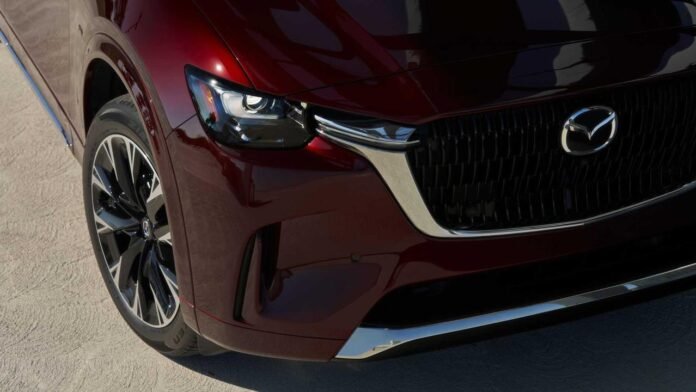

If you’ve been watching the midsize crossover market, you already know Mazda has been quietly doing something most mainstream brands struggle with: making cars that actually look like they cost more than they do. The CX-90 is the clearest proof of that. It’s Mazda’s flagship SUV, it seats up to eight people, and it competes in a segment loaded with strong options. Now it’s gotten a few updates and a higher price tag. Is it still worth your money? Let’s walk through it.
A Quick Refresh, Not a Reinvention
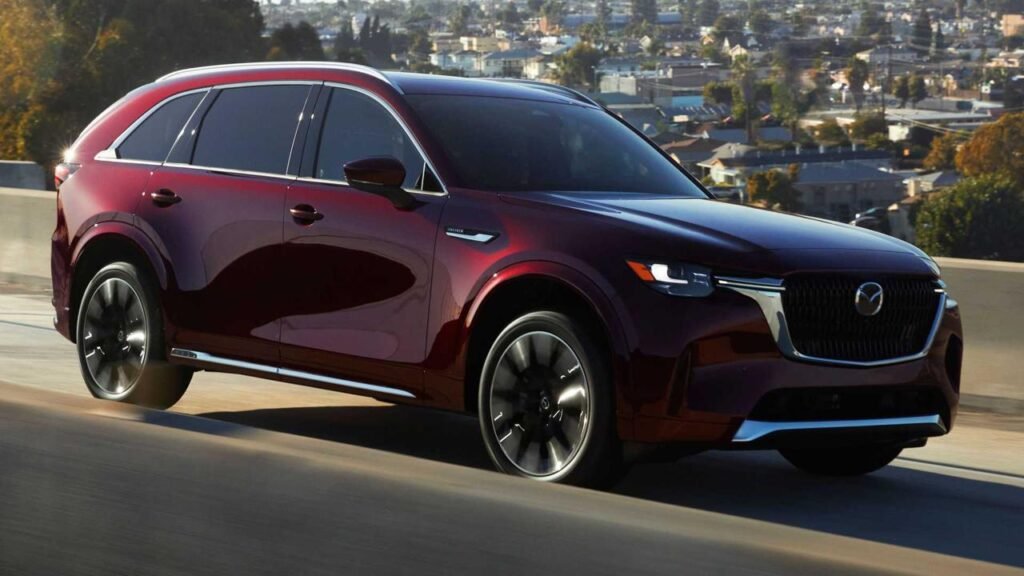
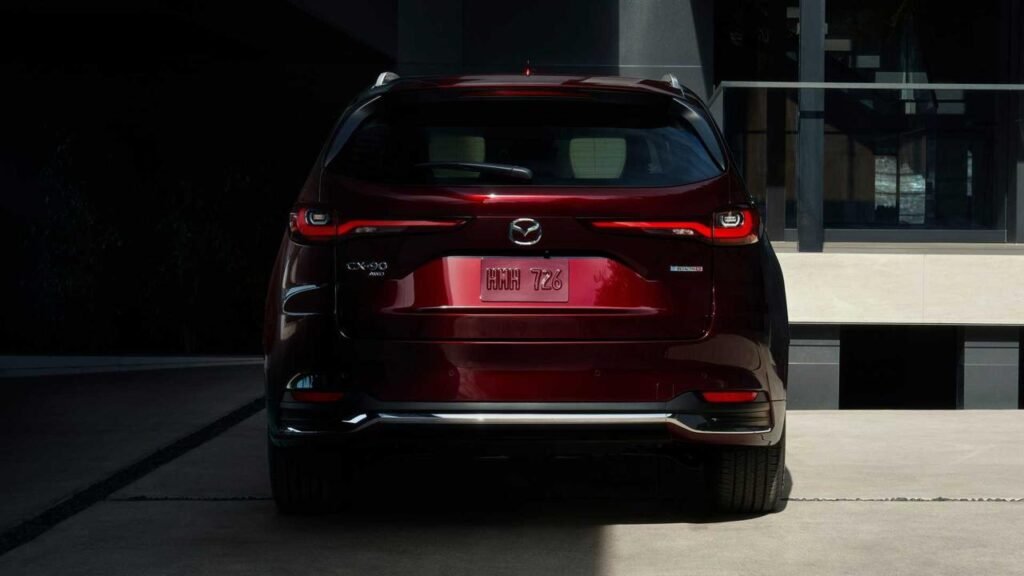
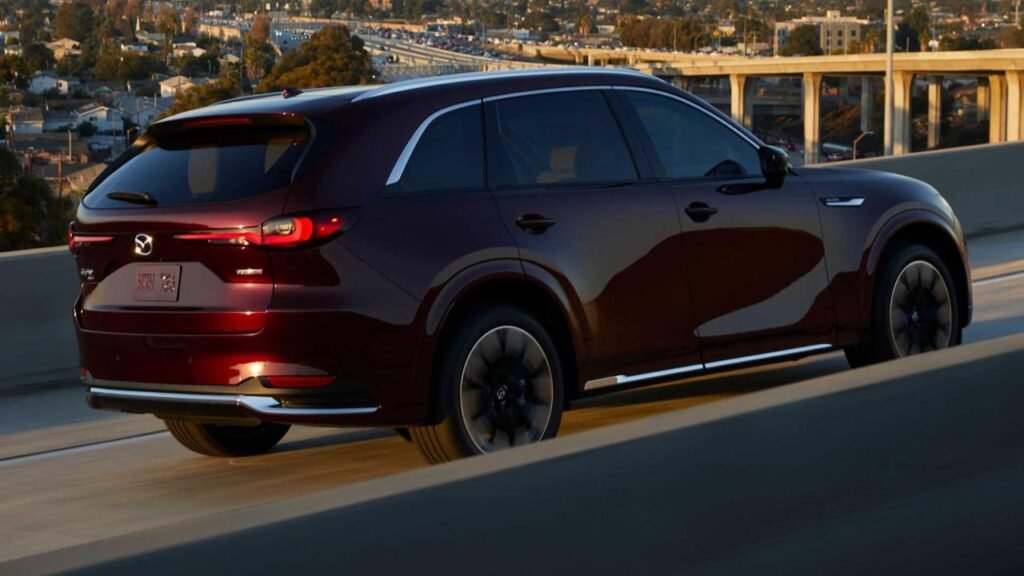
The 2025 Mazda CX-90 isn’t a ground-up redesign. Mazda made targeted updates rather than throwing everything out and starting over. That’s actually the right call here, because the original CX-90 that arrived in 2023 already had strong bones. The exterior is still sharp and clean, with a long hood, a rising beltline, and proportions that look more like a European luxury crossover than a family hauler from a Japanese mass-market brand.
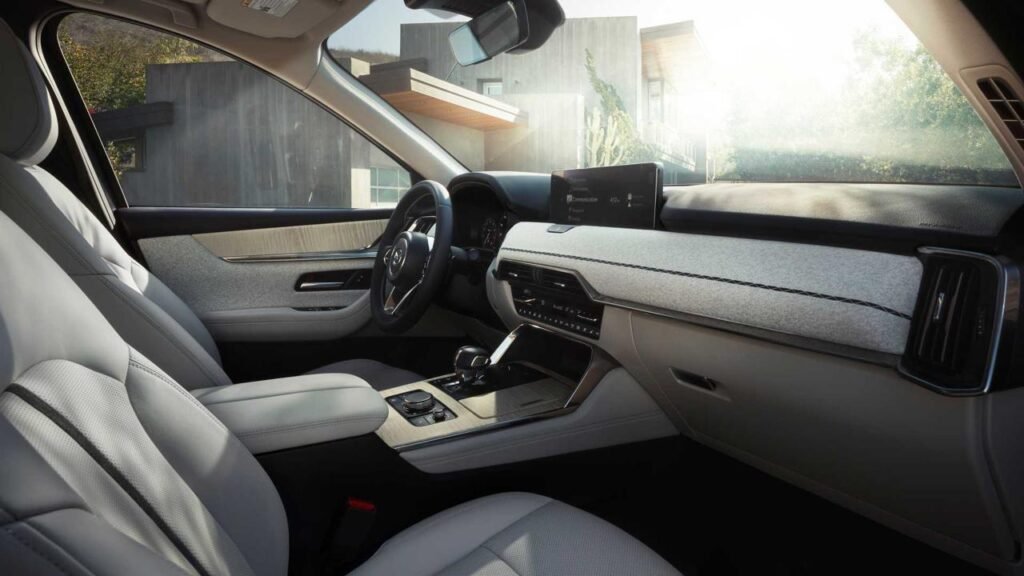
The interior continues to be one of the most talked-about cabins in the segment. Premium materials, a logical layout, and a design philosophy that prioritizes the driver without ignoring everyone else. If you’ve sat in a BMW X5 or an Audi Q7 and thought “I like this, but I don’t want to pay that price,” the CX-90’s interior will feel familiar in the best possible way.
With the refresh, Mazda has made small but meaningful changes. Expect refinements to standard equipment, available trims, and pricing structure. The core character of the vehicle, though, is unchanged: this is a premium-leaning crossover for buyers who care about how a car drives, not just how many USB ports it has.
Three Rows That Actually Work
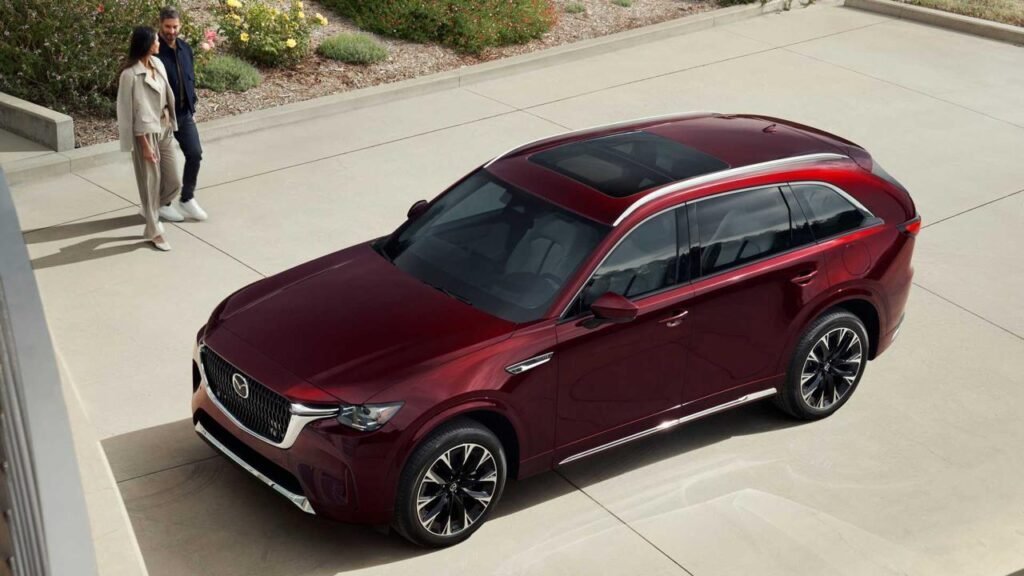
The CX-90 is a three-row crossover, and unlike some vehicles that technically have a third row but treat it as an afterthought, Mazda has made a genuine effort here. The third row isn’t spacious by any measure, and tall adults will find it tight on longer trips, but for kids or shorter passengers it’s perfectly usable. The real story is how well the second row works.
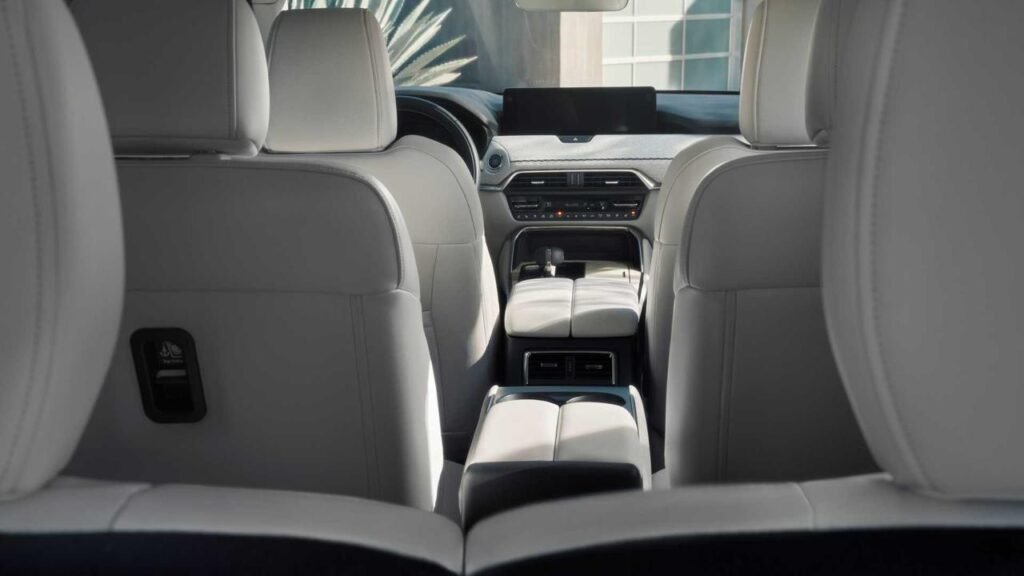
Second-row passengers get a comfortable, well-padded bench or captain’s chairs depending on trim level, with enough legroom to make a long highway drive feel reasonable. This matters more than third-row dimensions for most families, who typically use that back seat for children who don’t particularly care about legroom.
The cabin as a whole is wide enough and tall enough that it doesn’t feel claustrophobic, even with all three rows occupied. Cargo space behind the third row is limited, as it always is with three-row crossovers in this class, but fold that row flat and you have a practical amount of room for grocery runs or weekend gear. Fold both rows and you have a genuinely versatile cargo hauler.
For a large family or anyone who regularly needs to move a group of people, the CX-90 is one of the more thoughtful options in the segment. You’re not just getting seats; you’re getting a vehicle that was clearly designed with real-world use in mind.
Under the Hood: Two Paths, Both Interesting
Mazda offers the CX-90 in two distinct powertrain configurations, and the difference between them is meaningful enough that your choice here should drive your buying decision.
The Inline-Six with Mild Hybrid
The headline powertrain is a turbocharged 3.3-liter inline-six engine. This alone makes the CX-90 unusual. While most crossovers in this price range run four-cylinder engines, Mazda went with a straight-six, a configuration known for smooth power delivery and a pleasant exhaust note. It’s a choice that reflects the brand’s priorities: driving feel and refinement over pure efficiency numbers.
The engine comes in two states of tune. The base configuration produces 280 horsepower, which is enough for comfortable daily driving and highway passing. If you want more confidence on-ramp or when merging in traffic, the higher-output version makes 340 horsepower, achieved with a larger turbocharger. This version pulls with noticeably more urgency and is the one to get if you occasionally load all three rows and need the engine to not struggle under the weight.
Both versions include a mild hybrid system. This isn’t a plug-in hybrid and it doesn’t dramatically change the fuel economy picture, but it adds a small electric motor that helps fill in the torque curve at low engine speeds. In practical terms, this means the car feels more responsive from a stop than the engine displacement alone would suggest. You get that initial push off the line without waiting for the turbo to spool up fully. For city driving or stop-and-go traffic, this makes a real difference in how the car feels day to day.
The mild hybrid system also handles some of the auxiliary electrical load, which helps the engine run more efficiently across a wider range of conditions. Don’t expect plug-in-hybrid level fuel savings, but the system does its job quietly and competently.
The PHEV Version
For buyers who want genuine electric capability, Mazda offers the CX-90 PHEV. This uses a different engine entirely: a 2.5-liter inline-four with plug-in hybrid hardware bolted on. The combined system output is 323 horsepower, which slots between the two inline-six variants in terms of raw power numbers, though the character of the power delivery is different. Electric-heavy acceleration at low speeds, with the gasoline engine taking over at higher loads.
The PHEV makes the most sense for buyers who have a short-to-medium daily commute and can charge at home. Run primarily on electricity for those shorter trips and the fuel costs drop substantially. On longer road trips where you can’t charge, you’re running on the gasoline engine like any other car, and the added weight of the battery pack means efficiency won’t be exceptional in that scenario.
If you’re doing the math on whether the PHEV makes financial sense, the answer depends heavily on your driving patterns and local electricity costs. For urban drivers with home charging, the numbers tend to work out. For highway-heavy drivers without easy charging access, the inline-six options are probably the more practical choice.
How It Drives
Mazda has always positioned itself as a driver’s brand, and the CX-90 makes that case more credibly than most three-row crossovers have any business doing. The steering has a level of feel and precision that’s uncommon in this class. It’s not sporty in the way a sports car is sporty, but it’s engaging enough that you actually notice what the front wheels are doing, which is not something you can say about most family-hauler crossovers.
The suspension is tuned for composed highway behavior rather than all-out comfort. It absorbs road imperfections reasonably well, but it’s not as soft as something like a Kia Telluride. If you prioritize a floaty, pillowy ride, the CX-90 isn’t quite there. If you prefer a crossover that feels planted and connected to the road, it’s one of the better options in the segment.
With all-wheel drive (available across the lineup), the car handles wet roads and light snow with confidence. This is a crossover, not an off-road vehicle, but for the kind of mixed conditions that most families actually encounter, it’s well-suited.
The Price Has Gone Up
The starting price is now $40,000, which represents an increase from where the original CX-90 came in. This is going to be the sticking point for some buyers, and it’s worth addressing directly.
At $40,000, the CX-90 is no longer a budget option among three-row crossovers. It’s sitting in territory occupied by the Hyundai Palisade, the Kia Telluride, the Honda Pilot, and the Subaru Ascent, as well as the lower rungs of proper luxury three-row vehicles like the Genesis GV80 and the BMW X7.
Against the mainstream competition, the CX-90 holds its own. It’s more driver-focused than the Palisade or Pilot, and it has an interior that feels a step above both in material quality. The Telluride is arguably more practical and more value-focused, but it’s not trying to be a near-luxury vehicle. The CX-90 is, and for buyers who want something that leans in that direction without the full luxury-brand price premium, it still makes a compelling argument.
Against the lower end of true luxury, the CX-90 is less expensive and gives up some features and brand prestige. Whether that trade-off is worth it depends on how much the badge on the hood matters to you and whether the Mazda-exclusive content is enough to justify the price of admission.
Trim Levels and How to Pick
Mazda typically structures the CX-90 lineup with a clear entry point and progressively more content as you move up. The base trim covers the fundamentals well: the 10.25-inch infotainment screen with wireless Apple CarPlay and Android Auto is standard, as is a comprehensive suite of active safety features including automatic emergency braking, lane-keeping assist, and adaptive cruise control. Mazda’s safety technology is standard equipment rather than something you have to pay extra to unlock, which is how it should be.
Moving up the trim ladder adds features like a larger infotainment display, upgraded audio (Bose sound system on higher trims), premium leather upholstery, a head-up display, panoramic sunroof, and ventilated front seats. The top trims also include a driver monitoring system and additional parking assistance technology.
For most buyers, the middle of the lineup represents the best value. The base trim leaves out some comfort features that become genuinely useful in daily driving, while the top-tier trim can push the price into territory where a lower-spec luxury alternative starts to look competitive.
If you’re interested in the 340-horsepower engine, that’s worth prioritizing in your configuration, since the extra output is meaningful and the price difference between the two engine tunes is not enormous when spread over the life of a car loan.
Who Should Buy This?
The CX-90 is most clearly suited to families of four to six people who want a vehicle that doesn’t make them feel like they’ve completely surrendered to practicality. It has genuine driving character. The interior looks and feels genuinely premium. Three rows of seats mean it can handle bigger groups when needed.
It’s a particularly good fit if you’ve been driving a performance-oriented sedan or smaller crossover and are reluctantly moving up in size because your family has grown. The CX-90 doesn’t feel like a compromise the way many family crossovers do. You lose some of the responsiveness and compactness of a smaller vehicle, but you gain it in a way that acknowledges what you’re giving up and tries to minimize that loss.
It’s a less obvious fit if you’re primarily concerned with cargo capacity, maximum third-row space, or fuel economy. A full-size SUV or a more practically-oriented midsize crossover like the Telluride might serve you better in those areas.
Competitors to Consider
Before writing a check, it’s worth spending some time with the competition.
Kia Telluride: Lower starting price, more generous interior space, and enormous value-per-dollar. Less refined driving experience and a more conservative interior aesthetic. If practicality and budget are your priorities, this is the comparison that will hurt the CX-90 most.
Hyundai Palisade: Similar positioning to the Telluride with a slightly more upmarket interior. Recent refreshes have kept it competitive. Doesn’t drive as well as the CX-90, but is more comfortable for long hauls.
Honda Pilot: Highly practical, proven reliability, and a genuinely impressive third row for this class. Less character-filled driving experience, interior doesn’t reach the same quality level as the Mazda.
Genesis GV80: Starts around a similar price to a loaded CX-90, offers proper luxury brand quality and a five-star interior. Doesn’t have a third row, though the GV80 Coupe and a potential three-row addition are worth watching.
BMW X5: The aspirational comparison. Significantly more expensive, better badge, comparable driving engagement. Different buyer profile.
Final Thoughts
The Mazda CX-90 is more expensive than it used to be, and that’s going to narrow its audience. But what it offers in return is a genuinely distinct product in a segment full of competent but forgettable crossovers. A turbocharged straight-six with a mild hybrid system is an unusual and engaging choice. Three usable rows of seats cover the family-hauler brief. The interior quality punches above the Mazda badge’s historical positioning. And the driving experience is one of the few in this class that doesn’t make you actively miss your previous car.
If $40,000 is your budget and you want a three-row crossover that you’ll actually enjoy driving to work every day, the CX-90 deserves serious consideration. Just make sure you drive it back to back with the Telluride, because that competition is real and the value argument cuts the other direction just as hard.
Pricing starts at $40,000. Engine options include a 3.3L turbocharged inline-six in 280hp or 340hp configurations with mild hybrid, or a 2.5L inline-four PHEV producing 323hp combined. Available in three-row, all-wheel-drive configuration across multiple trim levels.

