
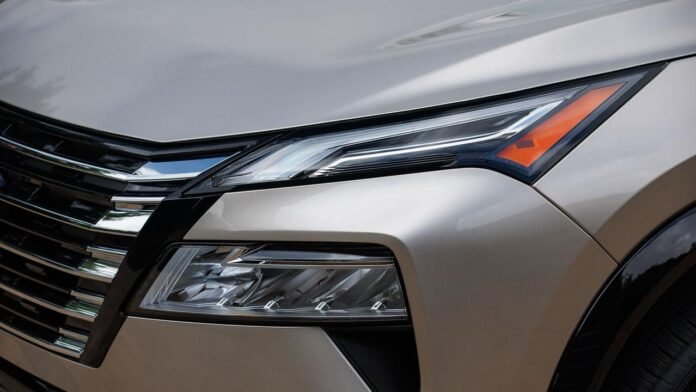

The Nissan Rogue has been one of America’s best-selling compact SUVs for years. It sells well because it does the job competently — reasonable space, decent fuel economy, a comfortable ride, and a price that doesn’t require a second mortgage. Most buyers pick a mid-range trim and call it a day.
Then there’s the Platinum. At $45,000, it sits roughly $10,000 above where many Rogue buyers start, and Nissan has loaded it with leather, walnut trim, technology subscriptions, and a handful of other additions to justify that gap. The mechanicals stay exactly the same. The engine is the same 1.5-liter turbo. The CVT is the same CVT. The all-wheel drive system is unchanged.
So the question is simple and worth answering directly: is $10,000 worth of interior upgrades and technology features actually worth $10,000 in a compact SUV that already has strong competition at lower price points?
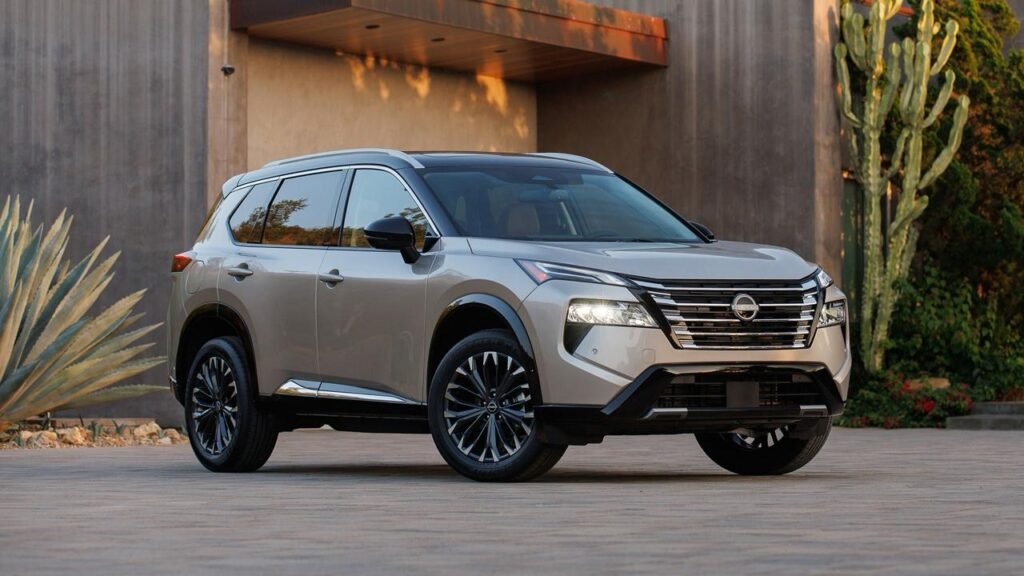
What the Nissan Rogue Platinum AWD Actually Is
Before getting into the trim-specific details, it helps to understand what you’re buying at a base level.
The Nissan Rogue is a five-seat compact crossover SUV competing in one of the most contested segments in the American market. Its main rivals are the Toyota RAV4, Honda CR-V, Mazda CX-5, Subaru Forester, and Hyundai Tucson — all competent vehicles with their own strengths and loyal buyer bases.
The Rogue’s position in that group has always been as a comfortable, family-friendly option that prioritizes ride quality and interior practicality over driving dynamics. It’s not the most fun to drive in the segment. It’s not the most powerful. But it’s comfortable, spacious enough for a family, and has a well-organized cabin.
The Platinum AWD takes all of that and adds the premium layer on top. Think of it as the same Rogue, dressed considerably better.
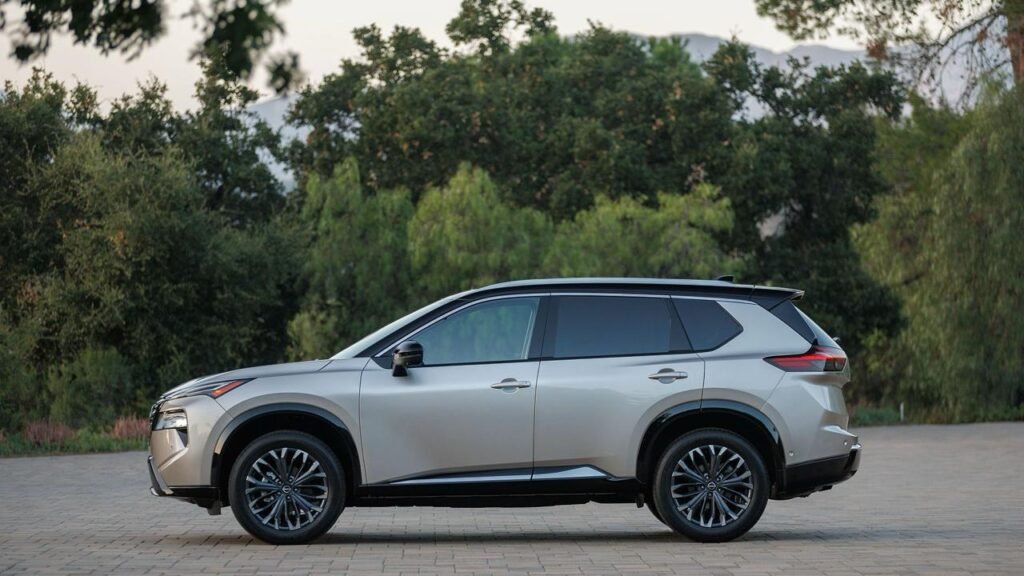
The Powertrain: Nothing Has Changed, and That’s a Deliberate Choice
The engine under the hood is a 1.5-liter turbocharged three-cylinder making 201 horsepower. It’s connected to a continuously variable transmission (CVT) and, in this configuration, all-wheel drive.
201 horsepower is adequate for a compact SUV. It’s not class-leading — the Honda CR-V Hybrid makes more, the Mazda CX-5 turbo makes significantly more — but it’s enough for comfortable daily driving, highway merging, and light hauling. Nobody buying a Rogue Platinum is expecting sports car performance, and Nissan isn’t pretending to offer it.
The CVT has improved over the years but remains a source of complaints among drivers who prefer the feel of a traditional automatic. Under hard acceleration, it can feel like the engine is working harder than the car is actually moving, which creates an odd sensation. In normal driving — steady speeds, gentle acceleration — it’s smooth and unremarkable, which is what a CVT should be.
All-wheel drive on the Rogue is an on-demand system that primarily sends power to the front wheels and engages the rear axle when slip is detected or when specific drive modes are selected. It handles snow, light mud, and wet roads well. It’s not a system built for serious off-road use, and the Rogue Platinum makes no pretense of being an off-road vehicle. It’s a family SUV that can handle winter conditions competently, which is exactly what most buyers in this segment need.
Fuel economy is reasonable. Real-world figures will vary, but the turbocharged engine with AWD gets you into the high 20s mpg combined under typical conditions, which is competitive for the segment.
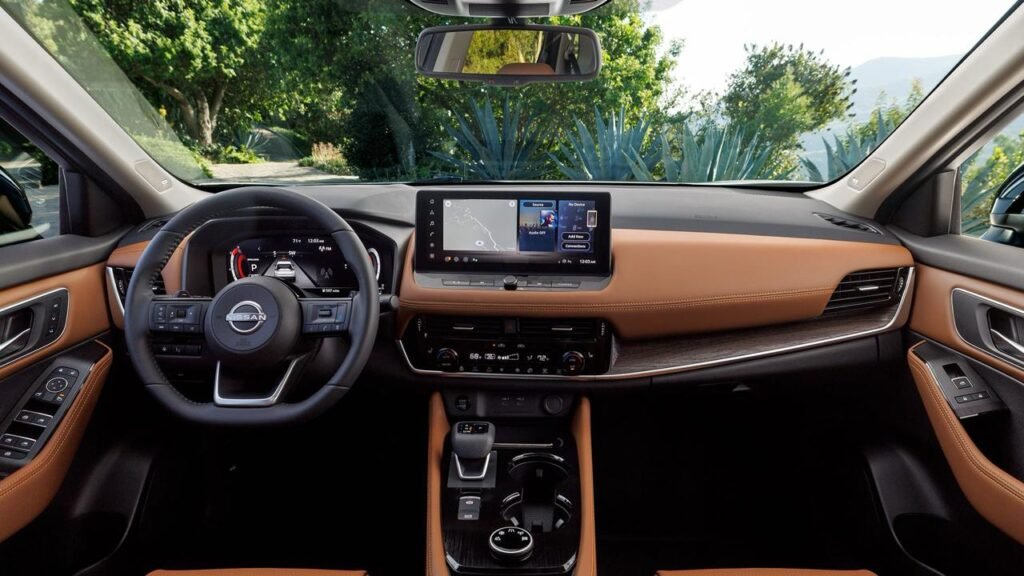
The Interior: Where the $10,000 Goes
This is the most important part of the Platinum story, because the interior is where nearly all of the premium investment is visible.
Leather Seating
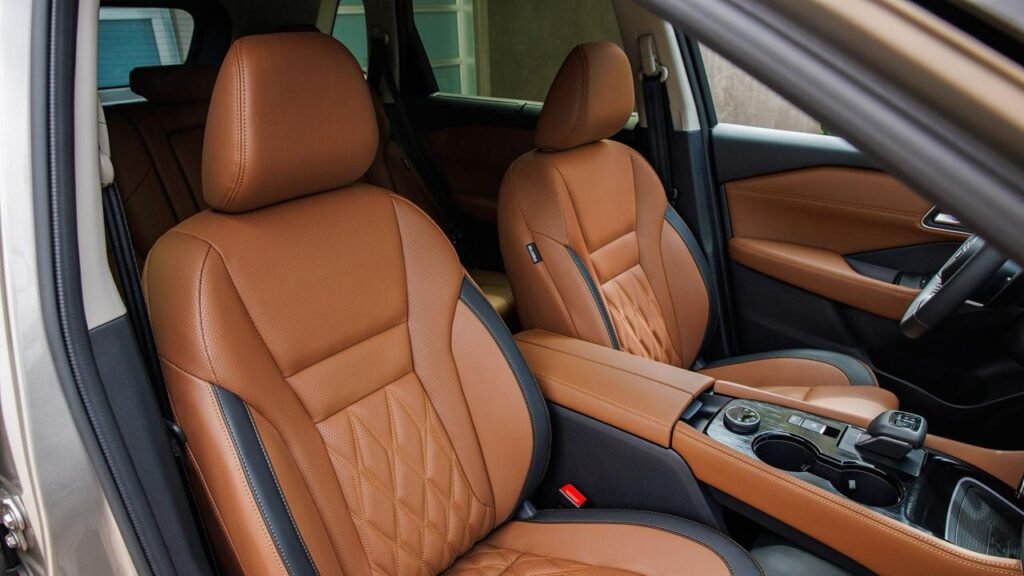
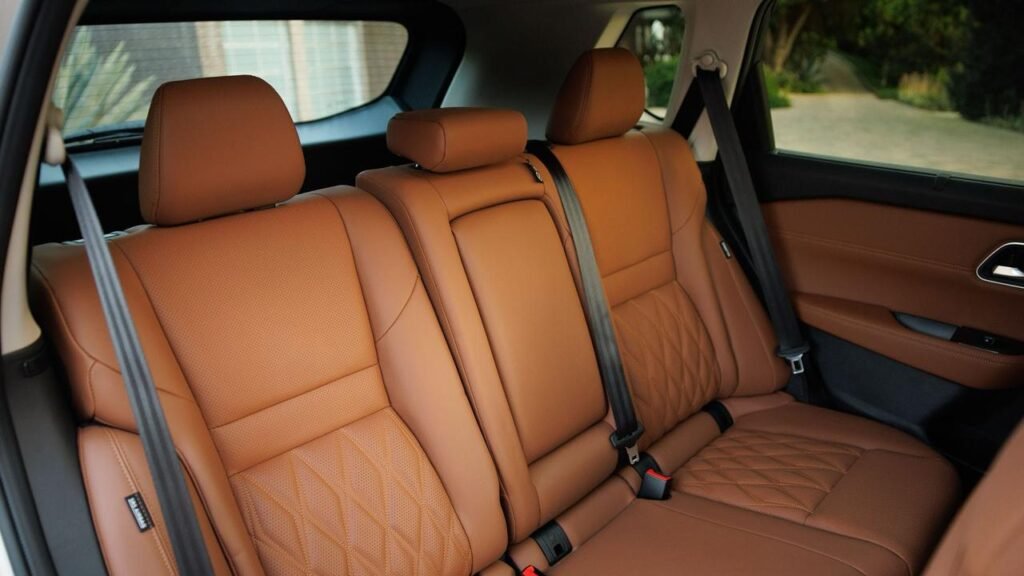
The Platinum gets genuine leather upholstery throughout. It’s soft, it’s well-stitched, and it feels noticeably more premium than the fabric and leatherette options lower in the Rogue lineup. The front seats are heated and ventilated — ventilated seats being one of those features that sounds like a luxury until you’ve sat in a black interior in summer and immediately understood why it matters.
Rear passengers also get heated seats, which is thoughtful for a family vehicle where the back row isn’t an afterthought.
The leather quality is good for the segment and price point. It won’t be mistaken for what you’d find in a BMW or Mercedes, but compared to the soft-touch plastics and woven fabrics lower in the Rogue range, the upgrade is immediately apparent and appreciated.
Walnut Trim
The walnut wood trim inserts throughout the cabin are a deliberate step toward a more traditional luxury aesthetic. They appear on the dashboard, door panels, and center console area, providing visual warmth that contrasts well with the leather and darker interior elements.
This kind of trim is polarizing. Some buyers find real wood inserts elegant and appreciate the natural grain variation. Others would prefer a cleaner, more modern interior with less visible ornamentation. Nissan’s execution here is tasteful rather than overwrought — the walnut accents are present without dominating every surface — but your reaction to it is largely a matter of personal preference.
What can be said objectively is that the combination of leather and walnut brings the Rogue Platinum’s interior closer to the aesthetic of entry-level luxury SUVs than most competitors at this price point. A CX-5 Turbo Premium Plus, a CR-V Sport Touring — neither looks or feels quite like this inside. For buyers who spend significant time in their vehicle and care about the environment they’re sitting in, that distinction matters.
Space and Practicality
The cabin dimensions haven’t changed between Rogue trims. Front headroom and legroom are generous. Rear seat space is sufficient for adults on longer trips, though the sloping roofline cuts into rear headroom slightly compared to boxier competitors.
Cargo space behind the rear seats is competitive in the segment. The load floor is low, making loading easier, and the rear seats fold to create a reasonably flat extended cargo area. There’s also underfloor storage in some configurations.
The Platinum doesn’t sacrifice any of this practicality for its premium additions, which is the right way to do it. You get the upgraded materials without giving up the functional space that justifies buying an SUV over a sedan.
Technology and Multimedia: Subscriptions Included
The technology package on the Rogue Platinum goes further than lower trims in both hardware and connected services.
The Infotainment System
A large central touchscreen running Nissan’s current multimedia interface handles navigation, media, phone connectivity, and vehicle settings. The system is responsive and clearly laid out. Wireless Apple CarPlay and Android Auto integration means most buyers will spend the majority of their screen-interaction time in familiar phone-based interfaces anyway.
The audio system is upgraded on the Platinum. It’s a Bose-branded setup with speakers positioned throughout the cabin, and the difference in sound quality compared to the standard system is audible — fuller bass, clearer highs, better spatial presence.
Driver Assistance Subscriptions
The Platinum includes Nissan’s ProPilot Assist system, which combines adaptive cruise control with lane centering to handle more of the driving workload on highways. It’s a capable system within its limits — steady-speed highways, gentle curves — and requires the driver to remain attentive with hands on the wheel. It’s not designed for complete autonomy, and it communicates clearly when conditions fall outside what it can manage.
There are subscription-based connected services bundled with the Platinum, covering remote start, vehicle health monitoring, and emergency services. The trial periods for some of these services are included with purchase, but ongoing access requires subscription fees after the trial expires. This is standard practice across the industry and worth understanding before purchase — the technology doesn’t disappear after the trial, but some connected features require continued payment to maintain.
A 12.3-inch digital instrument cluster is standard on the Platinum, replacing the partial analog gauge setup found on lower trims. It’s configurable, clear, and shows navigation guidance, driver assistance status, and vehicle data in a format that’s easy to read on the move.
Surround View Monitor
The Platinum includes a surround-view camera system that creates a virtual overhead view of the vehicle using multiple cameras. For parking in tight spots, maneuvering in crowded lots, or gauging clearance on narrow lanes, this is one of those features that sounds marginal until you use it regularly and then feel slightly anxious without it.
All-Wheel Drive in Practice
The Rogue’s AWD system is called Intelligent AWD by Nissan, and it earns that description in everyday conditions. It’s smooth in its engagement, predictable in how it handles mixed-surface driving, and effective in the winter and wet weather scenarios where most buyers will actually need it.
There’s a dedicated snow mode that adjusts throttle response and AWD engagement for low-traction surfaces. Off-road isn’t a dedicated mode here — nor should it be, given what this vehicle is — but unpaved parking areas, gravel driveways, and gentle dirt roads are within its comfort zone.
What AWD adds to a Rogue Platinum most importantly is peace of mind for buyers in northern states or higher elevation areas. The front-wheel-drive version is fine for mild climates, but the Platinum AWD is the version to specify if winter weather is a regular part of your life.
The $45,000 Question: How Does It Compare?
At $45,000, the Rogue Platinum is bumping against territory where compact SUV buyers have some serious alternative options. This price deserves honest scrutiny.
Mazda CX-5 Turbo Premium Plus: Arguably the best-driving compact SUV in the mainstream segment, with genuine luxury interior quality, a more satisfying powertrain, and excellent build quality. Prices overlap with the Rogue Platinum. If driving dynamics and interior refinement are your priority, the CX-5 is the one to cross-shop most seriously.
Honda CR-V Sport Touring Hybrid: Comes in near or at the same price range, offers a more efficient hybrid powertrain, excellent cargo space, and Honda’s long-standing reputation for reliability. The interior isn’t as visually warm as the Rogue Platinum’s walnut-and-leather combination, but the practical case for the CR-V is strong.
Toyota RAV4 Limited AWD: The RAV4 Limited brings Toyota’s reliability reputation with a well-equipped interior and proven AWD system. Pricing is competitive with the Rogue Platinum, and the Toyota dealer network and resale value record are difficult to argue against.
Hyundai Tucson Limited AWD: Hyundai’s interior design and technology integration have improved substantially in recent years. The Tucson Limited competes directly at this price point with a more modern aesthetic inside and outside.
Subaru Outback Touring XT: A different shape — more wagon-like — but at similar prices you’re getting Subaru’s standard symmetrical AWD, a turbocharged engine, and one of the best driver visibility records in the segment for buyers who value that.
The Rogue Platinum’s strongest argument against this competition is the interior experience — specifically the leather quality and walnut trim combination, which genuinely feels more premium than most of these rivals manage at equivalent prices. Its weakness is the powertrain, which is the least exciting in the comparison group.
Ride Quality and Noise Levels
One of the Rogue’s traditional strengths has been ride comfort, and the Platinum doesn’t change the suspension setup in any meaningful way. Over broken pavement, expansion joints, and the general indignities of American roads, the Rogue absorbs impacts in a way that suggests the suspension was tuned by people who wanted passengers to arrive comfortable rather than alert.
Road noise intrusion is reasonable but not class-best. The CX-5 and RAV4 both manage wind noise better at highway speeds. The Bose audio system on the Platinum helps mask road noise during normal listening, but in a quiet cabin with the radio off, tire noise from coarser pavement surfaces is present.
Who the Rogue Platinum AWD Is Actually For
Compact SUV buyers who care primarily about the interior experience and spend a lot of time in their vehicle will find the Rogue Platinum genuinely compelling. If you’re someone who notices the difference between good leather and mediocre fabric, who appreciates visual warmth in a cabin, and who wants connected technology and driver assistance without climbing into luxury brand pricing, the Platinum makes its case clearly.
It’s less compelling for buyers who prioritize driving dynamics, fuel economy above all else, or maximum cargo utility. Those buyers will find better options at or below this price point.
The $10,000 premium over entry Rogue trims is real money, and whether it’s justified depends entirely on how much the interior upgrade matters to you versus how that money could be spent elsewhere — either as a lower monthly payment or on a different vehicle entirely.
Final Thoughts
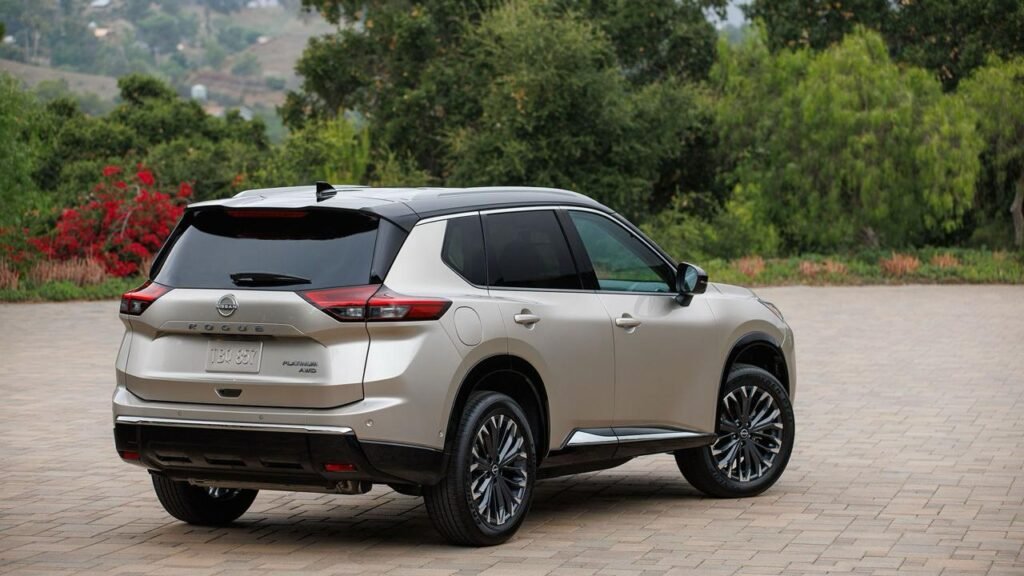
The Nissan Rogue Platinum AWD is the best Rogue you can buy, and it’s a genuinely nice place to spend time. The leather is good, the walnut trim is tasteful, the technology works well, and the AWD system handles winter conditions confidently.
None of that changes the fact that the powertrain is the same across the entire Rogue lineup, and at $45,000, you’re spending near-luxury money on a very well-dressed mainstream compact SUV. The competition is strong and worth your attention before signing anything.
If the interior quality is the deciding factor for you — and for many buyers it legitimately is — the Rogue Platinum earns its price. If you’re weighing the package more broadly against what else $45,000 can buy in the compact SUV segment, spend time in the CX-5 Turbo and the RAV4 Limited before making up your mind.
The Rogue Platinum is a good vehicle. Whether it’s the right vehicle for $45,000 is a question only you can answer, and the answer depends more on your priorities than on anything Nissan does right or wrong here.

