

The small SUV market is one of the most competitive spaces in the car industry right now. Every brand has an entry, every entry is competent, and the differences between them come down to styling choices, value propositions, and small quality gaps that buyers notice after six months of ownership.
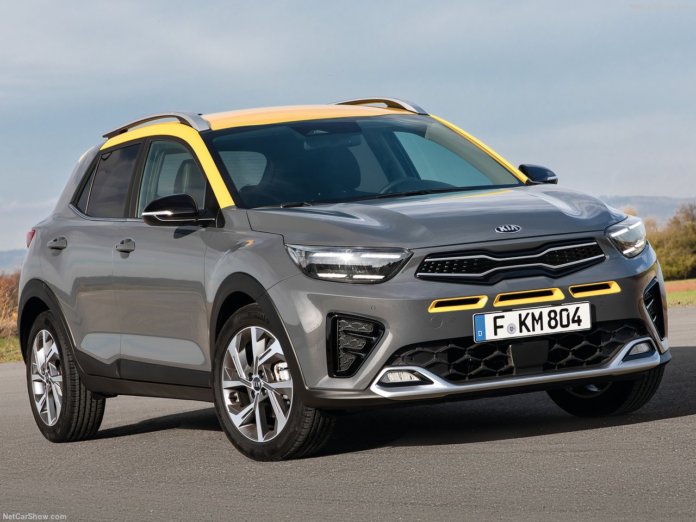
The Kia Stonic GT Line is Kia’s attempt to make its smallest SUV feel a bit more exciting. New bumper, brighter colors, some GT Line badging — the kind of changes that take a sensible urban runabout and give it a more expressive character. The engine is a 1.0-liter three-cylinder mild hybrid with 99 horsepower, available with a manual or automatic transmission, and the whole thing comes in at around $30,000.
That’s the overview. Now let’s work through whether it makes sense as a purchase.
What Is the Kia Stonic?
Before getting into the GT Line specifics, it helps to understand what the Stonic is as a vehicle and where it fits in Kia’s lineup.
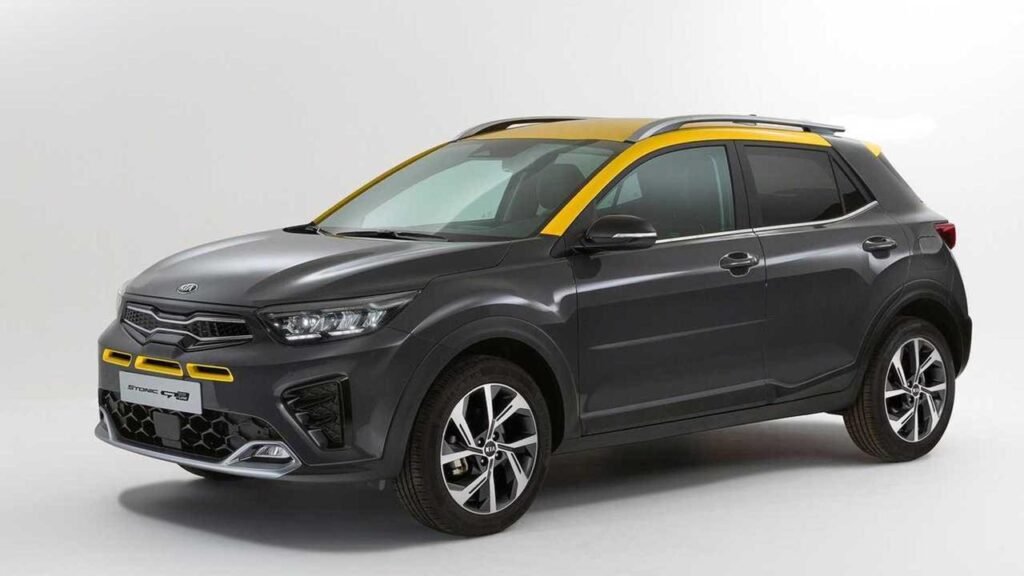
The Stonic is Kia’s entry-level SUV, sitting below the Sportage and the Niro. It’s built on a platform shared with the Hyundai Bayon and Hyundai i20, which tells you something about the size and character of the car — this is urban-focused, compact, and oriented around city driving rather than motorway cruising or family road trips.
The Stonic targets first-time car buyers, city dwellers who want the elevated seating position of an SUV without the bulk, and buyers who want something more stylish than a conventional supermini without paying compact SUV prices. It’s a niche that has grown considerably over the past decade, and competition in it is genuine — the Ford Puma, Volkswagen T-Cross, SEAT Arona, Hyundai Bayon, Renault Captur, and Opel Mokka are all fighting for the same buyers.
In that context, the GT Line trim is Kia’s way of giving the Stonic a more distinctive identity within its own lineup and against those rivals.
What the GT Line Actually Changes
The GT Line trim is a styling and equipment package rather than a performance upgrade. Let’s be clear about that upfront, because the GT badge can create expectations that the hardware doesn’t back up.
The New Bumper
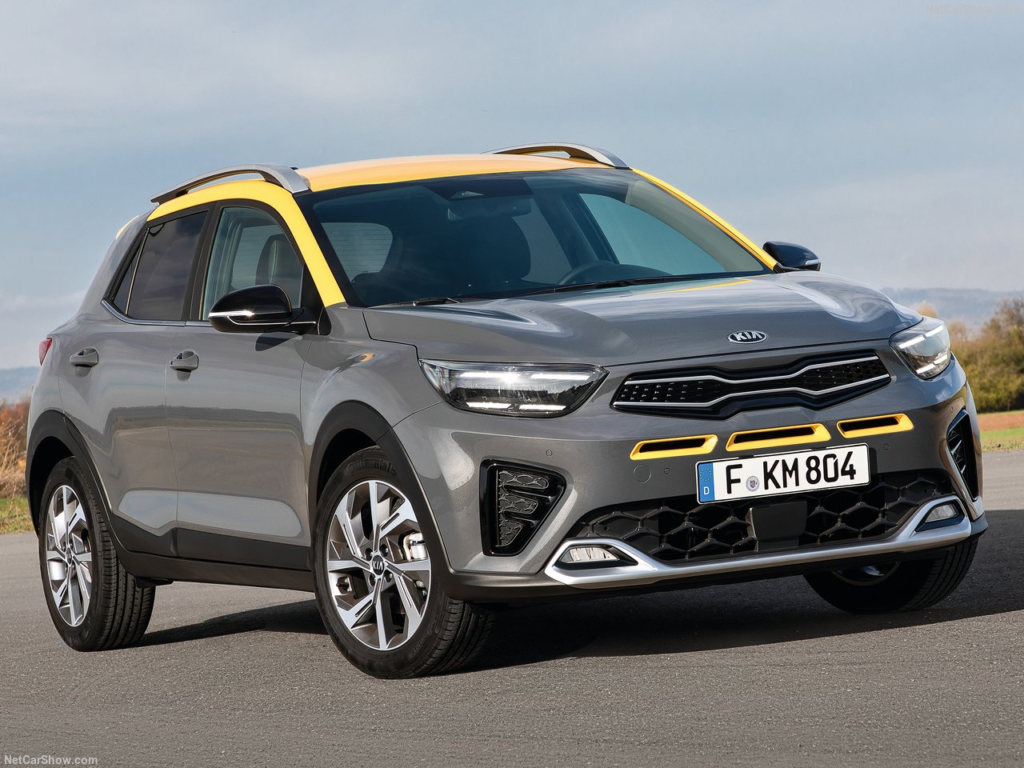
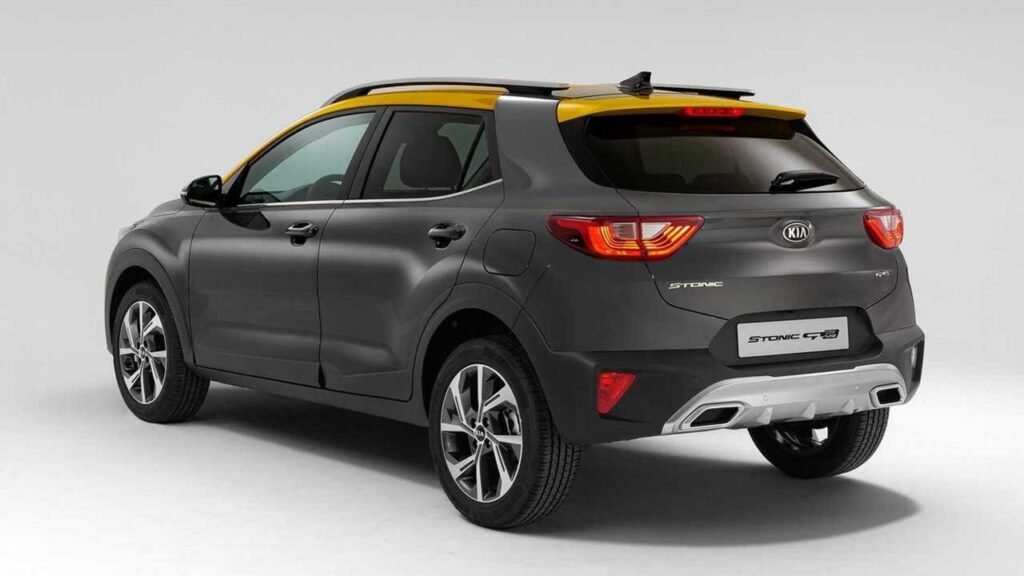
The front bumper on the GT Line is different from what you get on lower trims. It’s more aggressive in its design language — larger lower intakes, sharper edges, and a shape that reads as sportier than the standard Stonic’s more conservative face. The rear bumper also gets a different design to match.
These changes do work visually. The Stonic GT Line looks more purposeful from the front than the base model, and in a segment where buyers are making purchase decisions partly on the basis of how the car looks parked outside their apartment, that matters. Styling is not a superficial consideration at this price point — it’s a genuine part of the product.
The bumper changes don’t affect aerodynamics meaningfully, don’t add any cooling for performance hardware (because there’s no performance hardware to cool), and don’t change the driving experience in any way. They make the car look more exciting. That’s the job they’re there to do, and they do it.
The Colors
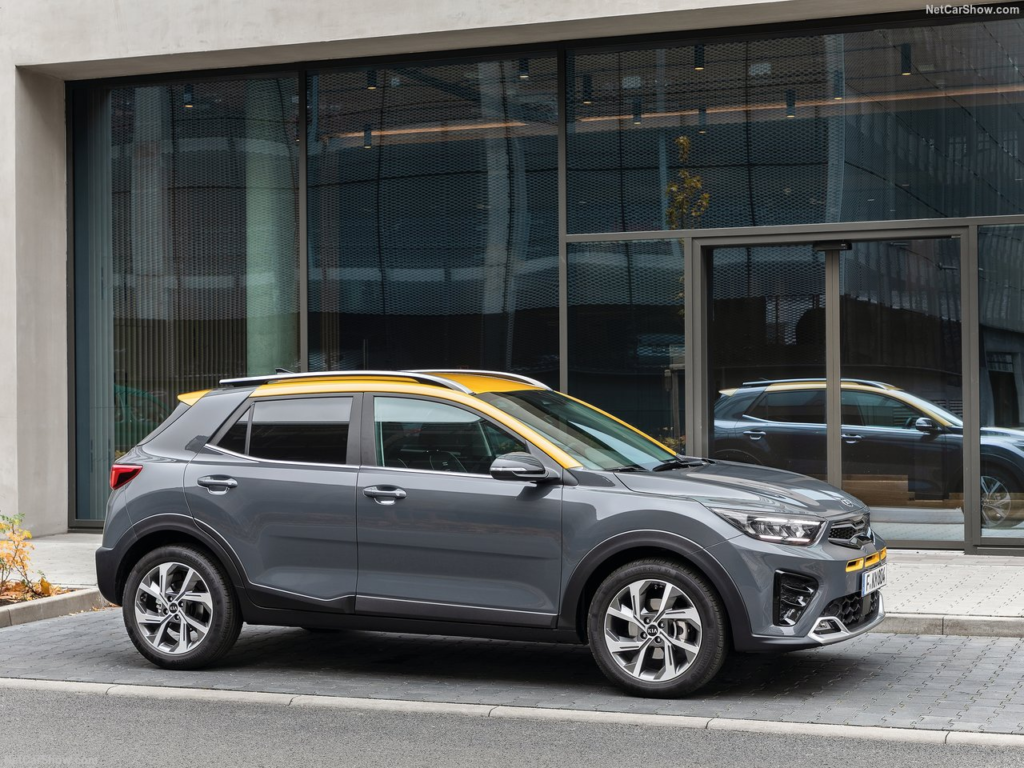
The GT Line comes with access to brighter, more expressive color options that aren’t available across the full Stonic range. These include more vivid exterior shades that suit the sportier visual identity of the trim.
Kia has long understood that color plays an outsized role in small car purchases. Small SUVs in subdued silvers and grays tend to disappear into parking lots. The same vehicle in a bright orange, a vivid blue, or a striking green becomes something people notice and talk about. The GT Line’s color options lean into this — the trims are designed to be seen, and the available colors support that.
Two-tone roof options are also available on the GT Line, which has become a popular choice in the segment for adding visual interest without requiring a full exterior color change.
Interior GT Line Details
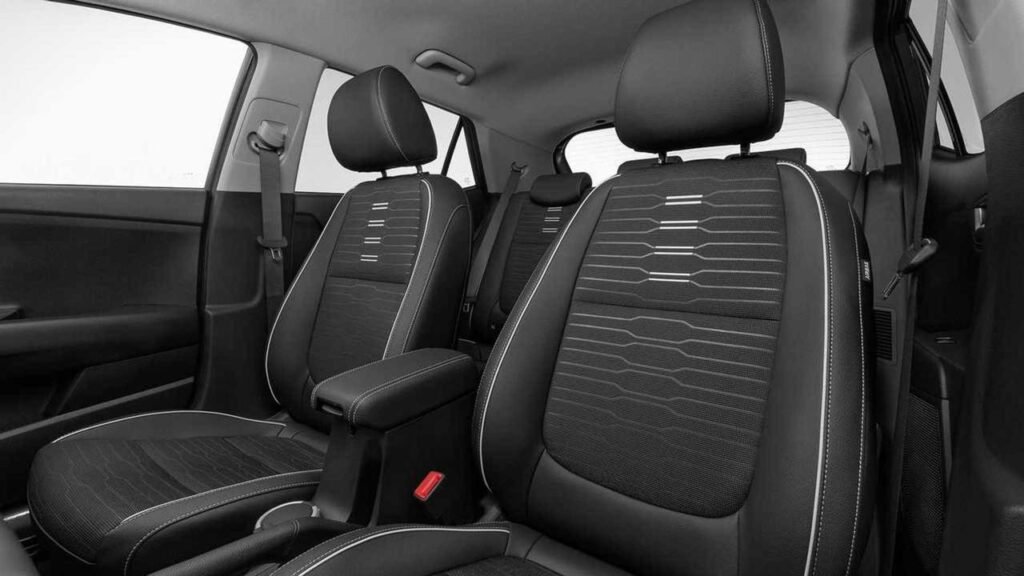
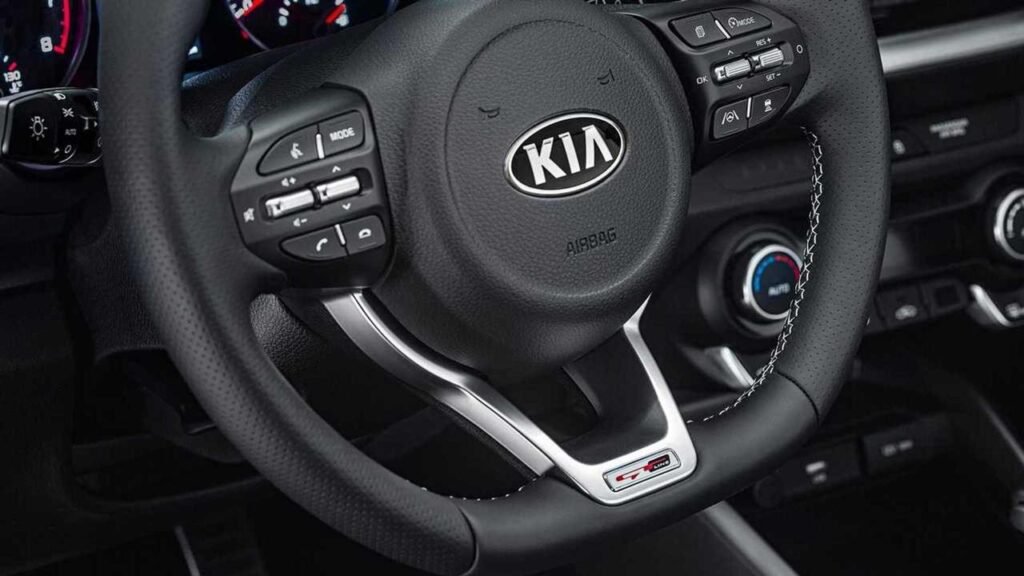
Inside, the GT Line gets specific trim elements that distinguish it from lower Stonic variants. These include sport-style front seats with bolstering that’s more pronounced than standard, GT Line badging on the seats and steering wheel, and a generally darker, more driver-focused aesthetic.
The seats in particular are worth mentioning because they’re where you spend all of your time in the car. The GT Line’s front seats offer better lateral support than what you’ll find lower in the range — not sports car contouring, but enough to make the car feel more engaged during spirited driving.
Sportier pedal covers, specific door trim inserts, and a flat-bottomed steering wheel (depending on market specification) round out the interior differentiation. None of these changes alter how the car functions mechanically, but they contribute to a cabin that feels more intentional and less like a purely practical appliance.
The Powertrain: 99 HP From a 1.0-Liter Mild Hybrid
This is a one-liter three-cylinder turbocharged engine with a 48-volt mild hybrid system. Output is 99 horsepower and around 172 Nm of torque.
It’s worth understanding what a mild hybrid actually means before overstating what this system does. A mild hybrid uses a small battery and electric motor-generator to assist the combustion engine — recovering energy during braking and coasting, then using that energy to reduce load on the engine during acceleration. It cannot drive the car on electricity alone. It doesn’t plug in. It doesn’t dramatically change the car’s character.
What the mild hybrid system does is improve fuel economy slightly compared to a non-hybrid version of the same engine, smooth out low-speed response, and reduce engine-off coasting hesitation. In real-world terms, the gains are meaningful enough to show up in fuel bills over time, but you won’t notice them in the driving experience the way you would in a full hybrid.
The 99 horsepower figure is what it is. In a city context, it’s perfectly adequate. You can pull away from traffic lights confidently, merge onto urban ring roads without drama, and keep up with the general pace of city traffic without working the engine hard. The turbocharger provides enough low-end torque that you don’t need to rev the engine hard for normal acceleration.
On the motorway, the picture is different. Sustained higher speeds, especially above 110 km/h, push the engine closer to its limits. Overtaking on A-roads at speed requires planning and a gear change. It’s not stressful, but you’re aware of the performance ceiling more often than in a more powerful car.
For buyers who drive primarily in urban areas — which is exactly who the Stonic is aimed at — 99 horsepower is sufficient and comfortable. For buyers who regularly cover long motorway distances, this engine will feel stretched, and they should probably be looking at something with more displacement.
Manual or Automatic: Which to Choose
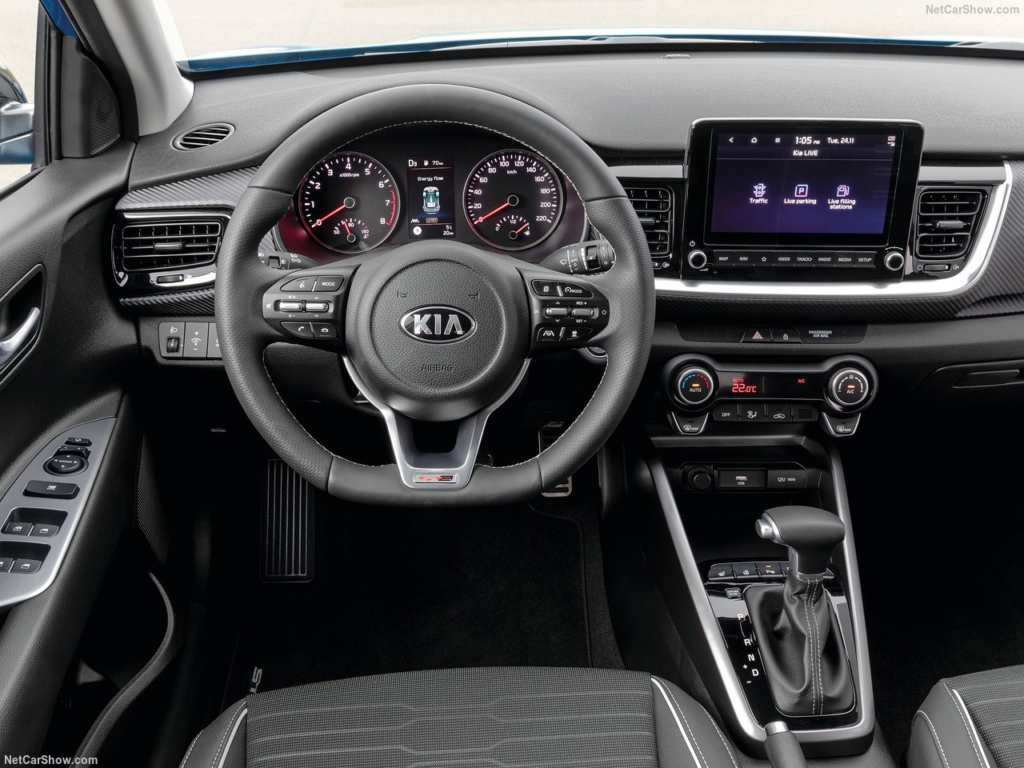
The Stonic GT Line is available with both a six-speed manual transmission and an automatic option, which is a dual-clutch unit in most markets.
The manual is the more engaging choice if you actually enjoy driving. It’s a slick, well-spaced gearbox that makes the small engine feel more involved and gives you more control over how the power is delivered. In city traffic, frequent shifting can become tiresome on longer commutes, but the manual is the configuration that makes the GT Line feel most like a driver’s car.
The automatic suits buyers who spend more time in dense urban traffic, who commute regularly in stop-and-go conditions, or who simply prefer not to operate a clutch. The dual-clutch setup is responsive at normal speeds, though like most dual-clutch automatics it can feel slightly hesitant at very low speeds — creeping in parking lots or slow-moving queues — where the clutch engagement isn’t at its smoothest.
If the primary use case is city commuting with frequent stops, the automatic is the more relaxed choice. If you cover more varied roads and want the car to feel more involved, the manual is worth the trade-off.
There’s no meaningful fuel economy difference significant enough to drive the decision either way. Choose on the basis of how you actually drive.
Ride, Handling, and Real-World Dynamics
The Stonic GT Line sits on a relatively soft suspension setup tuned for comfort over precision. This is the right call for the vehicle’s intended use. Urban roads are uneven, speed bumps are frequent, and small cars don’t have the wheelbase length to absorb impacts the way larger vehicles do. A softer ride makes daily life more comfortable.
The trade-off is that the Stonic doesn’t feel particularly sharp in corners. It has more body roll than the sporty exterior suggests, and the steering provides adequate feedback without being genuinely communicative. Again, this is appropriate for the car’s mission — it’s not pretending to be a hot hatch — but buyers attracted by the GT Line styling who hope it translates into driving sharpness will find the reality somewhat more muted.
The Stonic is, however, genuinely good fun on the right kind of road. A flowing B-road where cornering forces stay within the chassis’s comfort zone, where you can use the manual gearbox properly and enjoy the sound of the three-cylinder engine working — in those conditions, the GT Line earns its more expressive identity. It’s not fast, but it’s lively and light-feeling in a way that heavier cars can’t replicate.
The car’s compact dimensions are a practical advantage in city use. Parking in tight spots is easy. Narrow streets that would make a Sportage or RAV4 driver anxious are comfortable ground for a Stonic. The elevated seating position gives good visibility, and the short overhangs make it easy to judge the car’s extremities.
Technology and Features
The Stonic GT Line comes equipped with a touchscreen infotainment system. Screen size varies by market and specific year, but current Stonic models have been updated with larger displays running Kia’s latest interface software, which is clearer and more intuitive than the system it replaced.
Apple CarPlay and Android Auto connectivity are standard. For most buyers, these cover navigation and media integration completely — few people use the built-in navigation when a phone integration does the job more accurately and with up-to-date maps.
Driver assistance features on the GT Line include lane keeping assist, autonomous emergency braking, driver attention warning, and adaptive cruise control in most market specifications. These are appropriate safety features for a car in this price range, and their presence puts the Stonic on par with most of its direct competitors in terms of safety technology content.
The driver assistance systems are calibrated for urban and semi-urban use and work consistently in those conditions. They’re not as sophisticated as what you’d find in a more expensive vehicle, but they perform their safety roles reliably.
The $30,000 Question: Does the GT Line Make Sense?
At around $30,000, the Kia Stonic GT Line is priced at the upper end of its segment. The question isn’t whether it’s a good car — it is — but whether the GT Line premium over lower Stonic trims, and the Stonic’s price versus its rivals, makes financial sense for the buyer considering it.
Ford Puma ST-Line: One of the most dynamically capable small SUVs in this segment, with a more genuinely engaging chassis and a similar price range. The Puma is a stronger driver’s choice and has a larger boot than most competitors thanks to its MegaBox underfloor storage. Worth driving before deciding.
Volkswagen T-Cross: The T-Cross R-Line sits in a similar position to the Stonic GT Line — styling upgrades, sport aesthetics, same mechanical underpinnings as lower trims. VW’s interior quality is a genuine advantage. Badge prestige matters in this segment to some buyers.
SEAT Arona FR: Built on the same platform as the T-Cross but with a more expressive design language and typically lower pricing. The FR trim mirrors what GT Line does for the Stonic — sport styling on a practical urban platform. Good value in the comparison.
Hyundai Bayon: Shares a platform with the Stonic and targets a similar buyer. Typically priced more accessibly than a GT Line Stonic. Less sporting visual character, more focused on practicality and value. Makes the cost-versus-feature comparison unflattering for the Stonic in purely rational terms.
Renault Captur: Strong interior design, good technology integration, and available as a full hybrid which changes the fuel economy conversation significantly. The Captur is a credible alternative and has a loyal following in European markets.
The Stonic GT Line competes respectably in this group. Its strongest cards are the visual package — which is genuinely distinctive — and the Kia ownership experience, which includes the brand’s seven-year warranty.
The Seven-Year Warranty: Still One of Kia’s Best Arguments
Kia’s seven-year, 150,000 km warranty has been a consistent reason for buyers to choose Kia over rivals, and it applies to the Stonic GT Line in the same way it applies to every other Kia model.
At $30,000, this warranty matters. It means seven years of protection against mechanical failures, which reduces the financial risk of ownership significantly. Competitors typically offer three or five year warranties, which makes the Kia coverage meaningfully different.
For a first-time car buyer or someone buying on a budget who can’t absorb an unexpected major repair bill, a seven-year warranty isn’t a marketing detail — it’s a genuine financial advantage that affects the total cost of ownership calculation.
Who Should Buy the Kia Stonic GT Line?
The buyer who gets the most from the Stonic GT Line is someone who: lives and drives primarily in an urban or semi-urban environment; values how their car looks and wants something more expressive than a plain city car; doesn’t need significant motorway or long-distance performance; wants Kia’s warranty coverage; and has a budget around $30,000 for a new car.
It’s less suitable for buyers who: do significant motorway mileage regularly; need more rear passenger or cargo space; prioritize driving dynamics over visual impact; or are trying to maximize value per dollar, in which case lower Stonic trims or the Hyundai Bayon offer similar practical capability for less money.
Final Thoughts
The Kia Stonic GT Line is an honest product. It’s not trying to be something it isn’t — it’s a small urban SUV with a bolder look, and it delivers exactly that.
The bumper and color changes are well-executed. The mild hybrid powertrain is sensible without being exciting. The 99 horsepower is enough for what this car is used for. The manual gearbox is the more engaging choice; the automatic is the more practical one. At $30,000, you’re paying a premium for the GT Line’s visual package, Kia’s warranty, and the brand’s solid build quality — and those are reasonable things to pay for if they match your priorities.
It won’t be the right answer for everyone at this price point. The Ford Puma is a better driver’s car. The Renault Captur Hybrid is more efficient. The SEAT Arona FR costs less for similar style ambitions. But the Stonic GT Line is a coherent, well-priced product for the buyer it’s genuinely aimed at, and in a segment this crowded, coherence counts for more than it might seem.

