
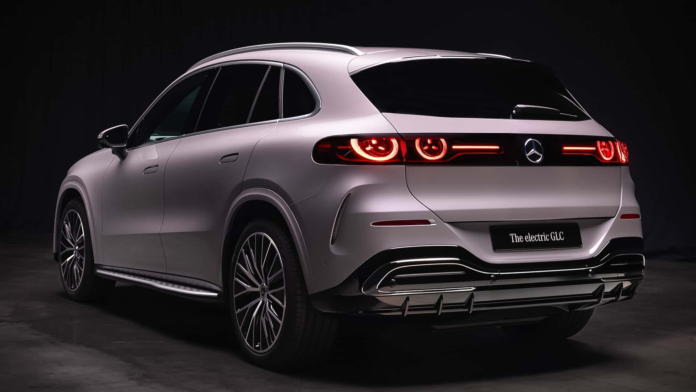

Mercedes-Benz has quietly done something significant with the new GLC. They took one of their most popular SUVs and rebuilt it from the ground up as a full electric vehicle. No hybrid compromise, no internal combustion fallback. Just a clean-sheet EV that borrows heavily from the S-Class parts bin and looks like nothing else in the segment right now.
If you have been following the electric SUV space, you already know the competition is serious. BMW’s iX3 has been refined over a couple of generations, and it sits right in the same target zone as the new GLC in terms of range, charging architecture, and price. The comparison is going to come up constantly, so we might as well address it head-on throughout this piece.
Here is a detailed look at what Mercedes has built, why it matters, and whether it is actually worth the price of admission.
The Numbers That Actually Matter
Before getting into the design and the cabin, let us talk about what most buyers care about first: the powertrain.
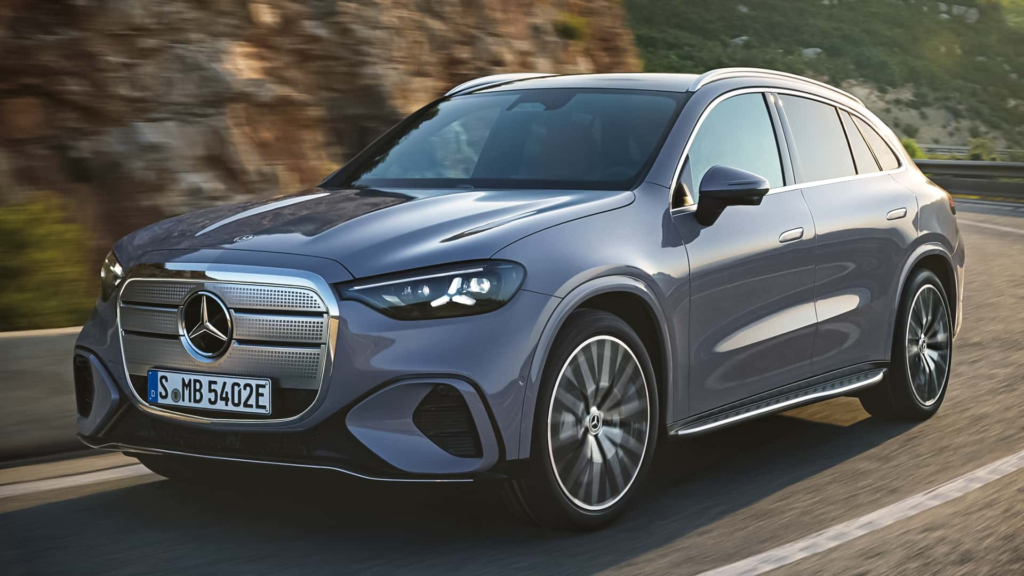
The new electric GLC produces 483 horsepower from a dual-motor all-wheel-drive setup. That puts it firmly in the performance SUV category, not just the premium commuter bracket. For context, the BMW iX3 in its most powerful variant sits in a similar range, which is why these two are being compared so directly. Both cars are targeting the same person: someone who wants a premium, capable SUV that can cover real distances without constant anxiety about finding a charger.
Speaking of range, Mercedes is claiming 700 kilometers on a single charge. That is roughly 435 miles, and it is a headline number that few electric SUVs in this segment can match right now. Even with real-world conditions shaving 15-20% off that figure, you are still looking at 350-plus miles of usable range, which genuinely changes how you think about road trips.
Charging is where the story gets more interesting. The new GLC supports fast charging that adds 30 kilometers of range in just 10 minutes. Over a longer session, you can pull a meaningful charge in the time it takes to get a coffee and use the bathroom. This is no longer a situation where you block off 45 minutes at a charger and sit there staring at your phone. The architecture supports high-speed DC charging that is comparable to what the iX3 offers, and it puts both cars well ahead of older EV platforms that were designed before ultra-fast charging was a priority.
The Design: 942 LEDs on the Front Grille
Let us talk about how this thing looks, because Mercedes made some bold choices.
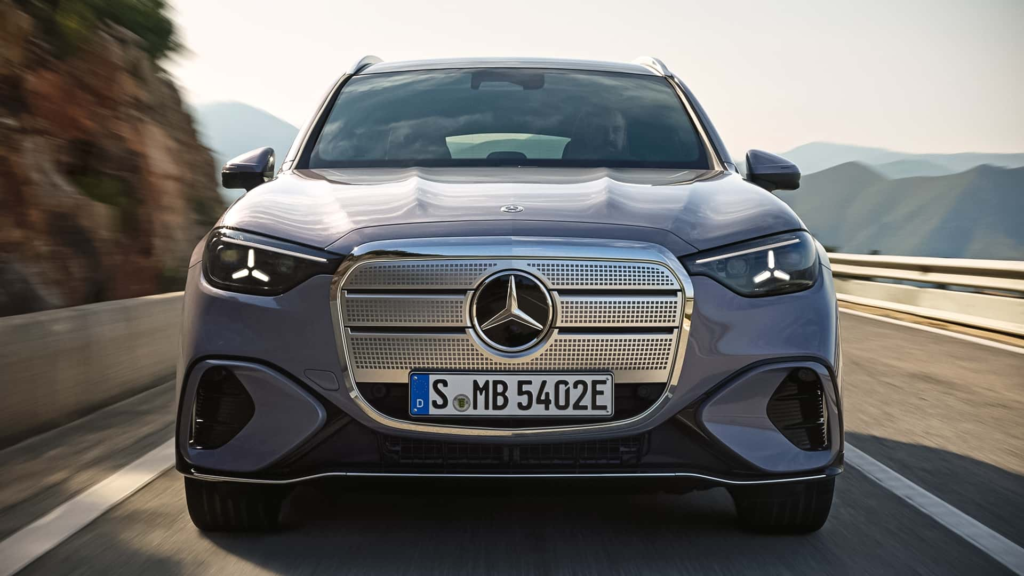
The front grille houses 942 individual LEDs, which is an absurd number until you see it at night. The effect is an illuminated face that shifts patterns and reacts to the car’s status, almost like a signature look that is identifiable from a distance. It is the kind of detail that sounds like a marketing gimmick until you are standing in front of it in a parking garage, and then it just looks genuinely impressive.
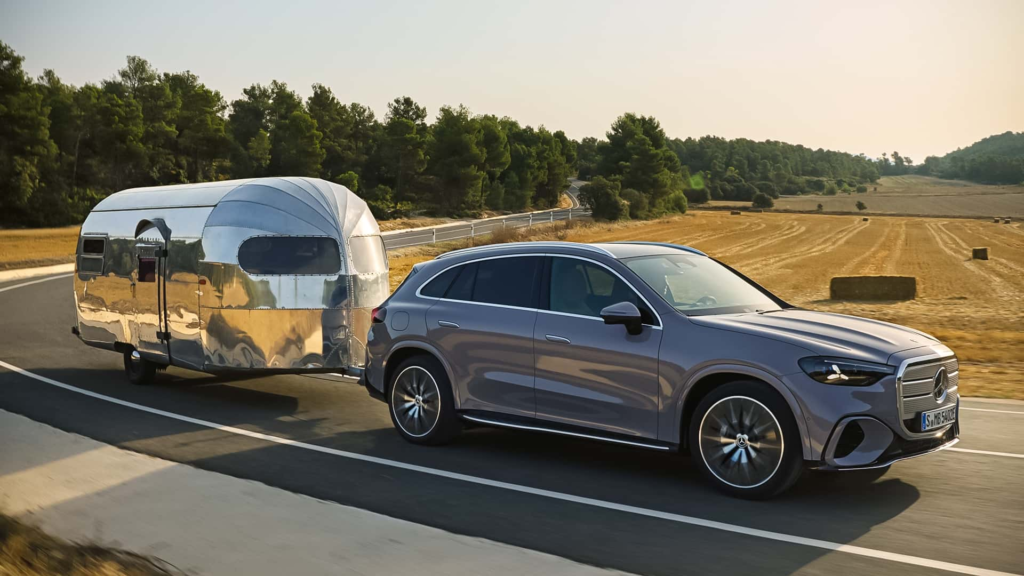
The overall proportions are what you would expect from a modern European SUV: a slightly raised ride height, clean flanks, and a silhouette that does not scream “electric” in the way some competitors do. Mercedes has kept the GLC recognizable, which will matter to buyers who are coming from the previous generation or from a gas-powered GLC and do not want something that looks like a spaceship.
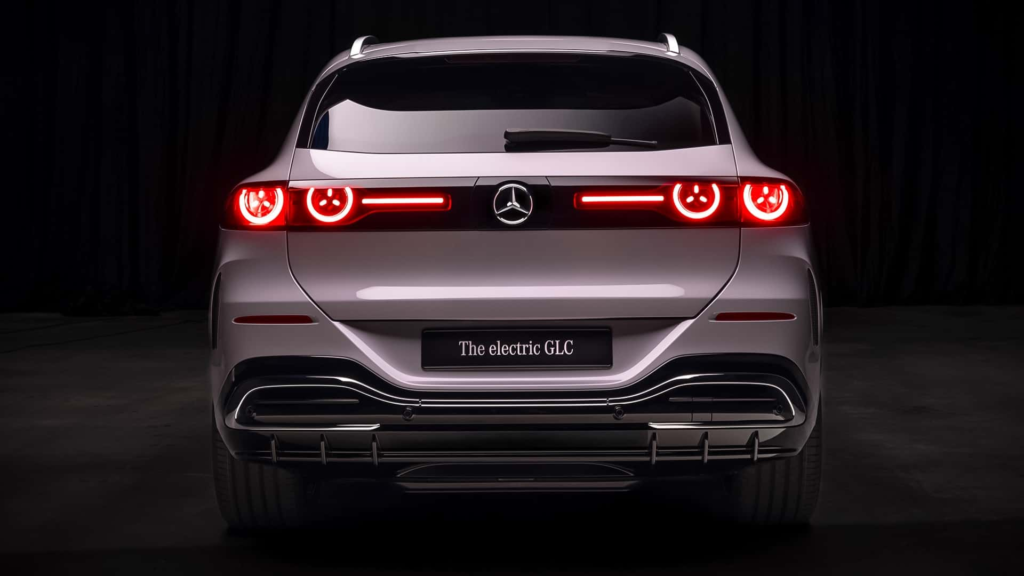
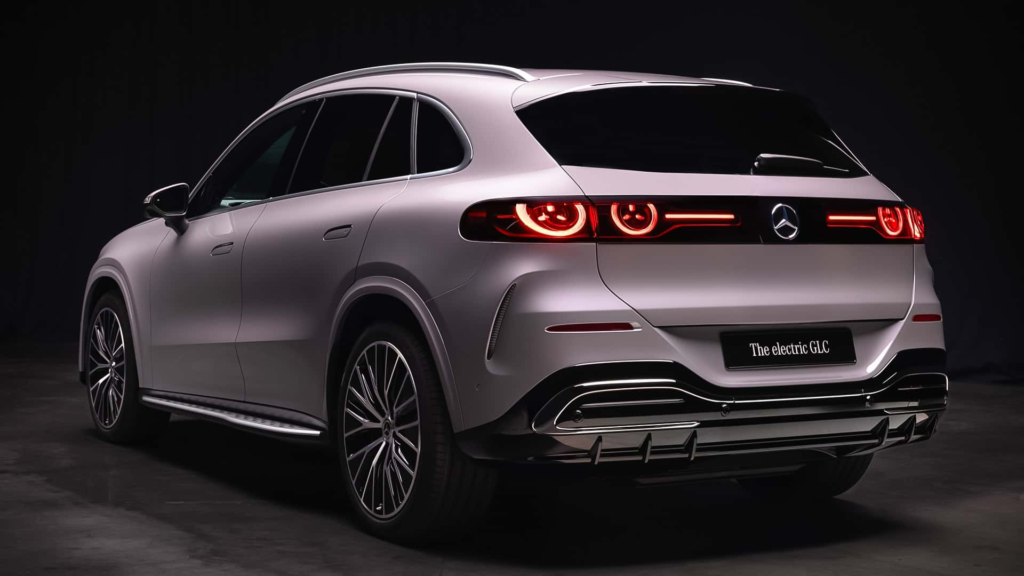
The rear styling is cleaner than the front, with a wide light bar and a stance that communicates solidity without being overstyled. One thing Mercedes has been consistent about is not chasing trends too aggressively with the GLC’s design. It is supposed to be a premium product for a professional buyer, and the exterior communicates that without trying too hard.
Inside: A Dashboard That Has Been Completely Reimagined
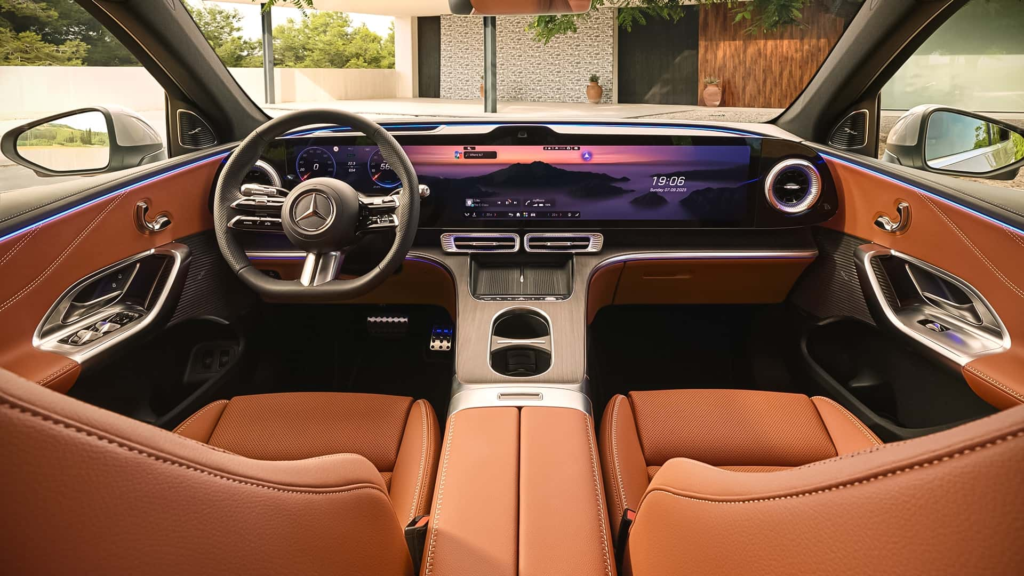
The most dramatic change inside the new GLC is the massive monitor that replaces the traditional dashboard. Mercedes has followed through on the direction they set with the EQS and the latest S-Class, putting a wide display across the front of the cabin that handles virtually all controls, navigation, climate, and vehicle settings.
This is a significant shift from the previous GLC, which had physical controls for most functions. The new layout is entirely software-driven, which means the interface can be updated over time. It also means that if you find touch controls for things like climate frustrating, there will be a learning curve. Mercedes has kept some voice control capability to reduce the number of taps required while driving, which is a reasonable compromise.
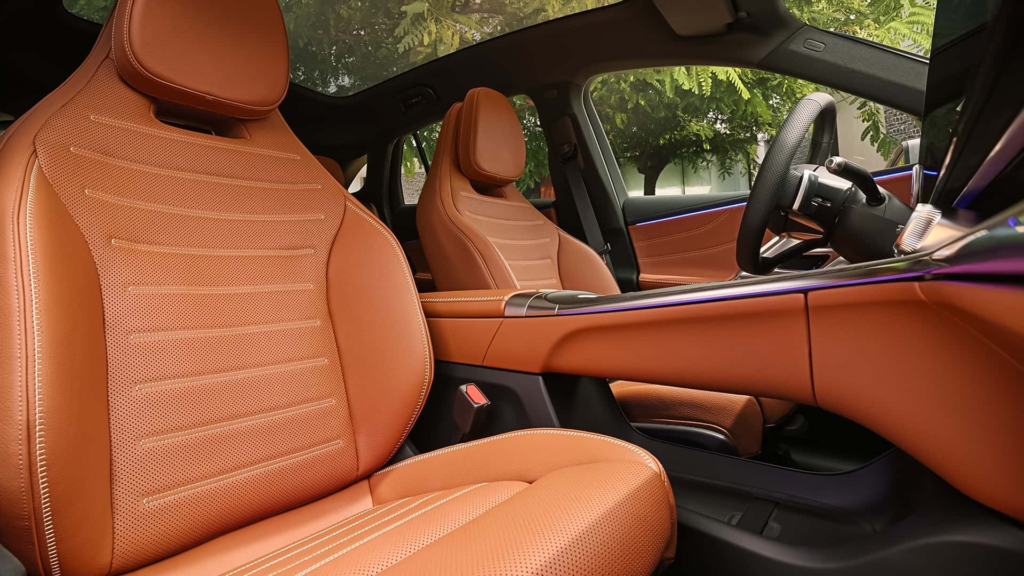
The materials throughout the cabin are appropriate for the price point. You are getting real leather, soft-touch surfaces where your hands actually land, and the kind of attention to how things feel when you touch them that you expect from a German luxury brand. Nothing in the cabin feels like it was sourced from a supplier who also builds economy cars. Everything has been considered.
Rear seat space is competitive with what you find in the BMW iX3 and the Audi Q6 e-tron, which occupy the same general size class. You can fit two adults comfortably in the back, and the raised floor from the battery pack is not severe enough to create issues with legroom in most configurations.
The Airmatic Suspension Option
One of the most notable optional features is the Airmatic air suspension system, which Mercedes has offered on the S-Class for years. This is a pneumatic system that adjusts the ride height and damping characteristics based on road conditions, driving mode, and load.
Having this as an option on the GLC is significant for a few reasons. First, it means buyers who prioritize ride quality can get something genuinely close to what the flagship sedan offers. Second, air suspension interacts well with the low center of gravity that comes from a floor-mounted battery pack, potentially giving the GLC handling characteristics that are better than its predecessor.
In practical terms, air suspension means the car can lower itself at highway speeds for aerodynamic efficiency, raise itself on rough roads or when parking over a curb, and maintain a consistently smooth ride regardless of passenger count or cargo weight. It is not essential for most buyers, but it is a meaningful differentiator for anyone who has experienced it in another vehicle and cannot imagine going back to a conventional spring setup.
The iX3 does not offer an equivalent system at this level, which gives the GLC an advantage in this specific area for buyers who care about it.
How It Compares to the BMW iX3
This comparison is going to follow the new GLC around for its entire lifecycle, so it is worth being direct about where the two cars are similar and where they differ.
Electric architecture: Both cars use modern EV platforms designed specifically for electric vehicles, not adapted from existing gas platforms. This matters because purpose-built EV architecture typically allows for better packaging, more efficient use of space, and more advanced thermal management for the battery.
Charging speed: They are closely matched here. Both support high-speed DC charging with similar peak rates. Neither car will leave you sitting at a public charger for an uncomfortable amount of time.
Range: The GLC’s claimed 700 km figure is ambitious. BMW’s numbers for the iX3 are competitive but not quite at that level in the same configuration. Real-world testing will narrow the gap, but Mercedes appears to have put genuine engineering effort into efficiency.
Power: The 483 hp figure from the GLC puts it in a strong position. The iX3 in its performance variant is in the same conversation, but the GLC may have an edge in straight-line output.
Interior technology: This is where taste comes into play. The GLC’s massive display system is more dramatic. The iX3’s interior is more restrained and traditional in some ways, which some buyers will prefer. Neither approach is wrong, but they appeal to different sensibilities.
Price: Both cars are expected to start around the $50,000 mark, though final regional pricing will vary. This is the premium midsize electric SUV bracket, and both cars are competing for the same buyer.
Suspension: The Airmatic option on the GLC is something the iX3 cannot match at this level. If that matters to you, the GLC wins this category outright.
Who This Car Is Actually For
The new electric GLC is a very specific proposition. It is not trying to be the most affordable option, and it is not trying to be the most extreme performance car. It is aiming at buyers who have owned premium SUVs before, who are ready to make the move to electric, and who do not want to feel like they are making a compromise in the process.
If you have been driving a gas-powered GLC, a BMW X3, or an Audi Q5, and you have been waiting for an electric version that does not ask you to give something up, this is the car Mercedes built for you. The range covers real anxiety about long trips. The charging speed covers the concern about stops taking too long. The interior quality covers the worry that electric means cheap or tech-forward at the expense of comfort.
The 483 horsepower is probably more than most buyers will regularly access, but having it means the car never feels underpowered in passing situations, on highway on-ramps, or when carrying passengers and luggage. Power in reserve is a different feeling from a car that is working hard to keep up.
The 942-LED grille and the massive display are for buyers who want their car to feel modern and distinctive. If you would prefer something more conservative-looking, Mercedes still has plenty of other options. But if you like the idea of a car that looks like it belongs in the next decade, the new GLC delivers that without compromising the fundamental usability.
Pricing and What to Expect
The expected starting price is around $50,000, which positions the GLC squarely in the premium electric SUV category alongside the BMW iX3, the Audi Q6 e-tron, and the Volvo EX60. Once you start adding options like the Airmatic suspension, upgraded interior packages, and the full driver assistance suite, the price will climb.
This is consistent with how Mercedes has always approached the GLC. The base model is priced to be competitive, but the fully-loaded version is significantly more expensive, and a meaningful portion of buyers will go for the higher configurations.
Availability timing will depend on the market. European buyers will likely see it first, with North American and other markets following within six to twelve months of the initial launch. Pricing in different markets will reflect local taxes and regulations.
Final Thoughts
The new electric Mercedes-Benz GLC is a serious effort from a brand that has had some mixed results with its electric vehicles in recent years. The EQS was impressive but enormous. The EQB was practical but unremarkable. The GLC sits in the sweet spot of size, performance, and price that the brand needed to get right.
The 700 km range claim will face scrutiny, and real-world testing will tell us what the car actually delivers in various conditions. The charging speed is genuinely impressive. The Airmatic option is a meaningful differentiator. The interior technology is bold and will polarize opinion.
What Mercedes has built here is an electric SUV that does not ask you to think like an early adopter. It is a mature, capable, well-specified vehicle that happens to run on electricity. For buyers who have been waiting for that kind of product in this segment, the wait appears to be over.
The BMW iX3 remains strong competition, and the two cars will trade points in different categories depending on what you prioritize. But the GLC makes a compelling case, and that is more than could be said for some of Mercedes’ earlier EV efforts.
For more coverage of new electric vehicles and upcoming releases, subscribe to Brand New Cars for regular updates on the cars that matter

