
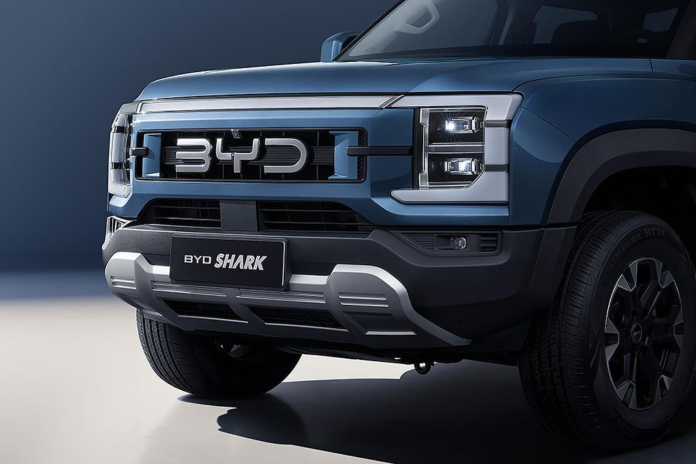

Pickup trucks have always occupied a specific space in the automotive world. They’re built for work, for towing, for hauling, and for getting through terrain that would stop most other vehicles cold. For decades, that meant a big internal combustion engine, a heavy-duty chassis, and a fuel tank you’d visit often. The BYD Shark 6 arrives with a different proposition: what if you could have all of that capability, but with a plug-in hybrid system doing most of the work?
This isn’t BYD dipping a toe into the truck segment with a light-duty crossover in disguise. The Shark 6 is a full-size pickup built on a purpose-engineered platform that combines two types of vehicle architecture most manufacturers keep strictly separate. The result is a truck that makes a compelling case for itself in markets where capability and efficiency both matter.
Here’s a thorough look at what BYD has built, how the engineering actually works, and whether the Shark 6 earns its place in a competitive segment.
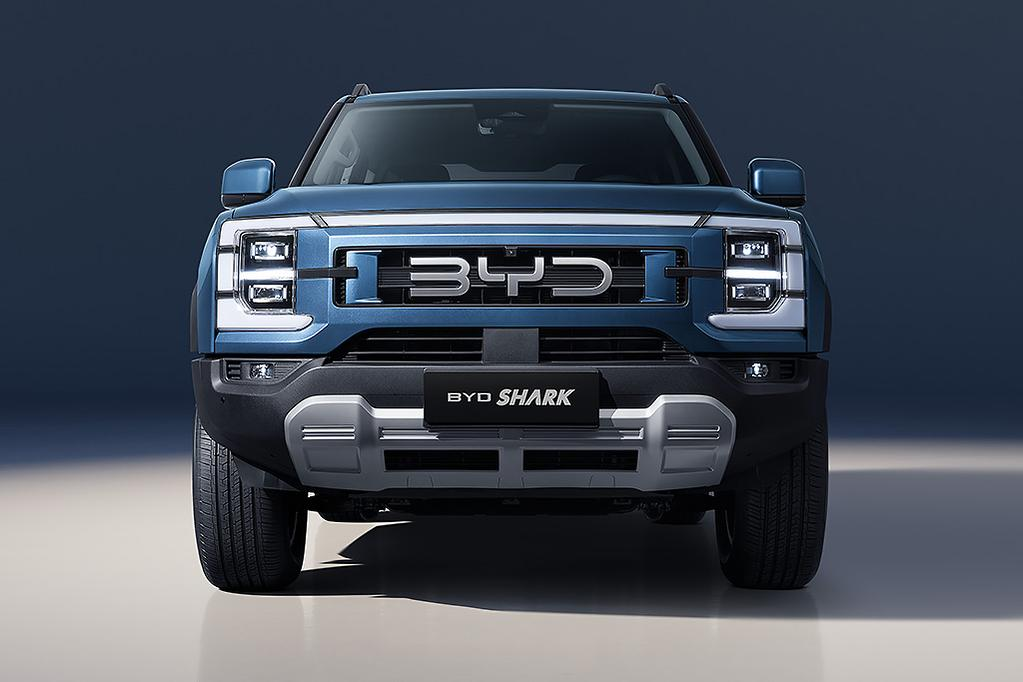
What Is the BYD Shark 6?
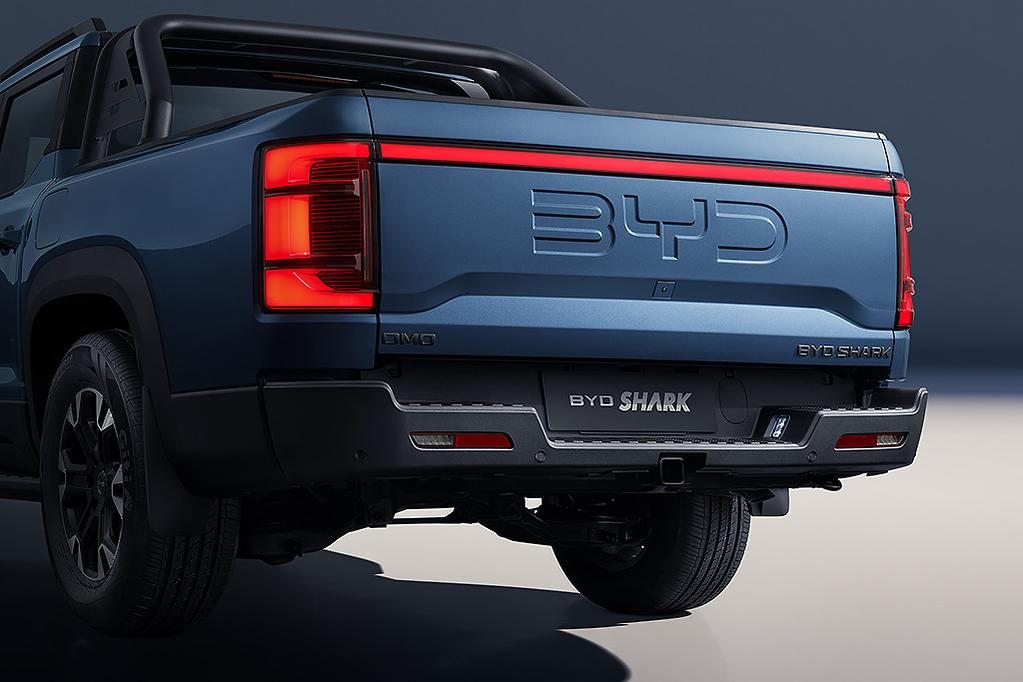
The BYD Shark 6 is a plug-in hybrid electric vehicle (PHEV) pickup truck, positioned as a utility vehicle with genuine off-road credentials and everyday practicality. It sits in a growing category of electrified pickups that also includes vehicles like the Ford F-150 Lightning and Rivian R1T, though the Shark 6 takes a different technical approach to electrification compared to most of its competitors.
Rather than going fully electric like the Lightning or R1T, BYD has built the Shark 6 around a plug-in hybrid system. This means it has both a combustion engine and electric motors working together, with a battery large enough to handle a meaningful amount of daily driving on electricity alone, but with the range security of a full fuel tank for longer trips or demanding off-road use.
The vehicle is aimed primarily at markets in Latin America, Southeast Asia, and other regions where the charging infrastructure for fully electric trucks may not yet be reliable enough for the use cases truck buyers actually need. It’s a pragmatic approach, and given the realities of global EV infrastructure in 2025, a sensible one.
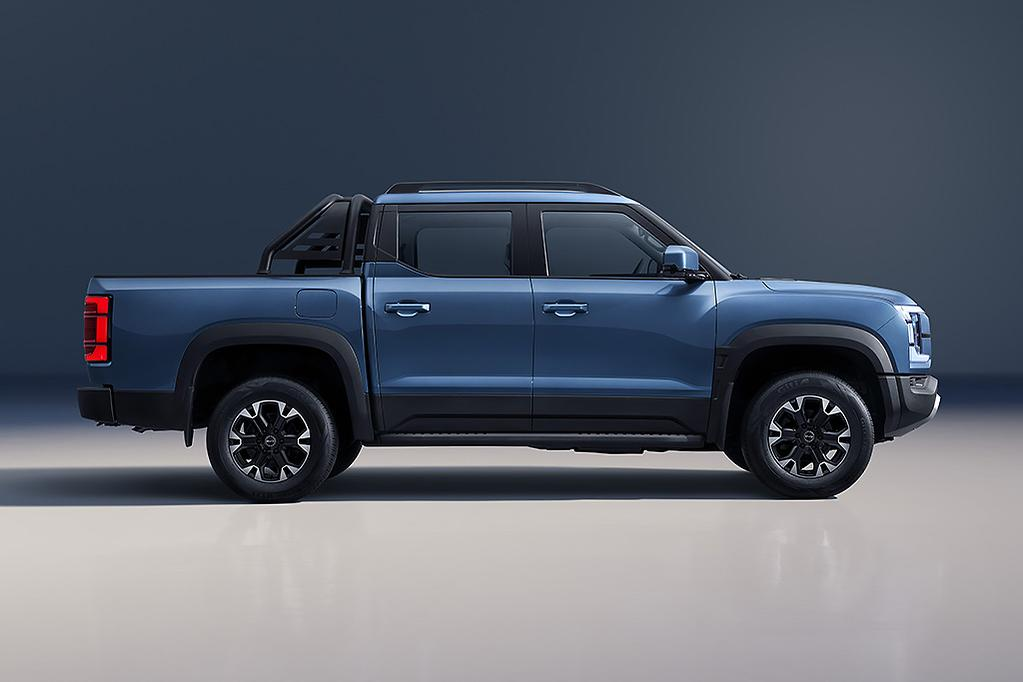
The DMO Platform: Why the Architecture Actually Matters
The most technically interesting aspect of the Shark 6 is the platform it’s built on. BYD calls it the Super Dual Mode Off-Road platform, shortened to DMO. Understanding what this platform does explains a lot about why the Shark 6 behaves the way it does.
Most passenger vehicles, including SUVs and crossovers, are built on what’s called a monocoque structure. This means the body and the chassis are essentially one integrated unit. The shell of the vehicle is load-bearing, which gives excellent rigidity, better crash energy absorption, and a lower floor height. It’s great for handling and for everyday comfort.
Traditional pickup trucks, by contrast, are built on a body-on-frame or ladder-frame chassis. This means a separate, heavy steel frame sits underneath the vehicle body, and the body is bolted on top of it. Ladder frames handle heavy loads well, resist the twisting forces that come with towing and hauling, and provide a strong foundation for off-road abuse. The trade-off is more weight, a higher floor, and ride characteristics that can feel less refined on normal roads.
BYD’s DMO Platform combines both. The passenger cabin uses a monocoque structure, preserving the safety and refinement advantages of that approach. The load-bearing lower structure uses a heavy-duty ladder frame, giving the Shark 6 the towing and off-road capability buyers expect from a proper pickup. This is genuinely difficult engineering to execute well. The two architectures have different stiffness characteristics and load paths, so integrating them requires careful attention to how forces transfer between the monocoque upper structure and the ladder frame below.
The benefits of getting this right are real. Structural rigidity is higher than a conventional body-on-frame truck because the monocoque passenger cell adds stiffness to the overall structure. Crash performance is better because the passenger compartment is engineered with the same principles used in passenger cars, where safety engineering has been more intensively developed. And the ride quality on normal roads is more refined than a traditional truck, because the monocoque structure damps vibrations more effectively.
For buyers who genuinely use their trucks for serious work and also spend significant time driving on regular roads, this matters. A conventional truck often makes those highway miles uncomfortable. The Shark 6 should, in theory, handle both environments with more composure than a traditional ladder-frame truck without the monocoque structure.
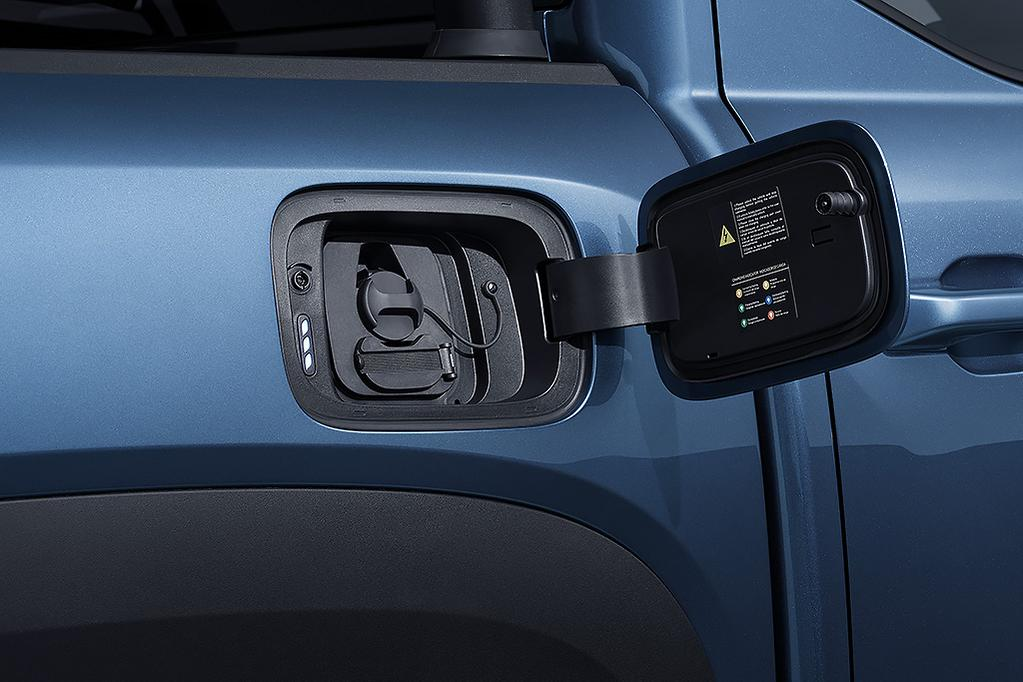
The Plug-In Hybrid System Explained
BYD has extensive experience with plug-in hybrid technology, particularly through their DM (Dual Mode) system used across their passenger car lineup. The Shark 6 uses a version of this system adapted for a truck application, with specific tuning for off-road use and heavier loads.
The system pairs a turbocharged petrol engine with electric motors and a battery pack. The electric motors handle the majority of acceleration from a standstill, which is where electric motors are most efficient and deliver the most torque. The combustion engine supplements power at higher loads and speeds, and also charges the battery when needed.
In everyday urban driving, the Shark 6 can cover a reasonable distance on battery power alone. BYD has not confirmed final production range figures for all markets at the time of writing, but the system is designed to handle typical daily commute distances electrically, with the engine serving primarily as a range extender and performance supplement.
For off-road use, the hybrid architecture offers a specific advantage. Electric motors deliver maximum torque instantly, from zero RPM, which is exactly what you want when you’re crawling over rocks or pulling out of mud at low speed. The combustion engine doesn’t need to be in its optimal power band to contribute useful torque in these situations, and the combined output of the system gives the Shark 6 strong low-speed pulling ability.
Towing capacity is a critical metric for any truck buyer, and BYD has quoted competitive figures for the Shark 6. The battery pack and powertrain are configured to maintain performance under load, including sustained towing on inclines, which is where some lighter hybrid systems struggle because they deplete the battery quickly and fall back on the engine alone.
The battery can be charged via a standard plug, which means overnight home charging is straightforward. The truck also supports vehicle-to-load (V2L) functionality, allowing it to power external devices and equipment from the onboard battery. For work sites, camping, or locations without access to grid power, this is a practical feature that adds genuine utility.
Off-Road Capability
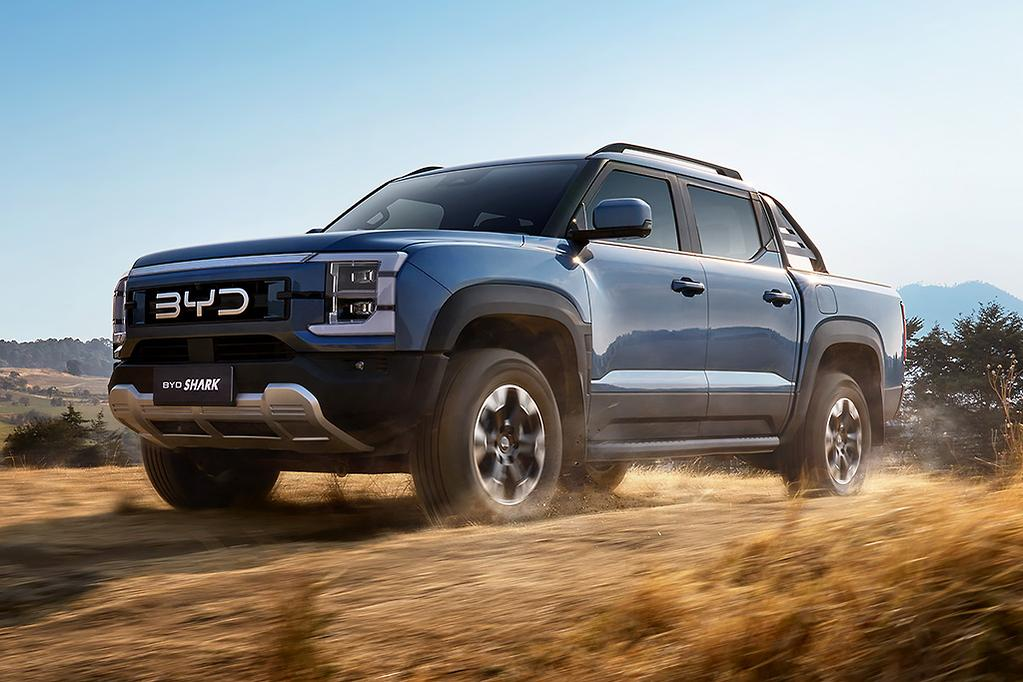
BYD has made specific engineering investments to give the Shark 6 off-road credibility that goes beyond marketing claims.
The DMO Platform’s ladder frame provides a strong foundation for off-road dynamics, with appropriate suspension geometry for articulation over uneven terrain. Ground clearance, approach and departure angles, and wading depth are all engineered to competitive specifications, though exact figures vary by market configuration.
The all-wheel-drive system uses the electric motor architecture to distribute torque with more precision than a traditional mechanical AWD system. Because electric motors can adjust their output faster than a mechanical differential can react, the system can redirect torque to specific wheels more quickly when traction is lost. This improves stability and progress on slippery or loose surfaces.
Multiple terrain modes are available, allowing the driver to configure the powertrain and stability systems for different surfaces: sand, mud, rock, and standard road conditions each get specific calibrations. The electric motors’ instant torque response works particularly well in rock-crawling modes, where precise low-speed power delivery is more valuable than outright power.
Suspension travel and the overall suspension setup are engineered with the expectation that buyers will actually use the truck off-road. This sounds obvious, but many trucks sold as off-road capable are actually tuned primarily for road comfort with only modest off-road improvement over a standard configuration. BYD has invested in the hardware to back the capability claims.
Interior and Technology
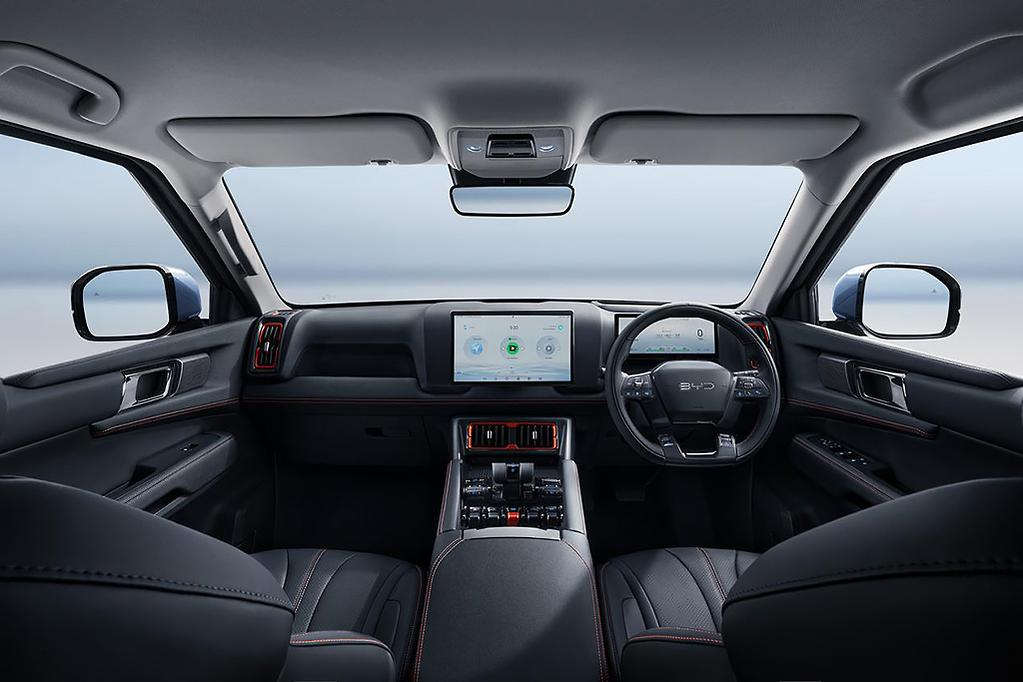
The cabin of the Shark 6 reflects BYD’s general approach to interior design: large touchscreen interface, clean surface design, and a mix of functional truck-specific features with consumer electronics-level technology integration.
The central infotainment screen is large and handles most vehicle functions, including terrain mode selection, powertrain configuration, and navigation with energy management integration. The system can calculate routes factoring in battery state, charging stops, and fuel availability, which is particularly useful for longer trips or remote off-road routes.
Seating is configured for practicality. The front seats offer good support, and the rear seating in the extended or crew cab configuration is adequate for adults on shorter journeys. The overall cabin layout is practical rather than luxurious, though material quality is competitive for the segment and price point.
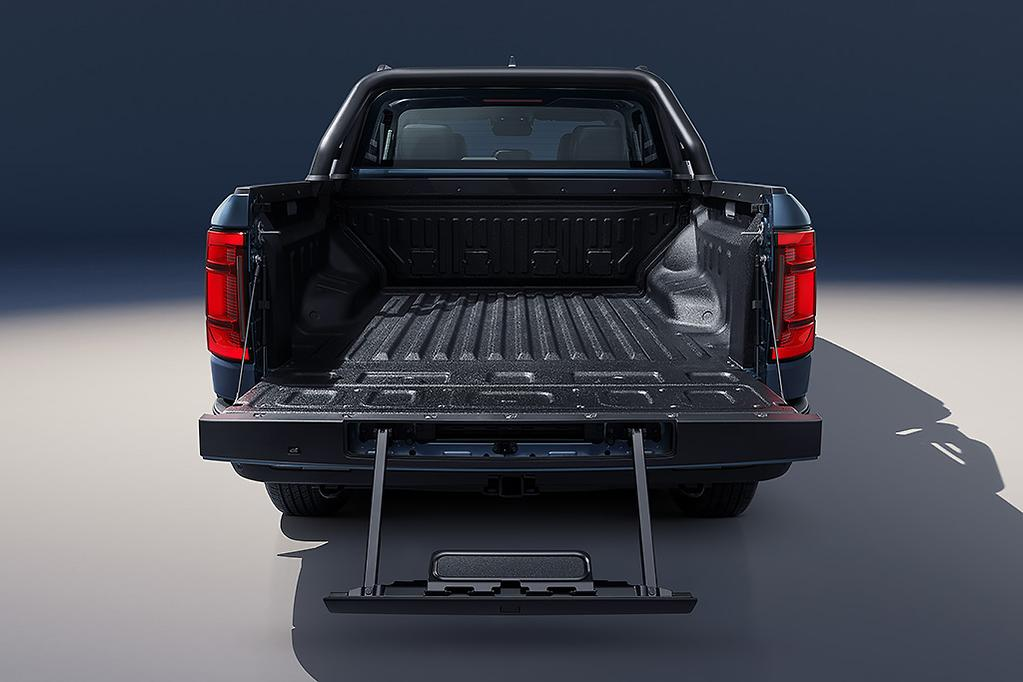
Storage in the cabin is well-considered, with thoughtful placement of compartments for tools, devices, and everyday items. The bed itself comes with a cover option and integrated tie-down points, along with power outlets for equipment use. The V2L capability extends to the bed, making it a viable power source for job site tools.
Driver assistance features include the usual array of cameras, parking sensors, adaptive cruise control, lane assist, and blind-spot monitoring. Off-road-specific camera systems give the driver visibility of the front wheels and underside, which helps with obstacle placement in technical terrain.
How It Compares to the Competition
The electrified truck segment is still relatively young, and the competitive set looks different depending on which market you’re in.
Against fully electric trucks like the Ford F-150 Lightning, the Shark 6’s PHEV approach trades maximum electric efficiency for range security and flexibility. In markets with limited fast-charging infrastructure, this is a meaningful practical advantage. The Lightning is a better choice for buyers with reliable charging access who want to minimize fuel costs, but the Shark 6 covers a wider range of use cases more reliably.
Against the Rivian R1T, the comparison is similar. The R1T is a more refined, more expensive, more premium product, but it requires charging infrastructure confidence. The Shark 6 is more pragmatic and targets a broader price point and market.
Against conventional non-electrified trucks like the Toyota Hilux or Ford Ranger, the Shark 6 offers meaningfully lower fuel costs for buyers who do a significant amount of urban or short-distance driving, plus the V2L utility and the performance advantages of the electric drivetrain in low-speed off-road situations. The trade-off is additional complexity from the hybrid system and a higher purchase price.
BYD’s pricing strategy for the Shark 6 is competitive, particularly in markets where it’s positioned as a premium alternative to the Toyota Hilux or equivalent. The technology on offer justifies a premium over a conventional pickup, and BYD has priced it to be attractive against international competition.
Fuel Economy and Running Costs
The real-world fuel economy of the Shark 6 will depend heavily on how buyers use it. For someone who charges regularly and does primarily urban or suburban driving within the electric range, fuel consumption can be very low. The truck effectively runs as an electric vehicle for those journeys.
For buyers who don’t have charging access at home or work, or who regularly drive distances that exceed the electric range, the Shark 6 functions more like a conventional hybrid, with fuel economy better than a non-hybrid equivalent but without the full benefit of plug-in capability.
BYD has designed the system to prioritize electric operation where possible, but the combustion engine is fully capable of handling all driving situations without the battery being charged, so buyers who don’t plug in regularly are not stranded or penalized in terms of mobility, just in terms of efficiency.
Maintenance costs for a PHEV are generally lower than for a pure combustion truck because the electric motors handle a significant portion of the driving and braking, reducing wear on the engine and conventional brakes. The regenerative braking system recovers energy during deceleration, which extends brake pad life considerably.
Who Should Buy the BYD Shark 6?
The Shark 6 makes the most sense for buyers who need a proper pickup truck but can’t fully commit to a battery-electric vehicle.
If you work in an industry where trucks are essential and you drive a mix of urban and rural routes, the PHEV system gives you meaningful fuel savings on the urban sections without compromising the range or capability for longer rural routes.
If you need off-road capability but also spend significant time on regular roads, the DMO Platform’s monocoque-plus-ladder-frame architecture gives you a more refined highway experience than a conventional body-on-frame truck.
If you operate in a market where charging infrastructure is developing but not yet comprehensive, the Shark 6’s ability to run on petrol when needed eliminates range anxiety entirely while still giving you the benefits of electrification where charging is available.
If V2L capability is useful to your work or lifestyle, the ability to run power tools, camping equipment, or emergency power from the truck’s battery is a practical feature that adds real value.
The Shark 6 is probably not the optimal choice for buyers who have excellent charging access and do mostly on-road driving with occasional light off-roading. In that case, a fully electric truck or a simpler PHEV passenger vehicle would likely serve better.
Final Verdict
The BYD Shark 6 is a technically ambitious vehicle that does something most truck manufacturers haven’t attempted: it takes two fundamentally different engineering approaches to vehicle construction and combines them into a single platform designed to do both jobs well.
The DMO Platform is the most interesting aspect of the truck. Integrating a monocoque passenger cell with a ladder-frame chassis creates real advantages in safety, refinement, and capability, and it reflects serious engineering investment rather than a marketing exercise.
The PHEV system is appropriate for the markets the Shark 6 targets. It solves the practical problem of limited charging infrastructure while still delivering the efficiency and performance benefits of electrification where conditions allow.
BYD is a company that builds vehicles at enormous scale and has been refining its hybrid and battery technology for years. The Shark 6 is the product of that accumulated experience applied to a vehicle category the company is serious about competing in.
For buyers in the right markets with the right use cases, it represents a compelling and genuinely capable choice.

