
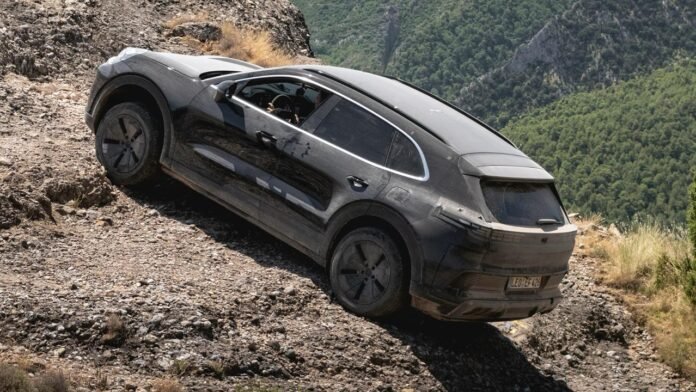

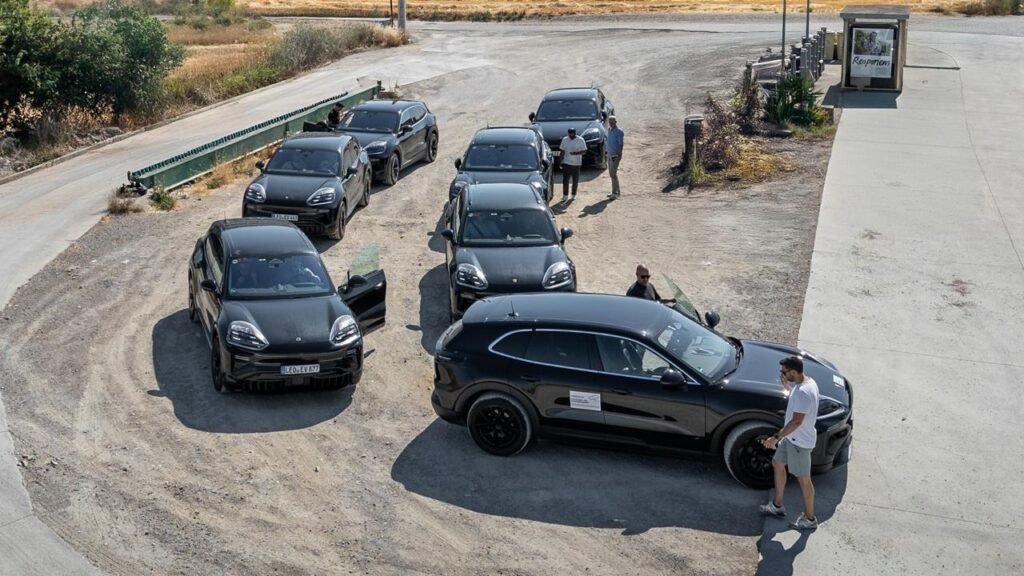
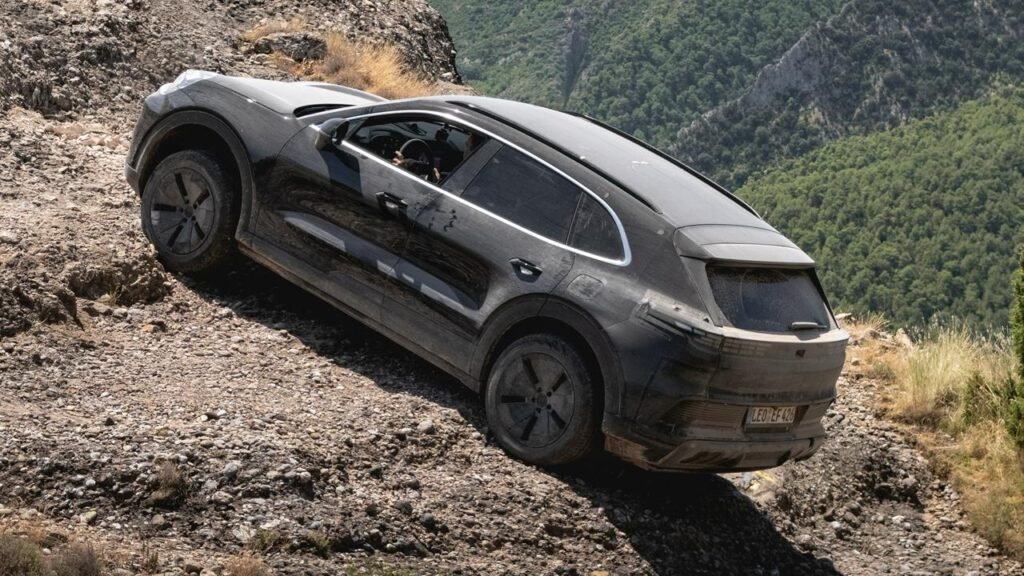
Porsche is clearly preparing to reveal something major, and the automotive press already has a strong sense of what’s coming. A group of journalists recently drove what appears to be an all-electric Cayenne prototype—and they didn’t take it easy. Based on the photos that surfaced afterward, not every vehicle made it back unscathed. Porsche hasn’t commented on how many were damaged, but the evidence suggests these weren’t gentle test drives.
This kind of early press access typically signals that a full reveal is imminent. While official specs remain under wraps, what journalists experienced aligns closely with long-standing expectations: a full-size luxury SUV, fully electric, with extreme performance and a few controversial design decisions.
Disguised Design: Hiding What Matters Most
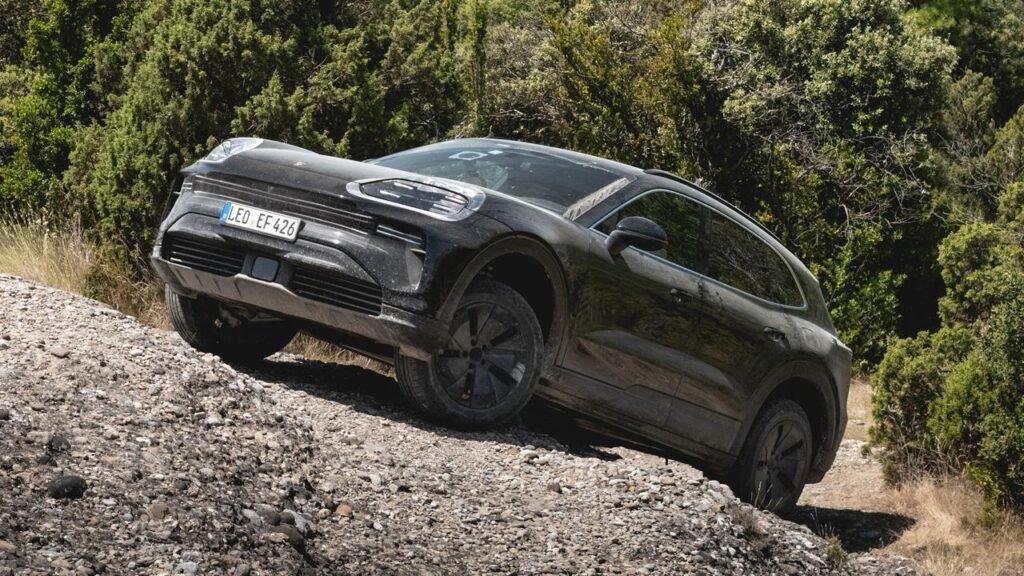
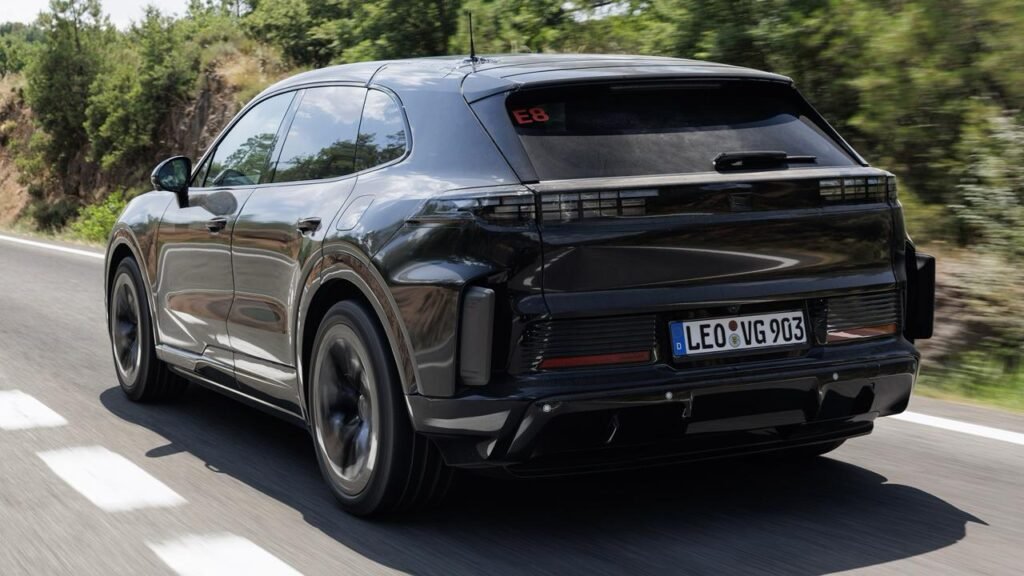
One of the more telling details from the test fleet is how Porsche chose to disguise the cars. Instead of traditional camouflage, the prototypes used printed stickers to mask the headlights and taillights. That’s not random—it’s deliberate.
Automakers often hide bodywork during testing, but obscuring the lighting signature specifically suggests that it’s a defining design element of the final car. In other words, Porsche thinks the real headlights and taillights are distinctive enough to be worth protecting until launch.
So while the proportions and overall shape in the photos are likely accurate, key visual details are intentionally misleading. The final production version may look noticeably different once those elements are revealed.
Performance: Around 1000 Horsepower
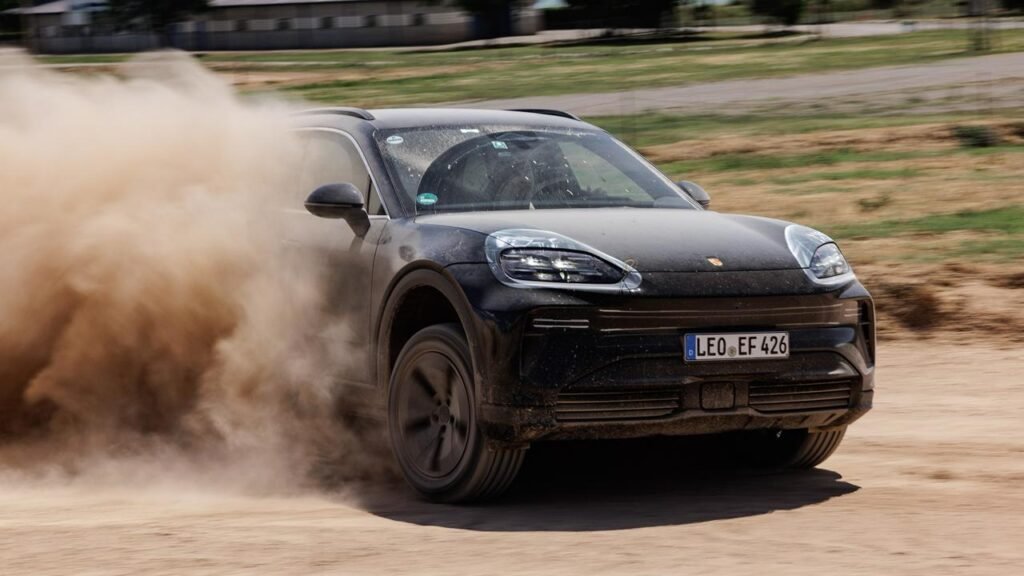
This is where things escalate quickly. Reports suggest the top-tier electric Cayenne could produce roughly 1000 horsepower. That’s not just a headline number—journalists who drove it described acceleration that feels absurd for a vehicle this size.
For context, the current Cayenne Turbo GT produces 640 horsepower and already ranks among the fastest SUVs on the market. An electric version with 1000 horsepower—and instant torque—pushes it into an entirely different category.
This isn’t a lightweight hypercar. It’s a five-seat SUV. The idea that something this practical can deliver that level of performance is part of what makes it so compelling—and, judging by the damaged prototypes, potentially unforgiving if pushed too hard.
The Synthetic V8 Sound: Bold or Misguided?
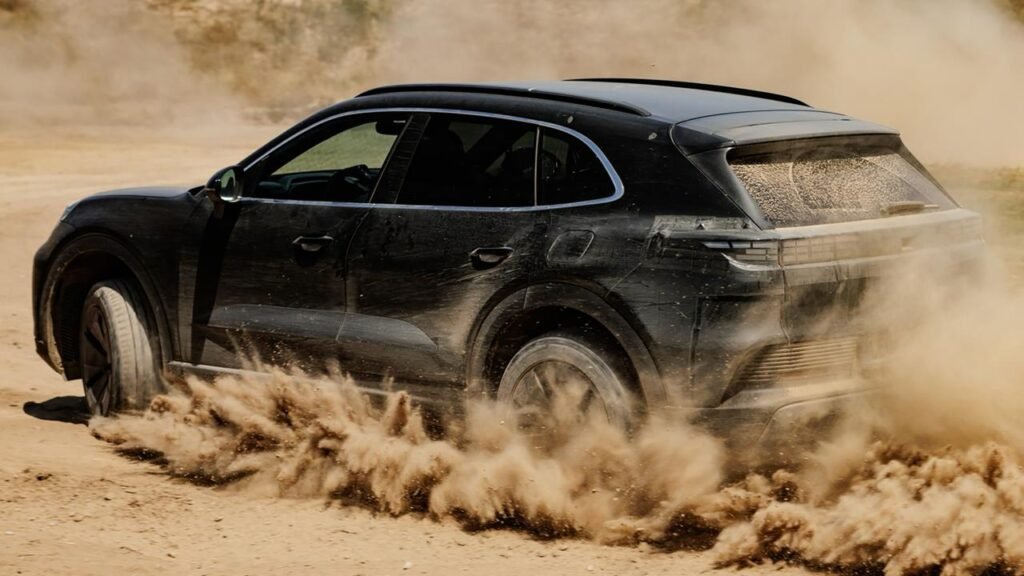
Perhaps the most controversial detail is the sound design. Under acceleration, the electric Cayenne reportedly plays a recording of a twin-turbo V8 engine through its speakers. Not a futuristic EV tone—a literal combustion soundtrack.
Porsche has experimented with artificial sound before, but this approach leans heavily into nostalgia. The audio responds dynamically to throttle input, mimicking the experience of a traditional engine.
There’s a clear argument in favor: sound is a huge part of driving emotion. For many drivers, silence under hard acceleration feels disconnected from the performance they’re experiencing.
But there’s also a strong argument against it: it’s artificial. The car isn’t producing that sound mechanically, and for some buyers, that undermines the authenticity of the experience.
Interestingly, Porsche didn’t go with a synthetic EV-style sound—they chose something familiar and evocative. Whether that feels immersive or gimmicky will depend entirely on the driver.
Why an Electric Cayenne Makes Strategic Sense
The Cayenne has always been more than just another model—it’s one of Porsche’s most important vehicles. Since its debut in 2002, it has played a crucial role in the company’s financial success and remains a core part of its lineup.
An electric version isn’t just inevitable—it’s necessary. With tightening emissions regulations and growing demand for EVs in the luxury SUV segment, Porsche needs a strong contender here.
The challenge is balancing performance with practicality. Unlike sports car buyers, Cayenne customers expect usability: range, charging convenience, and everyday comfort all matter just as much as speed.
What This Press Program Really Signals
Letting journalists drive pre-production cars this aggressively—before the official reveal—is a calculated move. It builds credibility.
Porsche didn’t just showcase the car; they let it be pushed to its limits. That suggests confidence in the engineering and a willingness to let real-world impressions shape the narrative ahead of launch.
At the same time, the disguised design elements show they’re still holding something back. The performance story is out. The visual identity is not.
The Missing Pieces: Range, Charging, and Price
There are still major unanswered questions. Battery size, range, charging speed, and pricing will ultimately determine how viable the electric Cayenne is beyond its performance credentials.
If it shares or improves upon Porsche’s 800-volt architecture, fast charging should be a strong point. But given the Cayenne’s size and weight, efficiency will be a challenge.
For high-performance variants, range may be secondary. For mainstream buyers, it won’t be.
What to Expect at Launch
When Porsche officially unveils the car, a few things are likely:
- Multiple variants, with the ~1000 hp version at the top
- Configurable sound options (or at least the ability to turn them off)
- A distinctive lighting design that’s been carefully hidden
- Pricing above current Cayenne models, especially at the high end
The Bigger Picture
A 1000-horsepower electric SUV that plays V8 engine sounds is, objectively, a strange concept. It blends cutting-edge electrification with a deliberate nod to the past.
But that tension might be the point.
What’s already clear is that Porsche hasn’t compromised on performance. If anything, they’ve doubled down on it. The damaged press cars are proof that this isn’t just another luxury EV—it’s something genuinely aggressive.
And if history is any guide, a controversial Cayenne might end up being exactly what Porsche needs.

