

⚡ Executive Summary: 2026 EV Battery Replacement Costs
In 2026, the average electric car battery replacement cost across mainstream models ranges from $6,500 to $19,500 for a brand-new factory pack, including certified high-voltage labor. For budget-conscious owners facing an ev battery replacement cost out of warranty, remanufactured and refurbished ev battery cost options have matured rapidly, lowering out-of-pocket expenses to $3,500 – $9,000—a massive 40% to 60% savings compared to franchised dealership list prices.
For prospective and current electric vehicle owners, no single mechanical component inspires more curiosity—or genuine financial terror—than the high-voltage traction battery pack. Skeptics often describe electric cars as ticking financial time bombs, predicting that an unexpected battery failure will inevitably render the entire vehicle worthless overnight.
As ASE-certified Master Automotive Technicians and EV powertrain analysts, we inspect high-voltage battery systems daily. The automotive industry in 2026 is at an inflection point. On the manufacturing side, cell-level production costs have tumbled below the critical benchmark of $100 to $115 per kilowatt-hour (kWh), driven by rapid scaling of Lithium Iron Phosphate (LFP) chemistry and high-throughput cell gigafactories. However, when an individual retail consumer walks into an authorized dealership service bay for an out-of-warranty battery swap, the invoice tells a vastly different story. Retail parts markups, specialized hazardous materials logistics, specialized isolation testing, and high-voltage certified labor rates ($150 to $220 per hour) keep dealership replacement figures formidable.
Whether you are calculating the long-term total cost of ownership (TCO) for a new EV purchase, or evaluating a high-mileage secondhand Tesla Model 3, Chevy Bolt, or Nissan Leaf whose warranty period has expired, this exhaustive technical and financial teardown covers real-world 2026 pricing across major brands, labor operations, repair alternatives, warranty rights, and proven maintenance habits to safeguard your battery for 300,000+ miles.
2026 Comprehensive Cost Breakdown Table by Major EV Models
Battery replacement costs vary dramatically depending on gross battery capacity (kWh), cell chemistry (NMC vs. NCA vs. LFP), structural architecture, and vehicle thermal plumbing. Below is an authoritative 2026 empirical pricing matrix compiled from real dealership work orders, insurance claims, and certified independent EV specialty shops across the United States.
*Note on Labor Rates: Pricing reflects certified master EV technicians billing at standard shop rates ($150 to $220/hr). Figures include specialized high-voltage de-energization, hydraulic lift drop, subframe alignment, low-conductivity coolant vacuum flushing, high-voltage interlock loop (HVIL) testing, and Battery Management System (BMS) software pairing.
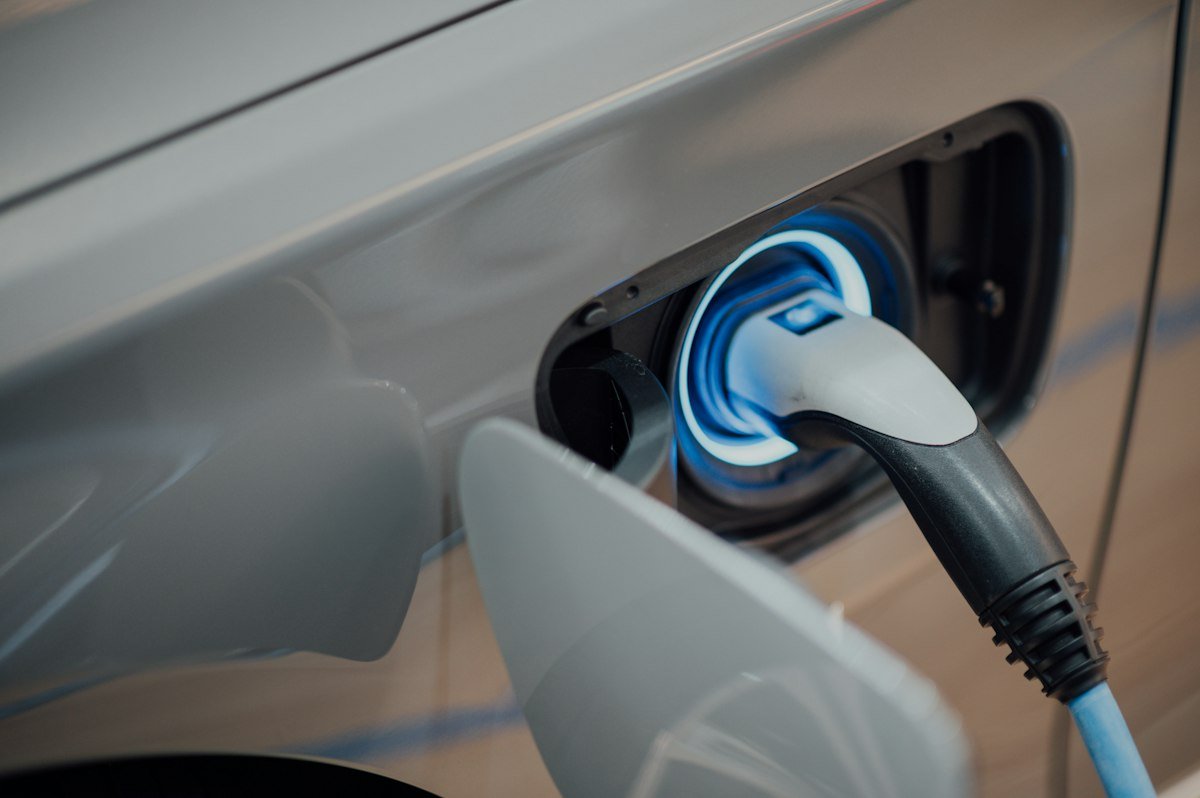
Figure 1: High-voltage traction battery pack integration in a modern electric vehicle chassis. Pack density, thermal cooling lines, and modularity directly dictate replacement expenses.
What Drives the Cost? Technical Analysis of the Invoice
When customers receive an out-of-warranty replacement estimate for $14,000 or $18,000, their immediate reaction is disbelief. Why does an EV battery cost as much as a clean pre-owned compact car? As automotive technicians, we break down an EV battery replacement invoice into three distinct cost centers:
1. Raw Materials & Cathode Chemistries: Lithium, Nickel, & Cobalt
The chemical heart of an electric car battery remains the single largest cost driver. Modern passenger EVs rely on two dominant chemical families:
- Nickel Manganese Cobalt (NMC) & Nickel Cobalt Aluminum (NCA): Found in high-performance and long-range vehicles like the Tesla Model 3 Long Range, Hyundai Ioniq 5, and Ford Mustang Mach-E Extended Range. These cells deliver exceptional volumetric energy density (250–300 Wh/kg), enabling 300+ miles of range in a compact physical footprint. However, class-1 refined nickel and refined cobalt are expensive, geopolitically sensitive commodities that keep raw pack manufacturing costs elevated ($110–$130/kWh at wholesale).
- Lithium Iron Phosphate (LFP): Adopted widely in standard-range variants (such as Tesla Model 3 RWD, base Mustang Mach-E, and Chinese market leaders like the BYD Blade Battery). LFP completely eliminates costly nickel and cobalt, substituting abundant iron and phosphate minerals. LFP packs cost roughly 25% to 35% less to manufacture ($75–$90/kWh), offer superior thermal stability up to 500°C, and survive over 3,500 full charge cycles. However, lower energy density means larger, heavier battery casings are required for equivalent range.
2. Structural Battery Packs vs. Modular Tray Architecture
How an automaker physically constructs the vehicle chassis has profound financial ramifications when service is required out of warranty:
Modular Architecture (Service-Friendly): Traditional designs—such as the Chevrolet Bolt, first-generation Nissan Leaf, and early Tesla Model S—house battery cells inside 8 to 16 discrete, removable modules wired together in series and parallel within a protective aluminum tray. If a single cell block drops voltage or develops high internal resistance, a skilled technician can drop the pack, unbolt the lid, remove the damaged module, and drop in a matched replacement for a fraction of the cost of a full pack.
Cell-to-Pack (CTP) & Structural Battery Packs (Monolithic): In contrast, modern engineering priorities prioritize weight reduction and structural stiffness. Tesla’s 4680 structural battery packs and BYD’s Cell-to-Body (CTB) platforms eliminate internal modules entirely. Cylindrical cells or prismatic blades are glued directly into the chassis with structural polyurethane potting foam. While this design increases driving efficiency and structural rigidity, it renders cell-level repair virtually impossible. If an internal short circuit develops, technicians cannot service individual cells without destroying the structural matrix; the entire structural skateboard pack must be discarded and replaced as a single monolithic unit.
3. Ancillary Workshop Procedures: Coolant Flushing, Pyrofuses, & Software Pairing
Replacing a high-voltage battery is far more complex than swapping a starter battery or an alternator. When our certified technicians perform an EV battery replacement, several specialized mechanical and diagnostic operations are mandatory:
- Dielectric & Low-Conductivity Coolant Purge & Vacuum Fill ($350 – $650): Liquid-cooled battery packs (such as Tesla, Hyundai E-GMP, and Ford Mach-E) circulate specialized low-conductivity ethylene glycol through internal aluminum cooling ribbons. Whenever the pack is disconnected, the cooling loop is broken. Re-filling requires pulling a deep vacuum to eliminate trapped micro-bubbles—which could otherwise cause localized hot spots and thermal runaway—followed by high-voltage isolation resistance tests (megohmmeter testing exceeding 500 megohms).
- High-Voltage Pyrofuse & Contactor Replacement ($250 – $600): Inside the Battery Junction Box (BJB), solid-state contactors and pyrotechnic disconnect fuses safeguard the electrical architecture against catastrophic short circuits. Automakers frequently mandate contactor and pyrofuse replacement whenever a pack is rebuilt or reinstalled.
- BMS Firmware Flashing & Digital VIN Pairing ($400 – $850): High-voltage Battery Management Systems are encrypted and cryptographically tied to the vehicle’s Central Gateway and Powertrain Control Module (PCM). Simply bolting in a replacement pack will leave the vehicle immobilized in “tamper protection” mode. A technician must connect factory diagnostic software (e.g., Tesla Toolbox 3, Ford FDRS, or Hyundai GDS-Mobile) to flash firmware, run cell balancing routines, and pair the new serial numbers to the immobilizer.

Figure 2: Certified master EV technician conducting bidirectional diagnostic scans, State of Health (SoH) module isolation checks, and cooling system pressure testing.
New vs. Refurbished vs. Individual Cell Module Repair: Comparing Options & Savings
When facing an out-of-warranty battery failure, drivers are no longer forced to accept an exorbitant $16,000 dealership estimate. Over the past three years, a robust, highly competitive independent EV repair aftermarket has emerged across North America and Europe. Today, owners can choose between three distinct repair pathways:
Brand-New Factory Pack
Direct replacement from authorized franchise dealers (Tesla Service, Ford, Hyundai, Nissan). Features 100% factory-fresh Grade-A cells, zero cycle wear, updated BMS firmware, and a fresh 3- to 4-year / 50,000-mile parts warranty.
Remanufactured Pack
Supplied by dedicated battery remanufacturing specialists (e.g., GreenTec Auto, EV’s Republic, 057 Technology). Donor packs from salvage or low-mileage retired vehicles are stripped down, ultrasonically cleaned, tested under dynamic load, and reassembled with balanced capacity.
Module / Cell Swapping
Independent EV diagnostic shops disassemble the pack casing, use specialized computerized cyclers to locate the 1 or 2 outlier modules triggering diagnostic error codes, and replace only those failed components before top-balancing the entire string.
For owners of aging, out-of-warranty electric cars—such as a 2017–2019 Tesla Model 3 or a 2018 Nissan Leaf whose fair market vehicle value sits around $12,000 to $16,000—spending $15,000 at a dealership makes zero economic sense. Opting for a refurbished ev battery cost between $4,500 and $7,000 restores full operational utility, delivers another 5 to 8 years of dependable commuting, and preserves vehicle equity without triggering an insurance write-off.
Manufacturer Warranty Protections: The 8-Year / 100,000-Mile 70% Capacity Rule
Before spending a single dollar out-of-pocket on battery replacement, every owner must understand their statutory legal protections. In the United States, federal environmental and consumer statutes provide an extraordinary safety net for EV powertrains:
1. Federal Statutory Mandate: 8 Years / 100,000 Miles
Under regulations enforced by the EPA and the Clean Air Act, all automakers selling electric passenger vehicles in the United States must provide a dedicated high-voltage battery warranty covering defects and abnormal premature degradation for a minimum of 8 years or 100,000 miles (whichever occurs first). This warranty is legally tied to the vehicle’s Chassis Identification / VIN, meaning it automatically transfers to subsequent secondhand owners at no additional charge.
2. CARB Transitional Zero-Emission States: 10 Years / 150,000 Miles
If your vehicle was originally delivered and registered in California or one of the Section 177 CARB-adopting states (including New York, Massachusetts, New Jersey, Oregon, Washington, Vermont, Maine, and Maryland), state environmental mandates require automakers to extend the high-voltage warranty on TZEV (Transitional Zero Emission Vehicles) and eligible zero-emission platforms to 10 years or 150,000 miles.
3. Demystifying the 70% State of Health (SoH) Capacity Retention Threshold
Almost all major manufacturers—including Tesla, Hyundai, Kia, Ford, GM, and BMW—explicitly guarantee that the high-voltage battery will retain at least 70% of its original usable energy capacity throughout the duration of the warranty window. (Certain European premium brands like Mercedes-Benz and Audi provide even tighter guarantees at 75% to 80% capacity retention).
How Degradation Claims Are Adjudicated: If your vehicle originally delivered 300 miles of EPA-rated range, and your maximum 100% full charge now yields fewer than 210 miles under standard ambient test conditions, you may qualify for a free factory battery replacement. However, automakers do not rely on your dashboard estimate to approve claims. A certified technician must run a specialized automated Battery Health Diagnostic Cycle—which completely depletes the pack, initiates a continuous calibrated recharge, and measures actual kilowatt-hours absorbed versus thermal dissipation. If the validated State of Health (SoH) falls to 69.9% or lower, the automaker must repair or replace the pack free of charge.
5 Proven Maintenance Habits to Make an EV Battery Last 300,000+ Miles
While high-voltage batteries experience gradual thermodynamic aging over time, driver habits and thermal management represent the single greatest difference between a pack that degrades prematurely at 115,000 miles and one that easily surpasses 300,000 miles with over 80% health intact. As certified EV technicians, we advise our fleet and private clients to practice these five non-negotiable operational habits:
1. Adhere Strictly to the 80/20 State-of-Charge (SoC) Rule (For NMC & NCA Cells)
Lithium-ion cells experience the highest mechanical and chemical stress when forced to their extreme voltage thresholds (above 4.15V per cell at 100% SoC, and below 3.0V per cell at under 10% SoC). High cell voltage accelerates electrolyte oxidation, cathode cracking, and transition metal dissolution. For daily commuting, configure your vehicle’s charge limit slider to 80% (or 85% maximum), and plug in before the battery dips below 20%. Reserve 100% full charges strictly for immediate departure on long highway road trips. (Exception: Vehicles equipped with Lithium Iron Phosphate [LFP] chemistry, such as base Tesla Model 3 RWD, should be charged to 100% at least once a week to allow the BMS to calibrate cell voltages).
2. Limit DC Fast Charging (Level 3) to Under 20% of Total Charging Sessions
Direct Current Fast Chargers (DCFC)—such as Tesla Superchargers, Electrify America, and EVgo stations pumping 150 kW to 350 kW—deliver enormous electrical current directly into the battery tray. This high C-rate generates severe internal resistive heat ($I^2R$). When fast charging occurs frequently, micro-particles of metallic lithium can deposit onto the graphite anode instead of intercalating into the lattice—a catastrophic phenomenon known as lithium plating that permanently robs capacity and increases short-circuit risks. Use gentle Level 2 (240V AC, 7–11 kW) home or workplace charging for 80%+ of your driving needs, saving DC fast chargers for highway journeys.
3. Always Pre-Condition the Battery Before Fast Charging & In Sub-Zero Weather
Cold lithium-ion electrolyte becomes thick and sluggish, causing internal cell impedance to spike. If you force high DC charging amperage into a cold battery (below 50°F / 10°C), severe lithium plating occurs within minutes. Always enter your fast-charging destination into the vehicle’s onboard satellite navigation system 30 to 45 minutes prior to arrival. This prompts the thermal management system to activate the electric heat pump or PTC coolant heaters, warming the cells into their optimal thermodynamic acceptance window (between 86°F and 104°F / 30°C to 40°C) before fast charging begins.
4. Avoid Sustained Ambient Heat Soaking: Leave Your EV Plugged In During Summer
Extreme heat accelerates chemical degradation far more aggressively than winter freezing. Leaving an EV parked outdoors on black asphalt in 105°F (40°C) desert sun can elevate pack temperatures above 130°F (55°C), triggering rapid decomposition of the solid electrolyte interphase (SEI) passivation layer. Whenever possible, park in shaded carports or garages. Furthermore, heed the universal engineering maxim: “A plugged-in EV is a happy EV.” When plugged into a home Level 2 charger, the vehicle draws shore power directly from the electrical grid to run its active liquid cooling fans and coolant pumps, keeping the battery pack at a safe temperature without draining a single watt of driving range.
5. Never Store Your EV at 100% or Near 0% for Extended Periods
If you are departing on vacation or storing your electric vehicle for weeks or months, set the charging target to approximately 50% State of Charge. Storing a battery at 100% full capacity under ambient heat produces continuous parasitic side-reactions and cathode structural micro-cracking. Conversely, storing a battery at near 0% risks parasitic drain from onboard telematics and computers pulling the individual cell voltages below their critical safety threshold (2.5V), causing permanent copper dissolution from the anode current collector and permanently ruining the pack.
High-Intent FAQ: Everything Buyers & Owners Must Know
Q1: How much does a Tesla battery cost to replace out of warranty in 2026?
In 2026, an out-of-warranty battery replacement for a Tesla Model 3 or Model Y Standard Range (60 kWh LFP) costs approximately $10,900 to $13,400 all-in at official Tesla Service Centers, including high-voltage labor and coolant evacuation. For a Long Range or Performance Model 3 / Model Y (81 kWh NMC), total out-of-pocket costs range from $15,000 to $18,600. However, choosing a remanufactured replacement pack from certified independent Tesla specialty facilities lowers the total expense to roughly $6,500 to $9,500.
Q2: What is the Nissan Leaf battery replacement price in 2026?
Replacing an out-of-warranty Nissan Leaf 40 kWh battery pack at an authorized Nissan dealership typically totals $7,500 to $9,600 including parts and labor. For the extended-range Nissan Leaf Plus 62 kWh pack, the total price runs between $10,400 and $13,100. Because the Nissan Leaf utilizes an uncooled, passive thermal architecture, older 24 kWh and 30 kWh models frequently experience accelerated degradation; however, aftermarket remanufacturers offer upgraded, reconditioned 40 kWh packs compatible with older chassis for as little as $4,500 to $6,500 installed.
Q3: Does auto insurance cover electric car battery replacement?
Yes, but strictly under specific claim circumstances. Comprehensive and collision auto insurance policies do cover EV battery replacement if the pack is damaged by an external covered peril—such as a collision impact, vehicle rollover, road debris striking the underbody shield and puncturing the pack, vandalism, theft, or floodwater submersion. However, standard auto insurance policies explicitly exclude normal mechanical breakdown, chemical aging, gradual capacity loss, and wear-and-tear degradation. For mechanical failure protection outside factory warranty, owners must rely on specialized EV mechanical breakdown insurance (MBI) or third-party vehicle service contracts.
Q4: Can you continue driving an EV with a degraded battery?
Yes, provided the degradation is uniform across all cells. If your battery has naturally degraded to 70% or 65% State of Health (SoH) over 10 years of use, the vehicle will continue to accelerate, handle, and charge normally; it will simply provide less total driving range between charging stops. However, if the degradation is caused by an isolated cell or module imbalance (where one cell drops below operating voltage under load), the Battery Energy Control Module (BECM) will illuminate warning lights, severely restrict acceleration into reduced-power “limp mode,” and eventually prevent the high-voltage contactors from closing to safeguard against thermal runaway.
Q5: What happens to old, degraded EV batteries when they are replaced?
Retired electric vehicle batteries are virtually never discarded in landfills because their mineral contents carry immense economic value. Degraded EV packs typically embark on one of two lucrative second-life pathways:
1. Second-Life Stationary Energy Storage: An EV battery degraded to 70% capacity is no longer ideal for dynamic passenger vehicle acceleration, but it remains fully capable of storing electricity in stationary commercial solar, wind, and utility micro-grid installations for another 10 to 15 years.
2. Closed-Loop Hydrometallurgical Recycling: Advanced recycling facilities (such as Redwood Materials, Li-Cycle, and Ascend Elements) disassemble spent packs and utilize hydrometallurgical chemical extraction to recover over 95% to 98% of high-purity lithium, cobalt, nickel, and copper. These recovered raw materials are refined directly back into precursor cathode active material (pCAM) to produce brand-new EV battery cells.
Q6: Can independent automotive repair shops replace EV batteries, or must I go to a dealership?
You are legally and mechanically free to take your vehicle to any certified independent repair shop. In fact, independent EV specialty facilities often complete replacements faster and charge 30% to 50% less for labor ($120–$160/hr vs. $190–$250/hr at luxury dealerships). When selecting an independent facility, ensure their mechanics hold ASE L3 (Light Duty Hybrid/Electric Vehicle Specialist) certification, carry Class 0 (1,000V) high-voltage personal protective equipment (PPE), utilize low-conductivity dielectric vacuum fill equipment, and possess factory-grade scan tools capable of VIN cryptographic pairing.
ByOne Auto Certified Technical & EV Advisory Team
Authored by ASE-Certified Master Automotive Technicians and senior EV powertrain analysts. Our technical staff inspects, tests, and evaluates electrified vehicle systems using manufacturer-level diagnostic platforms, SAE J1772/CCS/NACS standards, and real-world workshop empirical repair data.

