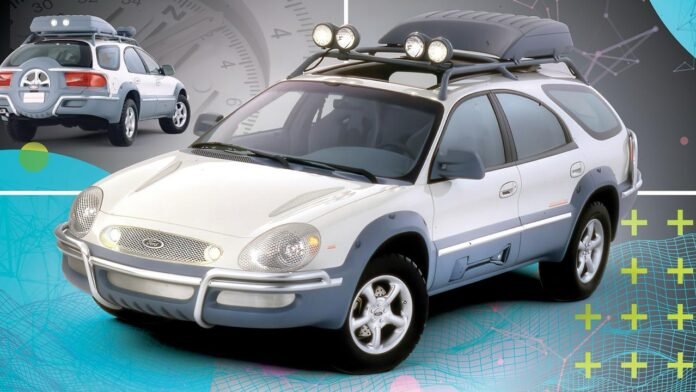

In the 1990s, automakers were exploring new territory. The era marked the beginning of what we now know as the all-terrain station wagon. While the concept of versatile, off-road-ready vehicles wasn’t exactly new, the ‘90s saw an increased desire for more rugged, practical cars that didn’t compromise on style or comfort. One of the most memorable vehicles from this period, albeit an unfinished concept, was the 1997 Ford Santa Fe. It was a design that captured the spirit of the time—bold, experimental, and uniquely forward-thinking.
Ford’s Santa Fe concept is often remembered for its bold design and its attempt to break from the traditional SUV mold. With features that seem unusual by today’s standards, the 1997 Ford Santa Fe could easily be considered ahead of its time. So, what made this car stand out? And why did it fail to make it to production? Let’s take a closer look at this iconic ‘90s concept.
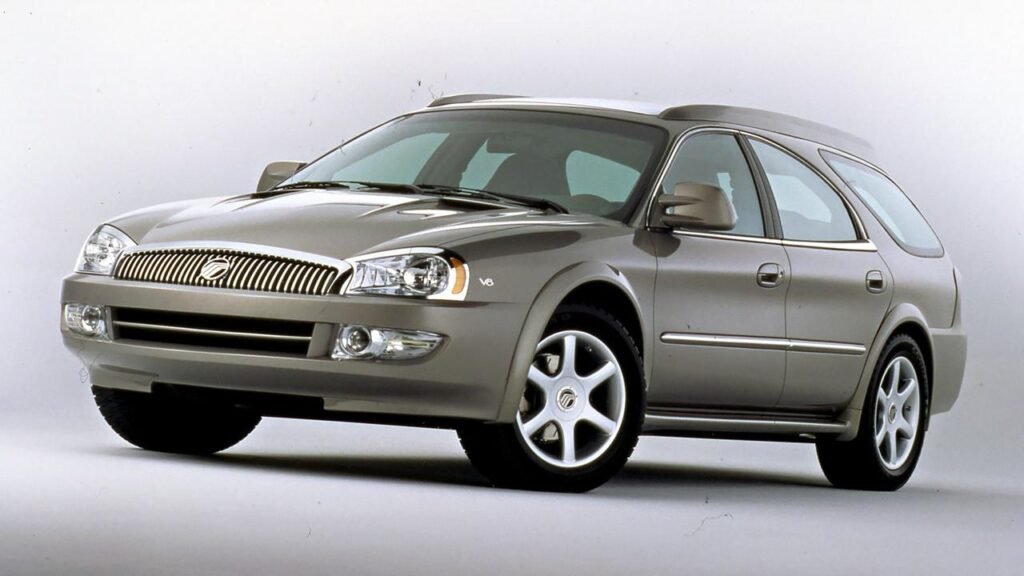
What Was the Ford Santa Fe Concept?
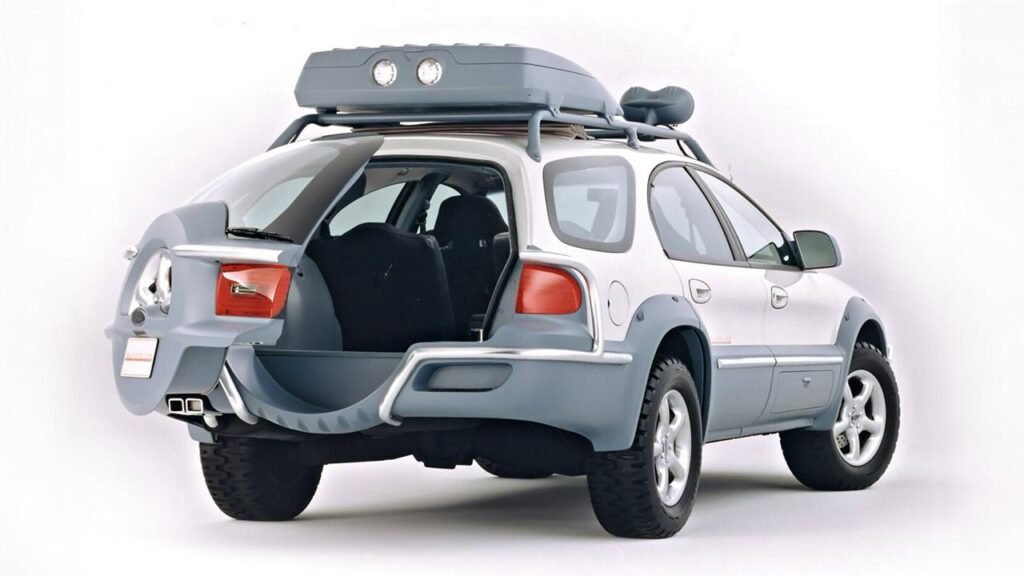
The 1997 Ford Santa Fe was a concept car created as part of Ford’s exploration into a new type of vehicle that could combine the versatility of a station wagon with the ruggedness of an off-road vehicle. At the time, the concept was striking, with its body kit, unconventional design, and purpose-driven modifications. It had all the trappings of an SUV before SUVs were cool—and long before the crossover craze that would dominate the automotive landscape in the 2000s.
Ford positioned the Santa Fe as a “lifestyle vehicle,” aiming to provide the kind of adventure and utility people wanted without sacrificing everyday drivability. Think of it as a precursor to the later crossovers that would dominate the market in the years that followed.
The Design: A Bold Statement
Looking at the 1997 Santa Fe today, it’s easy to see why the car stood out. The design was daring, offering an aggressive look that combined rugged elements with sporty features. The body kit, complete with an array of eye-catching details, gave it a sense of attitude. The addition of off-road m
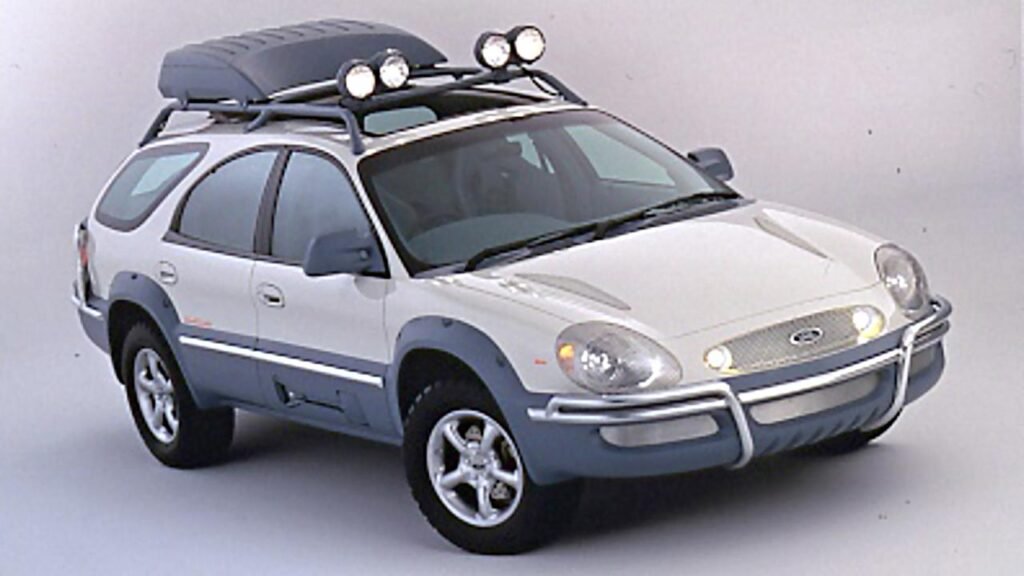
odifications, like the roof-mounted headlights and the shovel integrated into the driver’s side body kit, was an interesting decision. These additions made the concept feel like something out of a post-apocalyptic film, which fit well with the growing appeal of all-terrain vehicles in the ‘90s.
The Body Kit: A Nod to Adventure
At the heart of the Santa Fe concept’s bold look was its body kit. The kit gave the car an imposing, muscular appearance, something that was starting to become a trend among manufacturers looking to make a statement in the growing SUV market. The large, aggressive fender flares and rugged trim hinted at the car’s off-road capability, even though it wasn’t exactly designed for extreme terrain.
Perhaps one of the most unique aspects of the body kit was the shovel integrated into the driver’s door. This was a functional and stylistic touch, emphasizing that this vehicle was made for those who spent time in more rugged environments. Having a shovel conveniently stored in the door was a smart feature that highlighted the car’s rugged appeal, even if it was a bit unusual. While the practicality of such a feature was certainly questionable in the context of an urban environment, it was a sign of the adventurous spirit the Santa Fe represented.
The Roof-Mounted Headlights: Adding to the Boldness
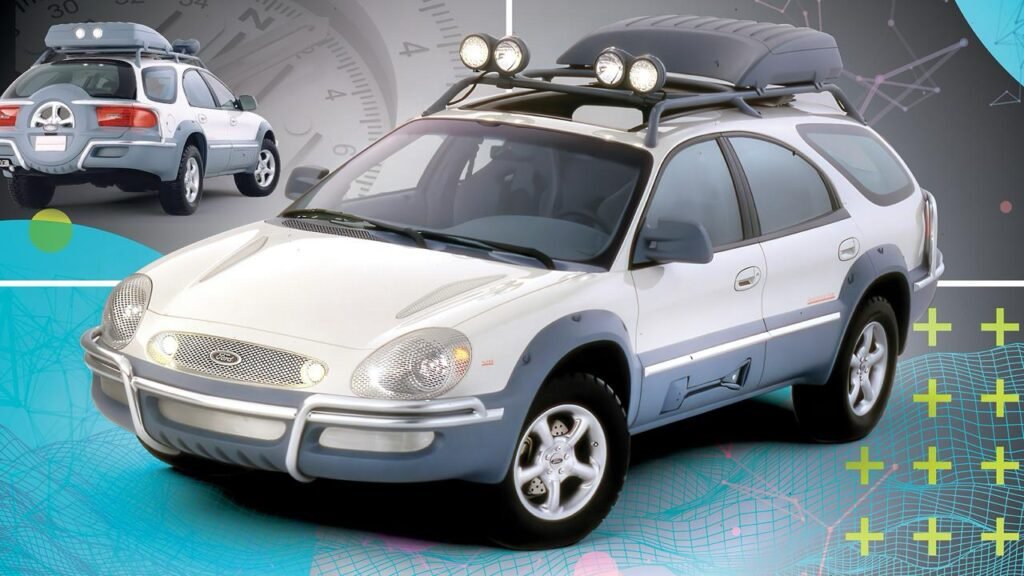
Another striking feature of the Santa Fe was its roof-mounted headlights. These headlights were another touch that made the concept look like something ready to tackle the wilderness. They had a functional appeal, providing more visibility in off-road scenarios, but they also added an element of style and aggressiveness to the car’s look. This combination of form and function was something that set the Santa Fe apart from other vehicles on the market at the time.
Looking at these roof lights today, it’s hard not to see the similarities between the Santa Fe concept and the design elements seen in later off-road-capable vehicles. Many of the features that we take for granted in today’s rugged SUVs—like extra lighting for off-roading—were first explored in vehicles like the Santa Fe. It was a hint at what the SUV market would look like in the 2000s.
The Spirit of the ‘90s: A New Era for All-Terrain Vehicles
In the 1990s, the market for all-terrain vehicles and SUVs was starting to grow. The ‘80s saw the rise of SUVs as practical family vehicles, with some models showing off-road capabilities. By the time the ‘90s rolled around, buyers were looking for vehicles that offered more than just the ability to handle a rough road. They wanted a vehicle that could take them on adventures—one that could handle both the daily grind and weekend excursions into the wilderness.
It was during this time that station wagons and sedans started to feel less practical. While SUVs and off-road vehicles were growing in popularity, they were still mostly seen as vehicles for people who lived in rural or suburban areas. The Santa Fe concept was an early attempt to bridge the gap between traditional SUVs and the everyday vehicle that was still approachable for those living in urban settings. Ford’s attempt at creating a more versatile vehicle was reflective of the changing needs of the average driver in the ‘90s.
The Market for All-Terrain Station Wagons
In the ‘90s, all-terrain station wagons were just starting to catch on. Though the market was still in its infancy, Ford and other automakers were beginning to see the potential for these vehicles. The idea was simple: offer the practicality and interior space of a traditional wagon, but with more rugged styling and off-road capability.
The rise of crossovers and all-terrain wagons in the ‘90s was driven by a growing interest in vehicles that could take on both urban streets and outdoor adventures. These vehicles allowed families and individuals to travel comfortably while also offering the freedom to explore more challenging terrains. While the concept of a station wagon with off-road capability wasn’t new, the Ford Santa Fe brought a sense of adventure to this market.
The Features that Defined the Santa Fe Concept
While many of the Santa Fe’s features were meant to appeal to a sense of adventure and style, there were several standout elements that made it unique for its time.
- Shovel in the Door Kit: As mentioned earlier, one of the Santa Fe’s most memorable features was the shovel integrated into the driver’s side body kit. The shovel was more than just a cool design choice—it was a nod to the kind of rugged outdoor lifestyle that the Santa Fe concept was trying to capture. Whether it was meant to dig out of a tough spot or simply as a design element, it added a fun and practical touch to the car.
- Rooftop Headlights: The rooftop headlights added a layer of functionality and style to the car. They allowed for better visibility in dark or off-road conditions, which was important for a vehicle meant to be taken off the beaten path. These added lights gave the Santa Fe an aggressive, ready-for-anything look that was perfect for the adventurous spirit of the ‘90s.
- Body Kit and Rugged Styling: The muscular body kit, aggressive wheel arches, and off-road-inspired trim elements made the Santa Fe look like a vehicle built to take on any challenge. The concept was clearly aiming at people who wanted more from their car than just a commuter. The design communicated that this vehicle could go places and do things that other cars simply couldn’t.
- Functional Yet Stylish Features: From the shovel in the door to the roof-mounted lights, the Santa Fe concept was filled with functional yet stylish elements. The combination of rugged styling and practical features was a precursor to the vehicles that would dominate the crossover market in the years that followed.
Why the Santa Fe Concept Didn’t Make It to Production
While the Ford Santa Fe concept had all the right elements for a successful production model, it never made it to the showroom floor. Part of the reason for this was timing. By the late ‘90s, the SUV market was still in a state of flux. Ford likely saw the potential in the Santa Fe concept but ultimately decided to focus on more conventional vehicles that would appeal to a broader market.
Additionally, some of the features on the Santa Fe, such as the shovel in the door and the roof-mounted headlights, might have seemed too unconventional for mass production. While these features were fun and functional in the context of a concept car, they didn’t quite align with the expectations of mainstream buyers at the time.
The Legacy of the Santa Fe Concept
Even though the Ford Santa Fe concept never made it to production, it played an important role in the evolution of the all-terrain station wagon and crossover vehicles. Looking at the Santa Fe today, it’s clear that the concept was ahead of its time. Many of the features and design elements that were introduced with this vehicle can now be seen in the vehicles that dominate the crossover market.
The 1997 Ford Santa Fe was a bold, experimental design that reflected the spirit of the ‘90s—a time when automakers were beginning to understand that people wanted more than just a practical car. They wanted vehicles that matched their adventurous lifestyles. Though the Santa Fe concept didn’t make it to production, its influence on the industry is undeniable. It set the stage for the crossover vehicles that we drive today, and it remains a fascinating example of automotive design from a decade that was just beginning to explore new possibilities.
In the end, while the Santa Fe may have missed its chance to shine in the ‘90s, its legacy continues to live on in the cars we drive today.